
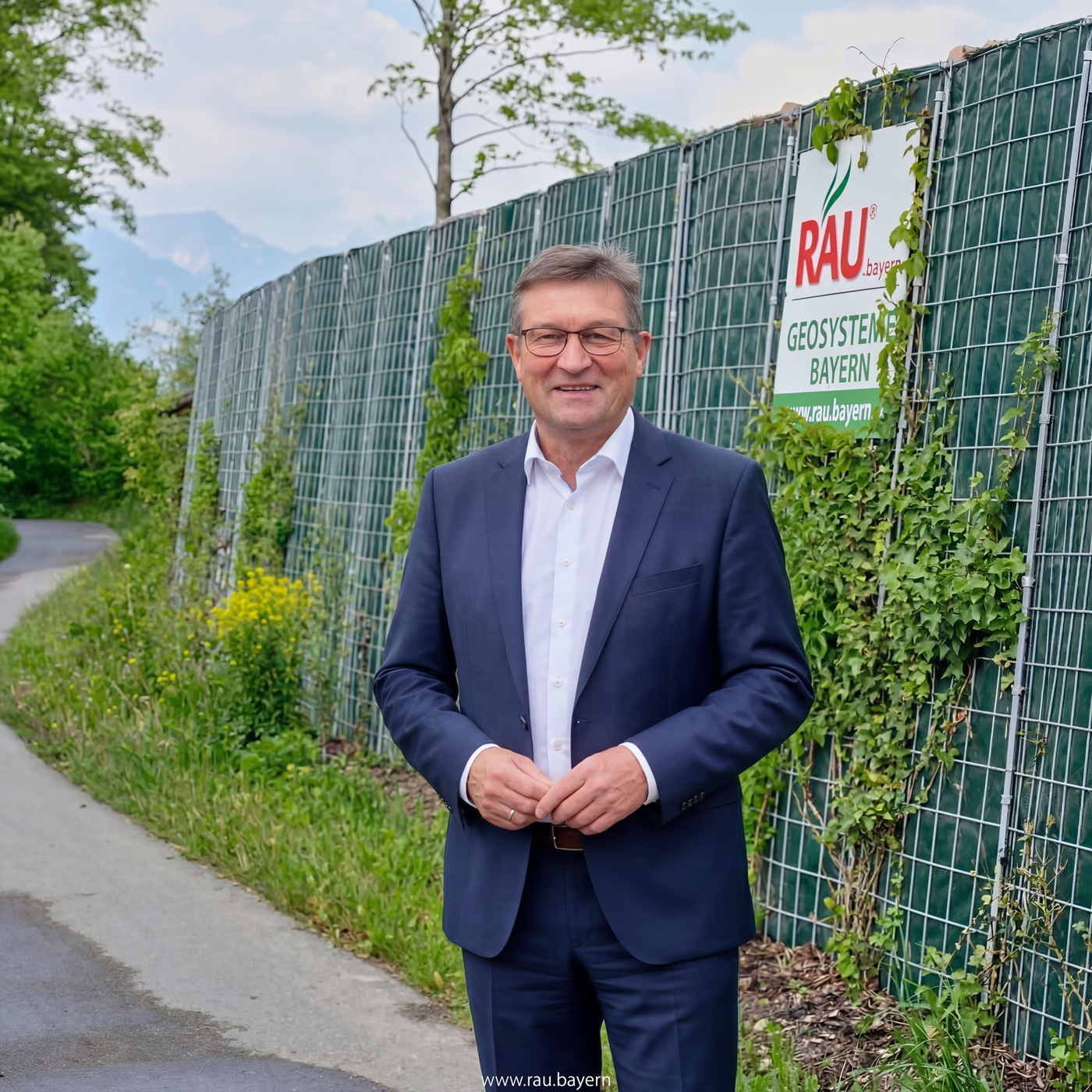
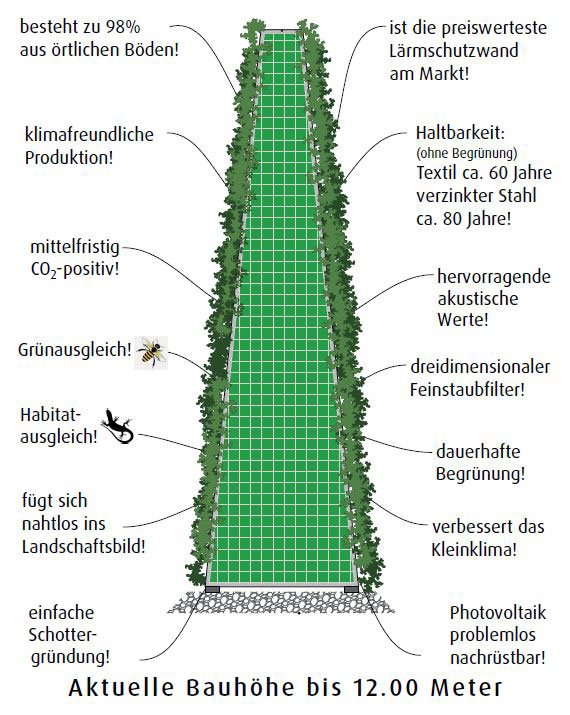
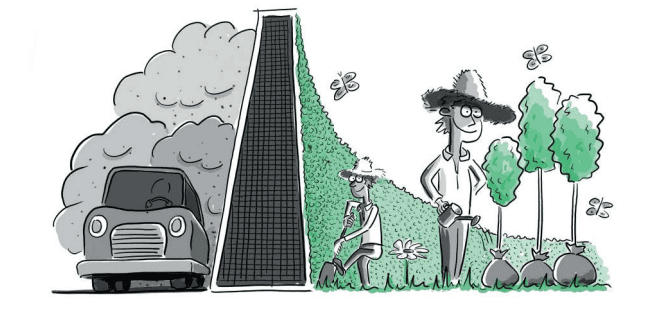
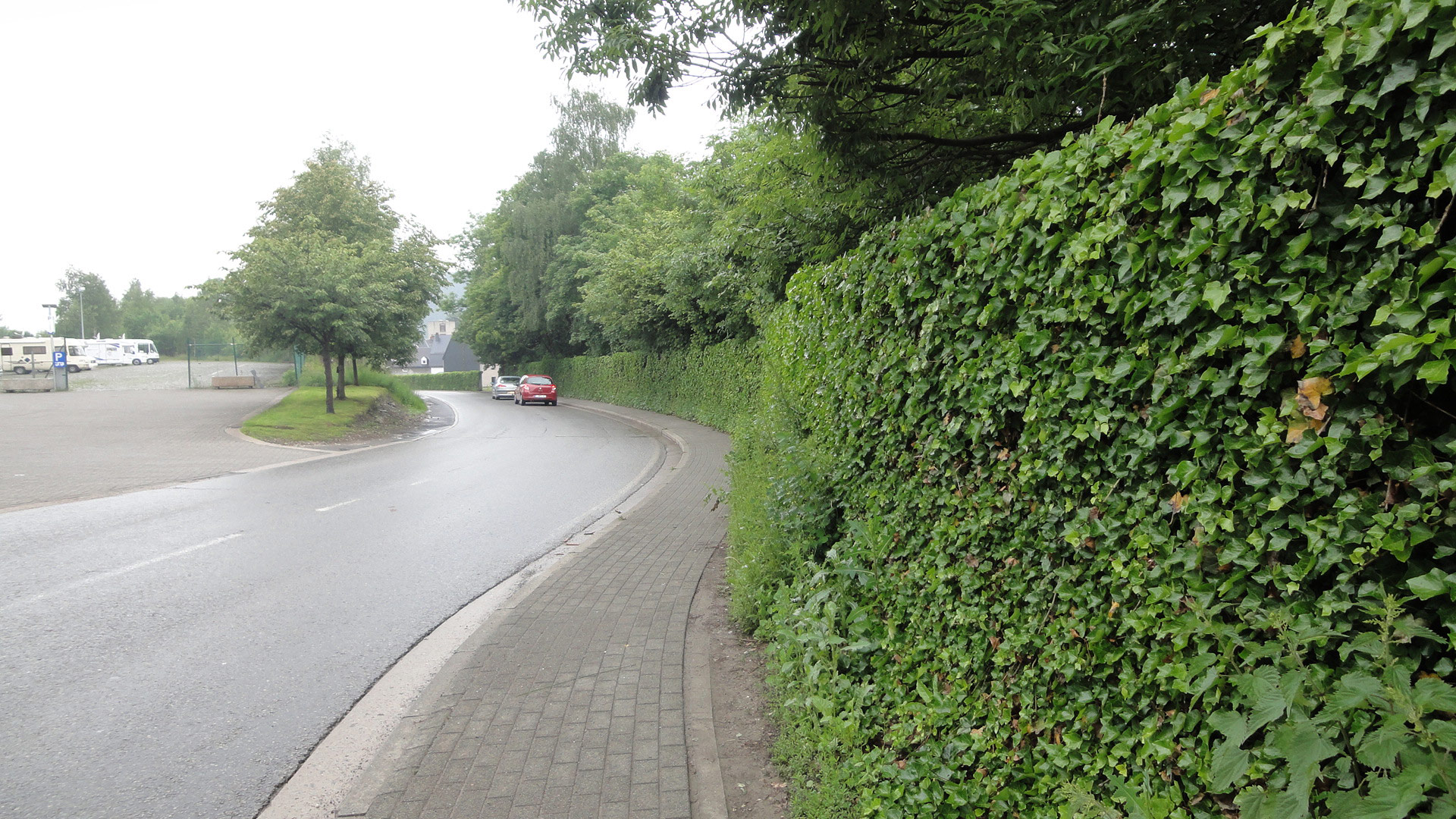
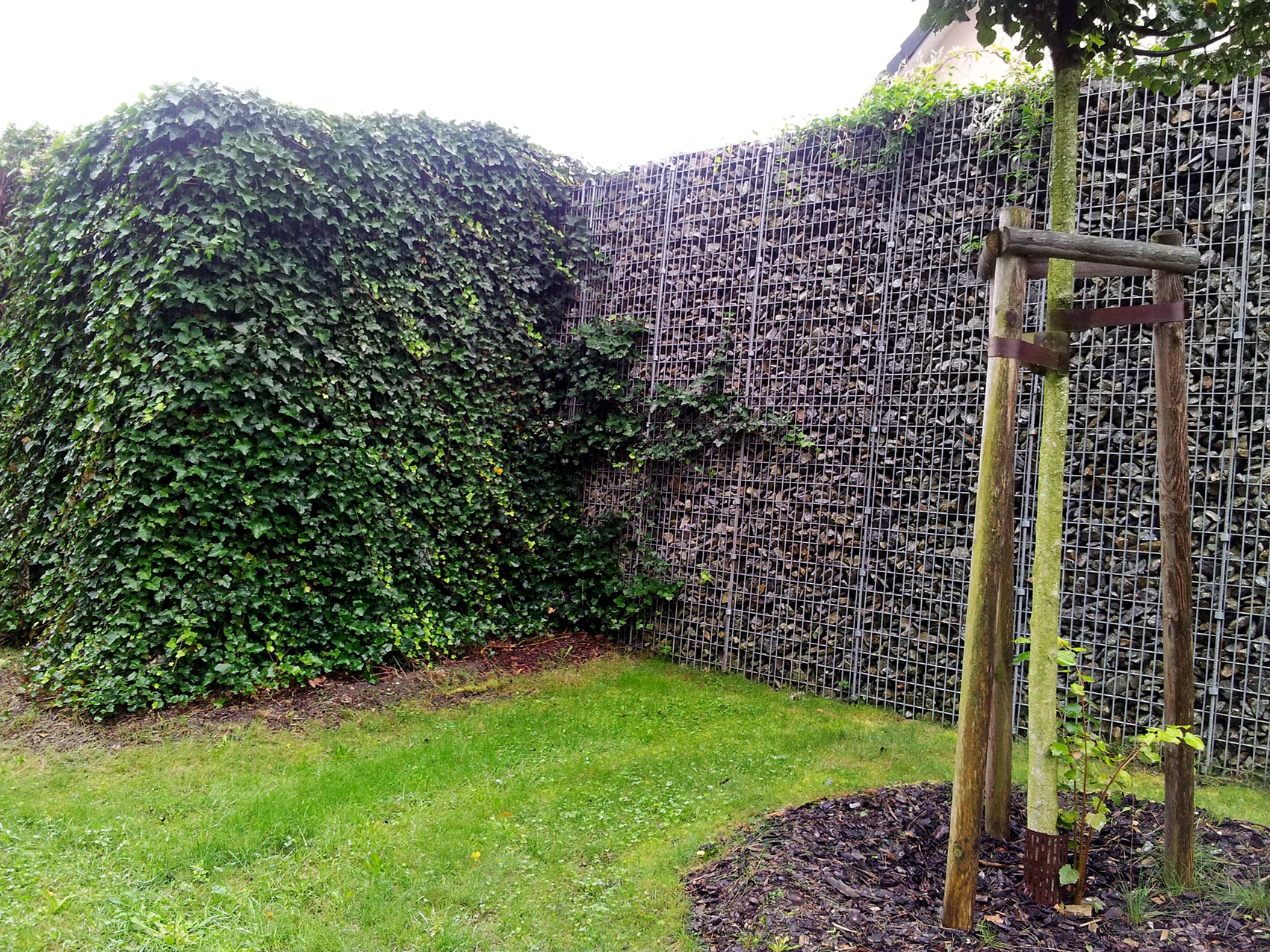
In BESS systems, there are five typical noise sources: the fans in the battery containers, the air conditioning units in the battery modules, the inverters, the transformers, and the pumps in the liquid cooling systems. RAU.bayern designs the RAU Bess noise control system to address the combined impact of these sources, with fans and inverters in continuous operation determining the assessment level. Each source has its own characteristics. Fans and air conditioning units generate broadband, uniform noise; inverters add tonal components from the switching frequency; transformers emit a low-frequency hum; and pumps run in sync with cooling demand. For the wall, this means it must shield all sources in the direction of the noise exposure point, with particular attention paid to the height of the fan openings. The vegetation at the base of the wall requires no irrigation; the wall structure is highly absorbent and is filled with soil sourced locally.
How do fans, inverters, and transformers differ in terms of noise levels?
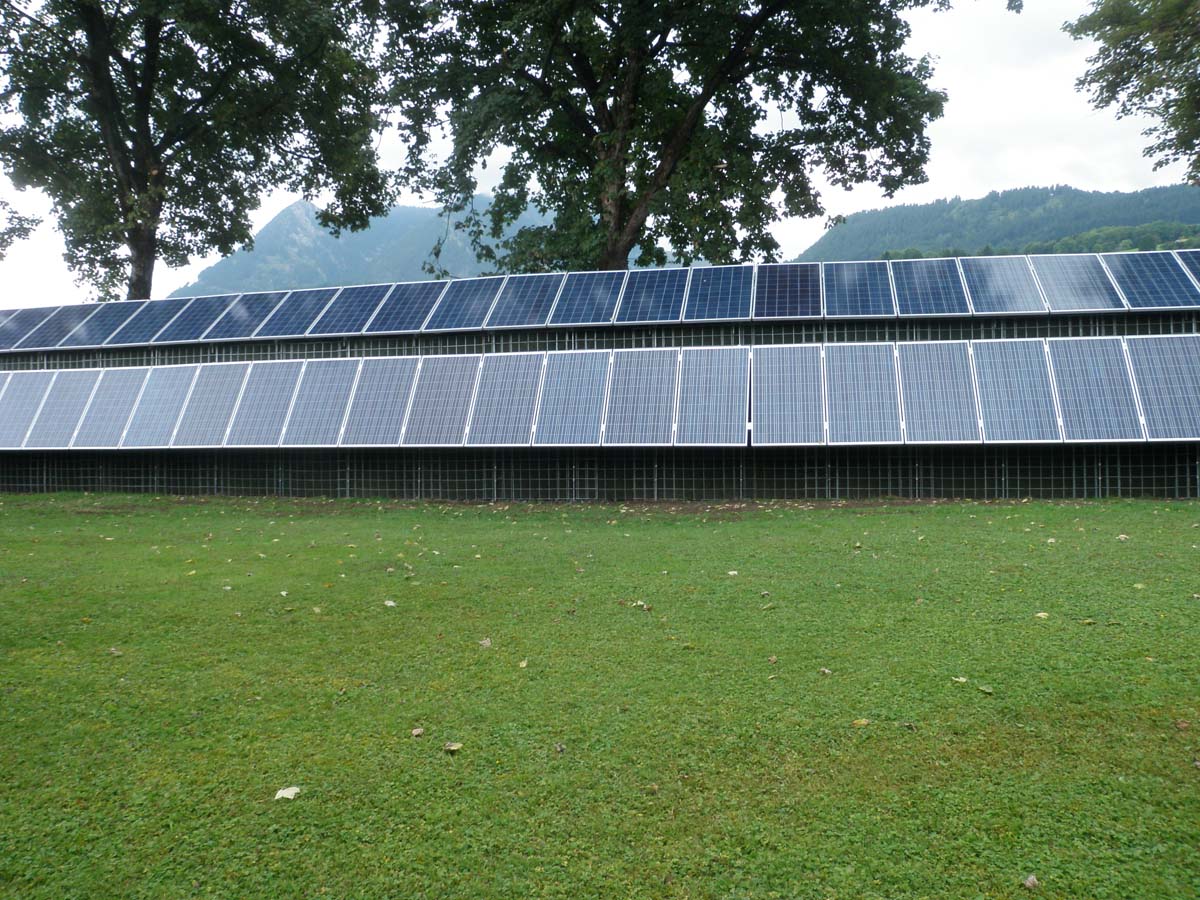
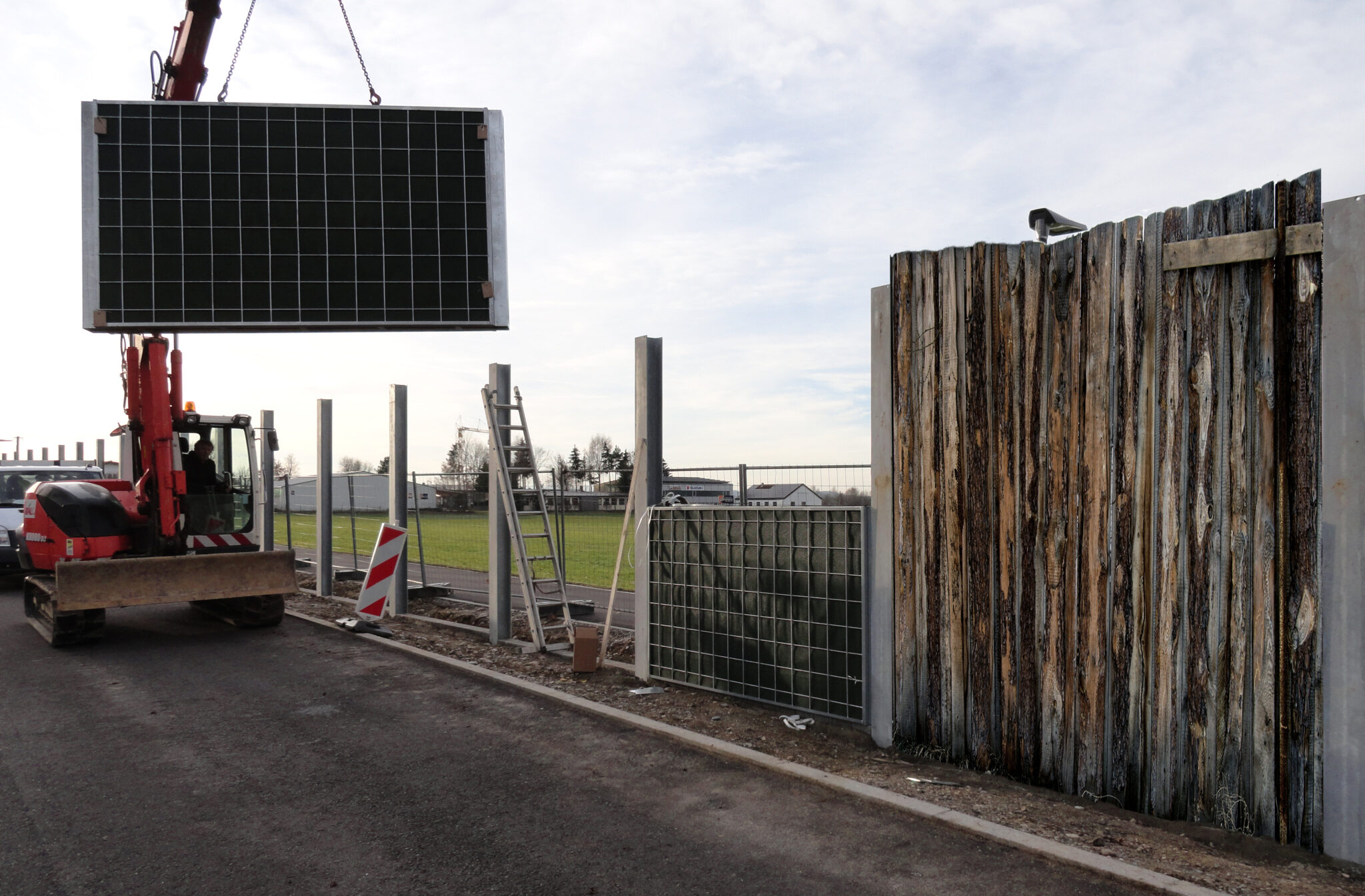
Fans, inverters, and transformers differ in the noise profile of a battery storage system in terms of frequency, temporal variation, and assessment according to TA Lärm. Fans in the containers and air conditioning units for the battery modules generate broadband noise that fluctuates with cooling demand and persists at night during the summer and during peak load periods; this noise forms the system’s background noise. Inverters superimpose individual tones from the switching frequency onto this noise; these tones become more prominent in quiet environments and can be evaluated by the assessor with a weighting factor for tonal character. Transformers contribute a low-frequency hum that has low energy but long wavelengths and is therefore diffracted around wall edges. Pumps in liquid cooling systems run in sync with cooling demand and produce a moderate, pulsating noise. For the design of the wall, the height of the sources is decisive, not just their sound level. Ventilation openings on the front or roof of the containers are higher than transformers at ground level; the top of the wall must therefore extend above all sources. We map the sources on the site plan and design corresponding wall sections using RAU.bayern’s noise barriers for battery storage systems, either as the Klimawand R3 or the Rock Extensiv.
Which of these sources determines the design of the noise barrier?
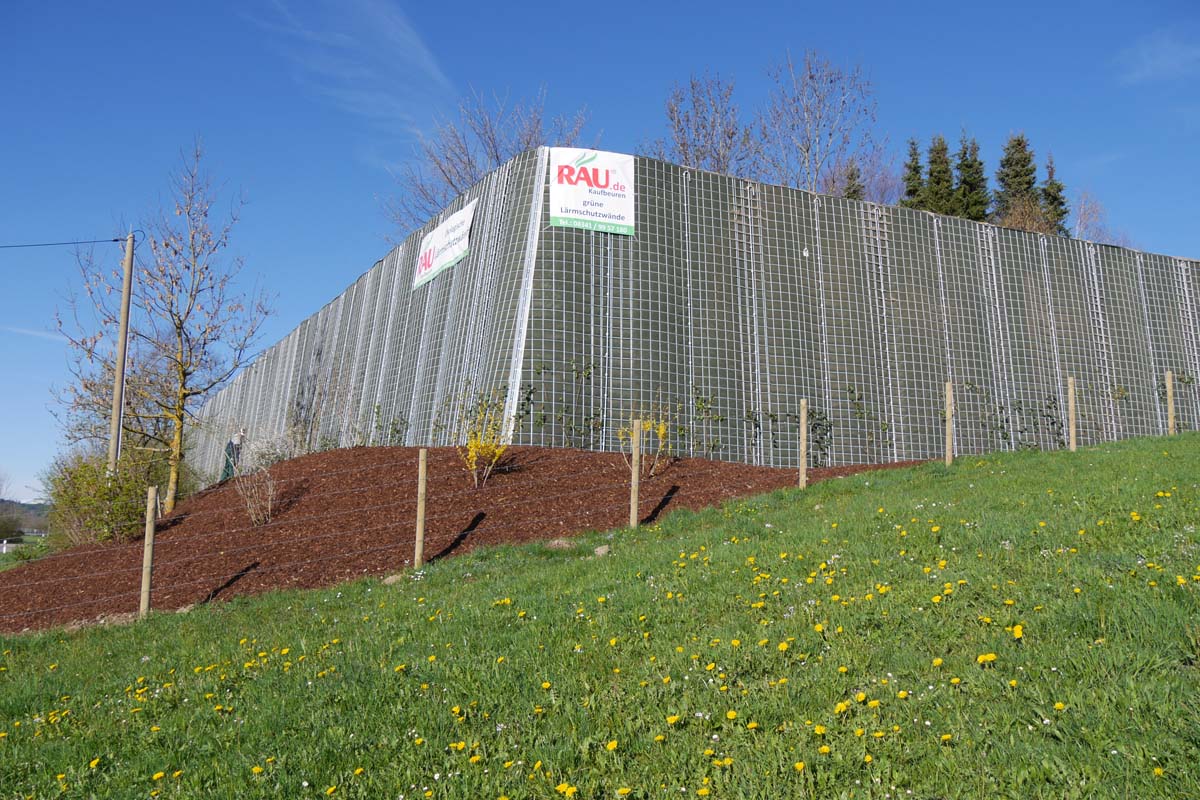
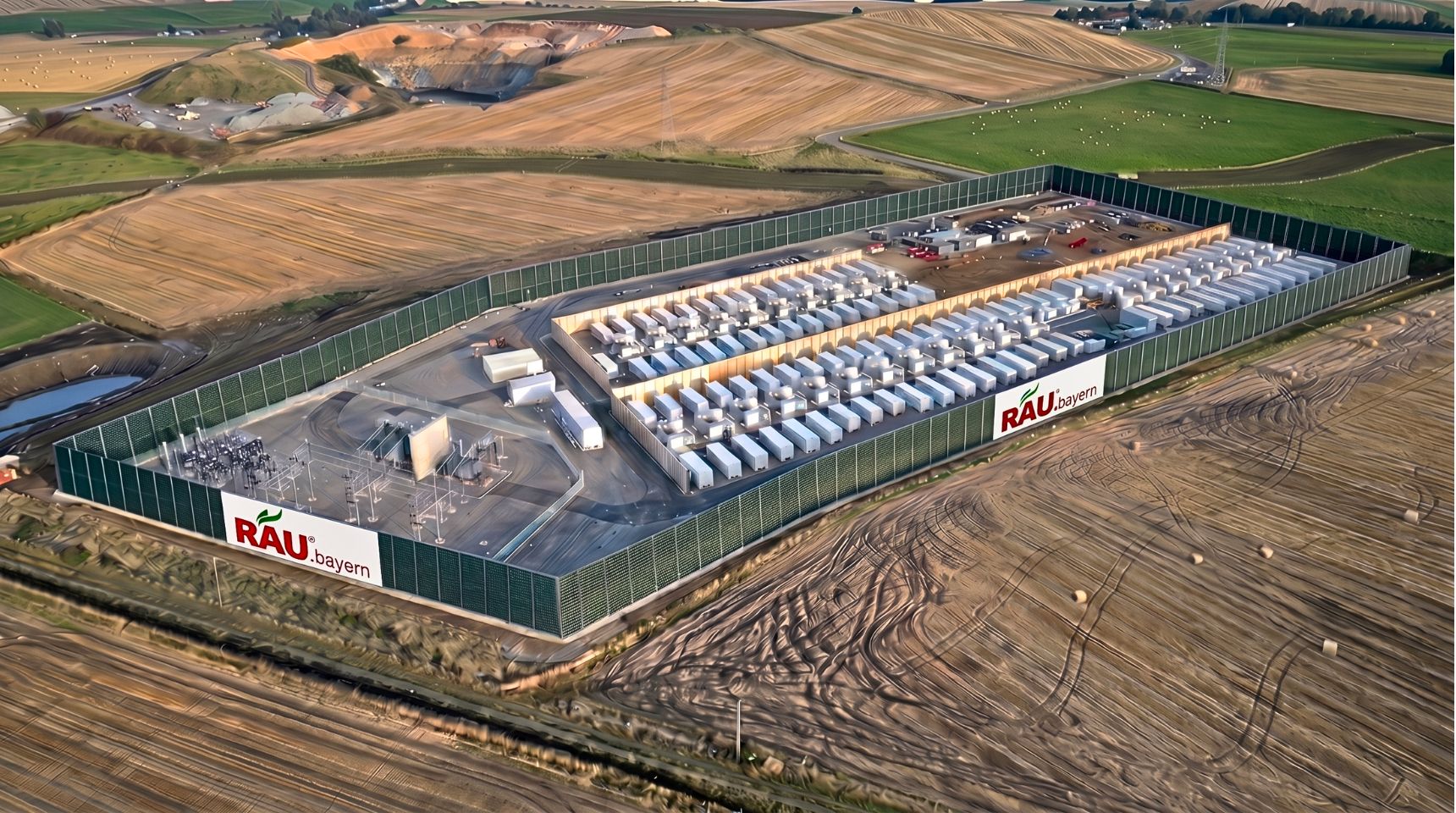
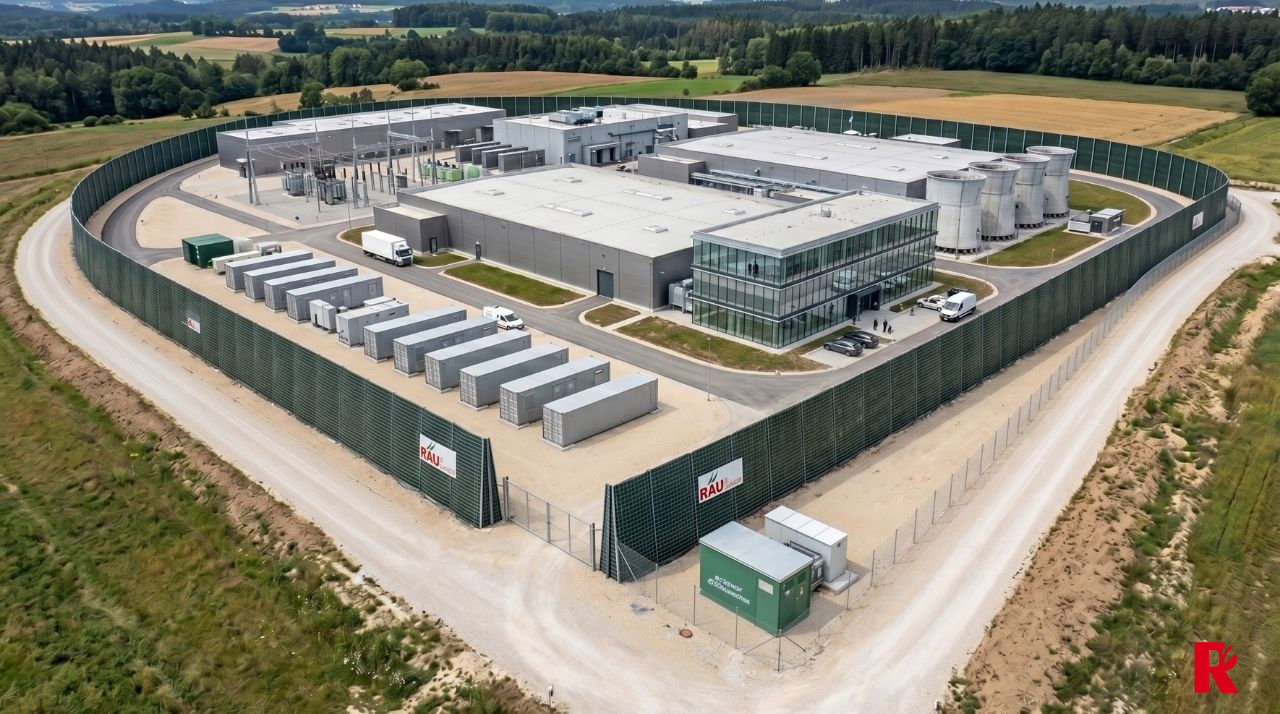
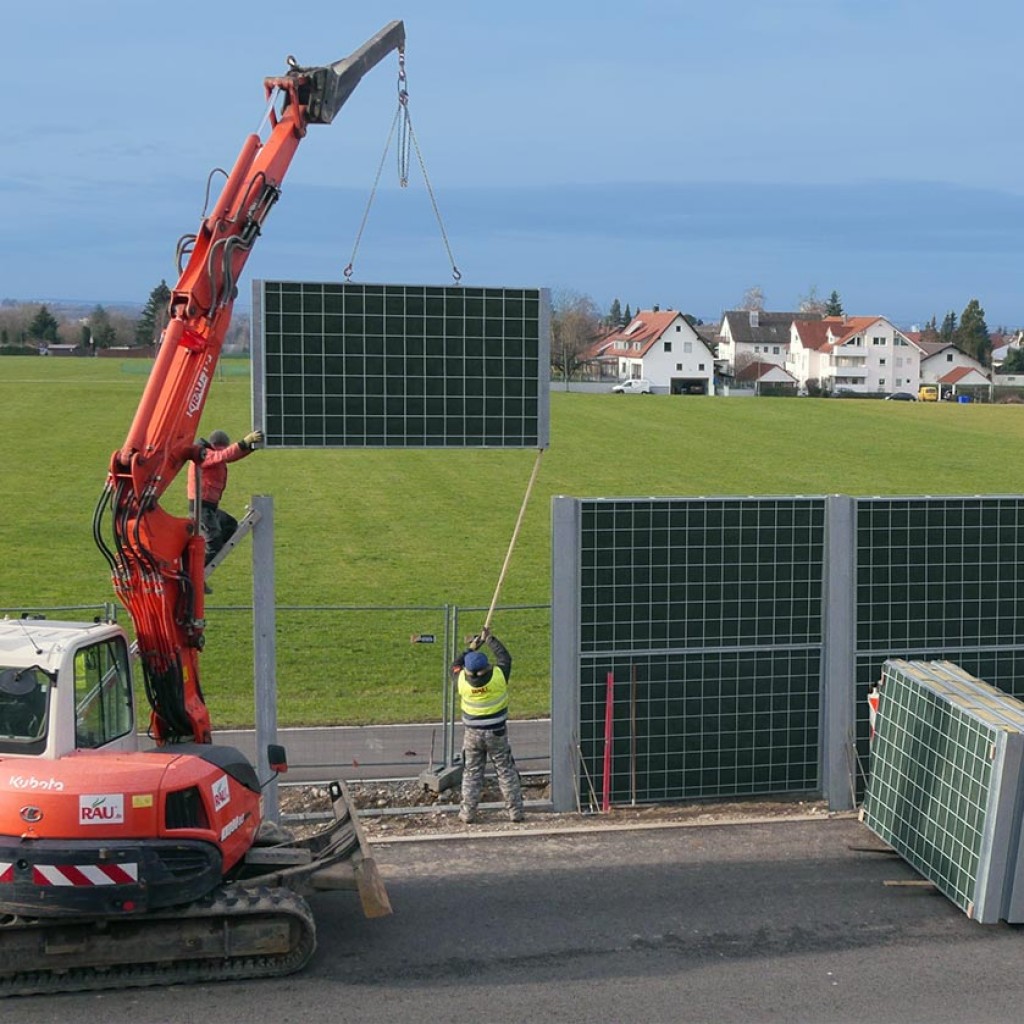
In battery storage systems, the design of the noise barrier is generally determined by the container fans and the inverters, because they are the primary factors influencing the assessment level at the noise exposure location during continuous operation, whereas transformers and pumps affect the geometry only at their respective locations. In the planning phase, we therefore group the sources together. The row of containers with their fans requires a continuous barrier running parallel to the row, with a height determined by the fan openings. The inverter array requires a highly absorbent barrier surface that absorbs rather than reflects tonal frequencies. The transformer requires a section that is extended laterally so that low-frequency sound does not travel around the ends of the wall. These groups result in a wall configuration with varying heights, as we implemented in Fehraltorf with heights ranging from 3.30 to 5.00 m. Where a transformer station or inverter array is located close to the property line, we use the RAU Rock Extensiv with a minimum width of 13 cm. Our planners in Kaufbeuren provide consultation on source analysis and selecting the appropriate wall; the page about RAU.bayern as a company describes our services, ranging from consultation and bid specifications to installation by our own service teams.


