
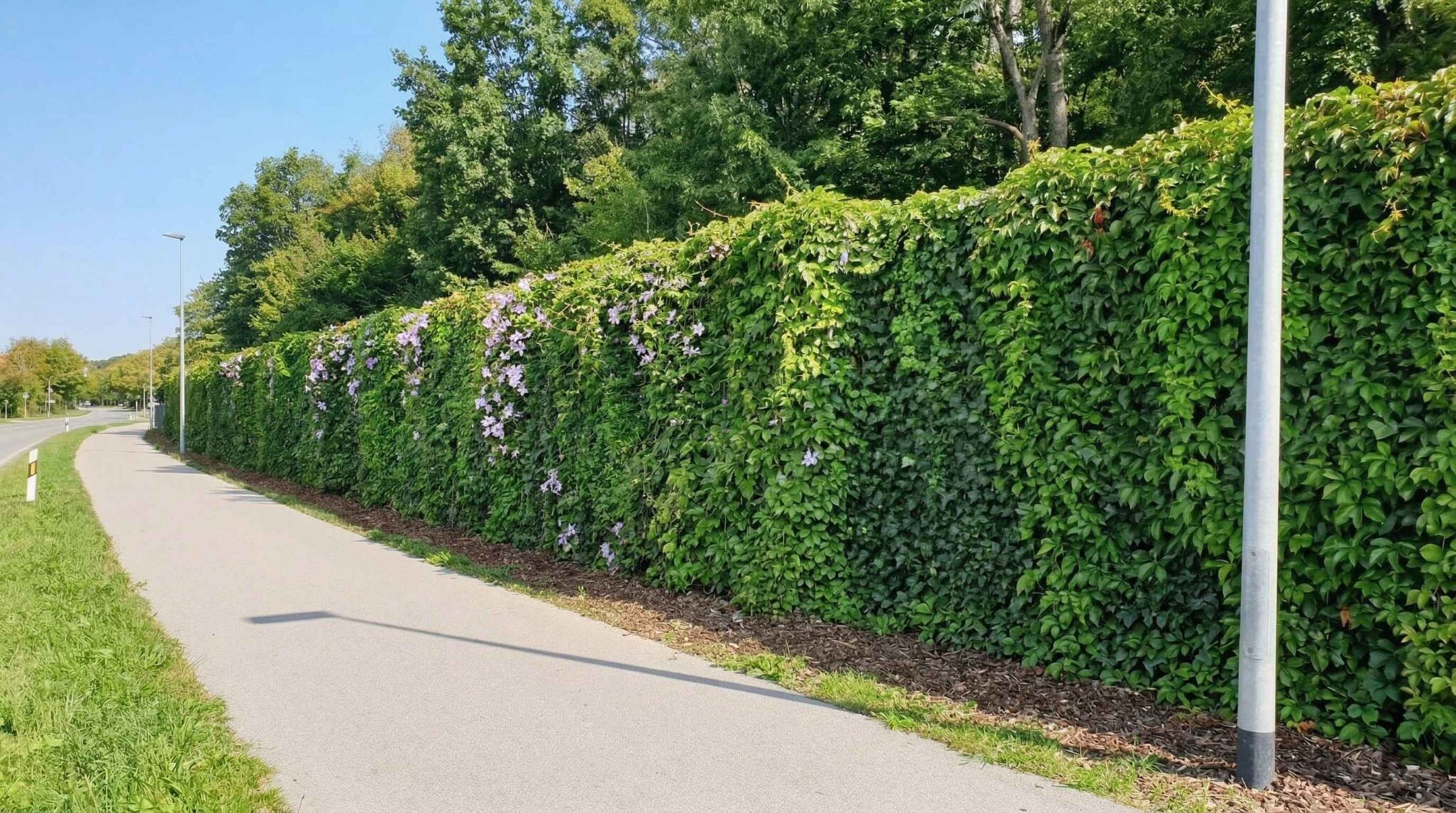
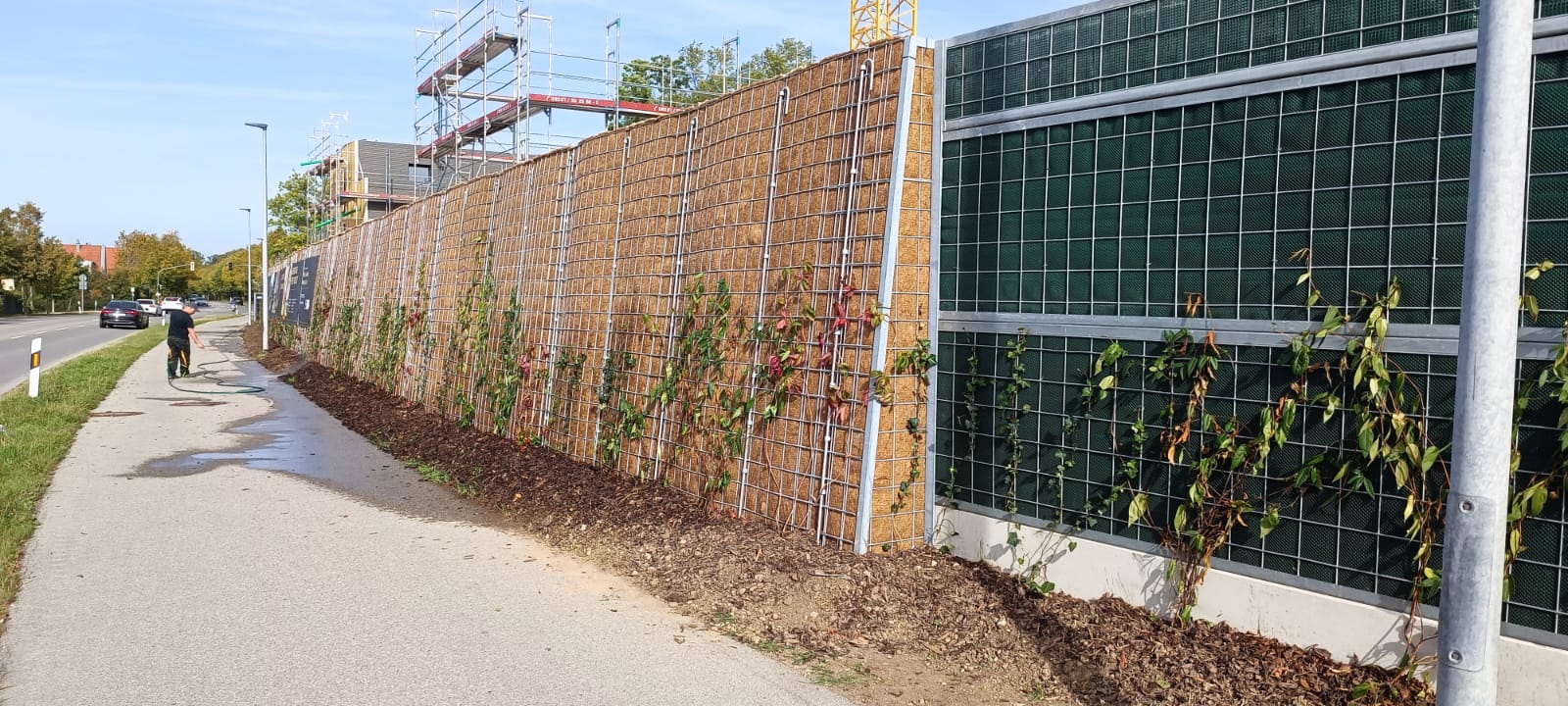
Vienna is growing – and so is the traffic noise. Anyone who lives or works along the A23 south-east bypass, on the main S-Bahn line or in the flight path of Vienna-Schwechat Airport will be familiar with the problem from everyday life. In the increasingly dense urban development areas between Donaustadt, Floridsdorf and Favoriten, noise protection is also increasingly becoming the focus of construction projects – Seestadt Aspern, the Nordbahnviertel or the districts around the new main railway station are examples of this. At RAU.bayern, we supply noise barriers from the Allgäu region to Vienna – to private developers, residential developers, commercial enterprises and municipal clients. Our focus is on green noise protection systems that combine acoustic benefits with ecological added value – a point that is particularly important in a city with ambitious climate and greening targets such as Vienna. We advise you personally, from the initial consultation to installation on site, and take the time to understand your situation: What noise is affecting you, from which direction, at what frequency? When is the noise level particularly high – during the day due to rush-hour traffic or at night due to freight trains on the Danube railroad? We use these answers to develop a suitable system instead of selling a standard solution. In this way, a noise barrier is not a technical component, but a concrete response to your living or working situation.

Noise protection in the growing Danube metropolis - what matters in Vienna
Vienna is a city where traffic arteries, residential construction and local recreation overlap in a confined space. The A23 is one of the busiest highway routes in Austria and cuts directly through densely populated areas between Inzersdorf and Kaisermühlen. The main S-Bahn line from Praterstern to Meidling is open around the clock. In addition, there are streetcar and bus lines, the traffic frequency in the Gürtel area and, last but not least, air traffic in the south of the city.
In this mixed situation, noise protection only works well if it is tailored to the specific situation. A detached single-family home in Stammersdorf has different requirements than a courtyard in Leopoldstadt or a new residential complex in Seestadt Aspern. Not only are the noise levels different, but also the permitted building heights, the subsoil conditions and the visual requirements of the developers or the City of Vienna.
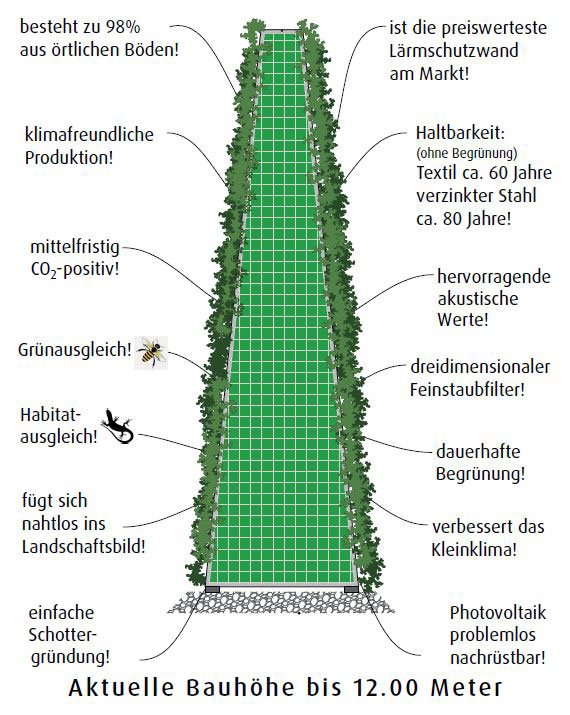
Anyone planning noise protection in Vienna is therefore rarely dealing with a purely acoustic issue, but always also with urban planning, traffic routing and neighborhood interests. We therefore first discuss the current situation with you. Which noise source dominates – road, rail, commercial? How high can the wall be, how far does the space extend, are there any requirements from the development plan? Only then is it a question of materials and systems. RAU noise barriers can be planned modularly and adapted to different heights, lengths and terrain situations. The modular design pays off, especially for longer stretches along streets in Vienna: Extensions or later adaptations are possible without complete reconstruction. This is also economically relevant because many Viennese construction projects are implemented in stages – for example, if a plot of land is only partially built on and the complete noise protection is to be added later.
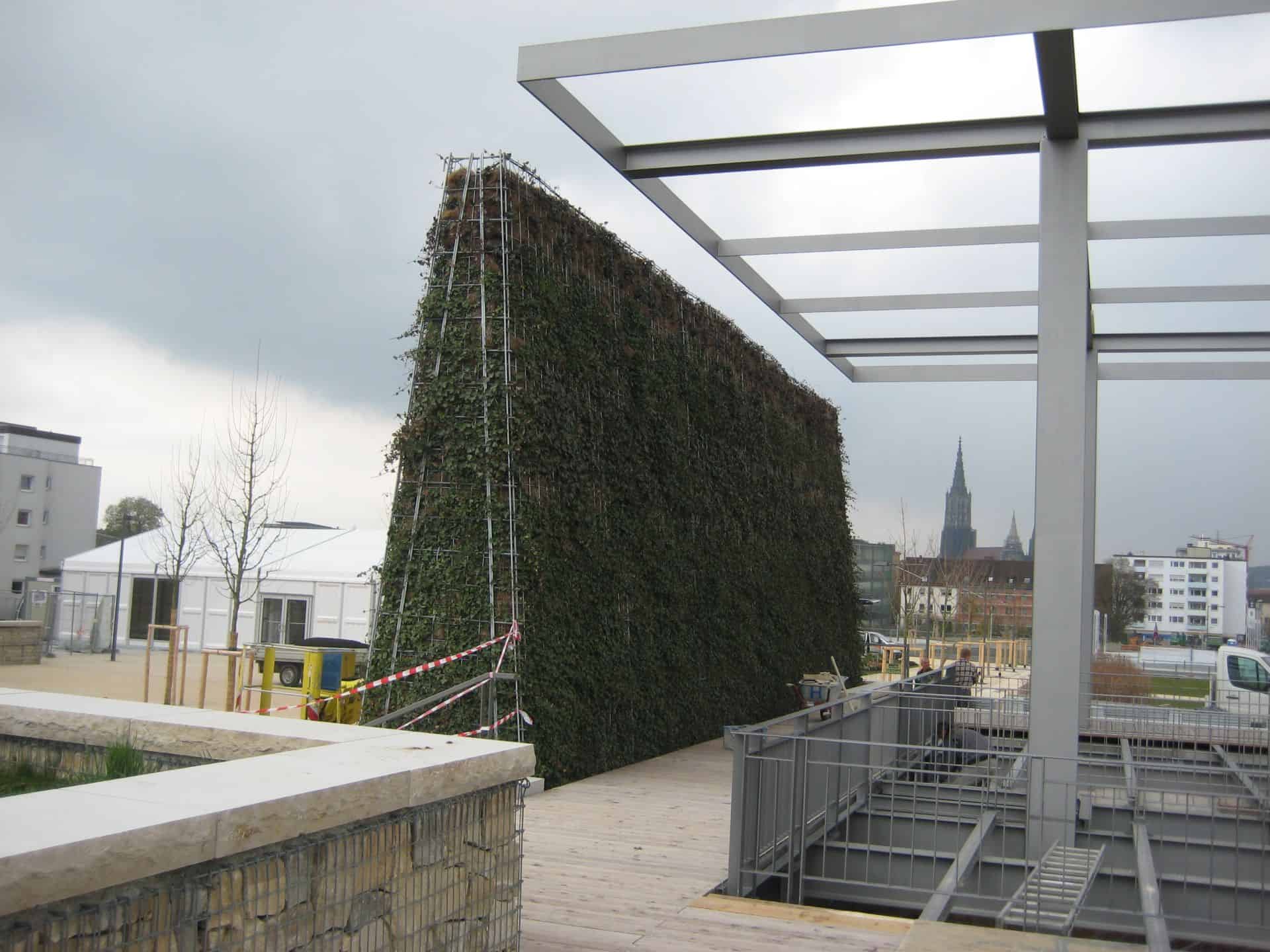
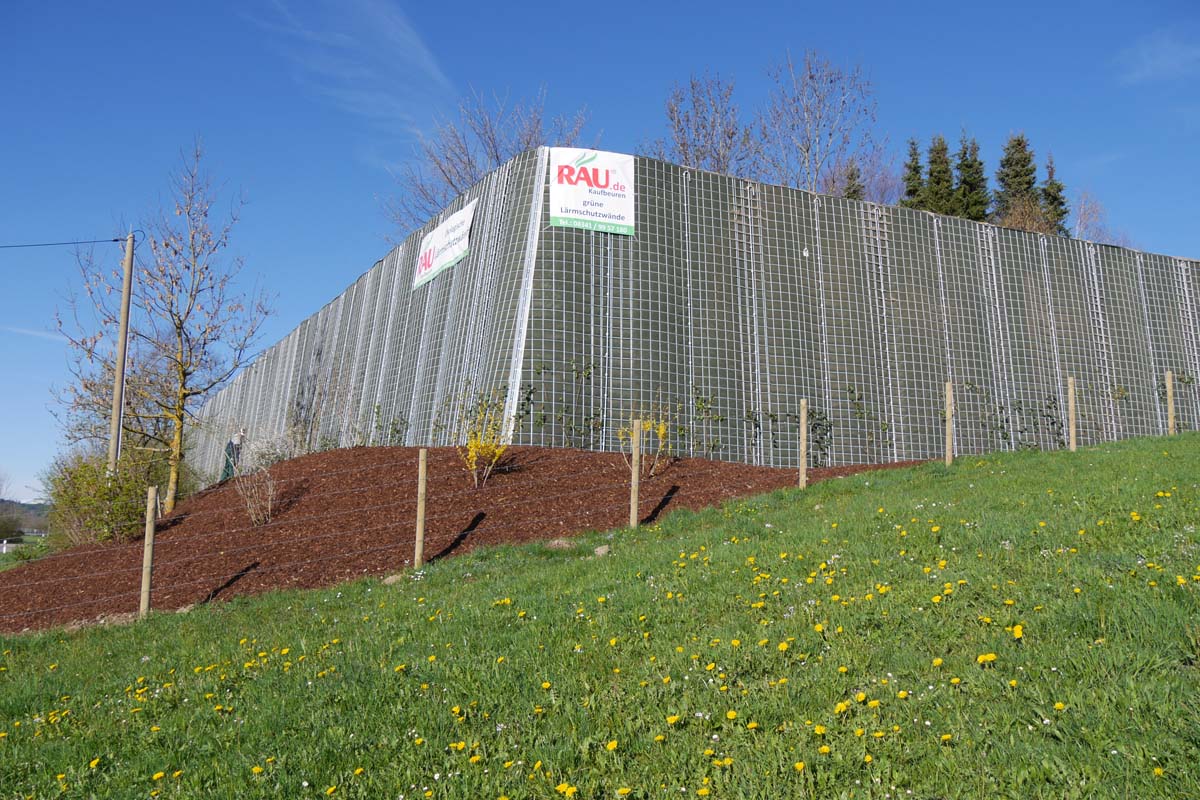
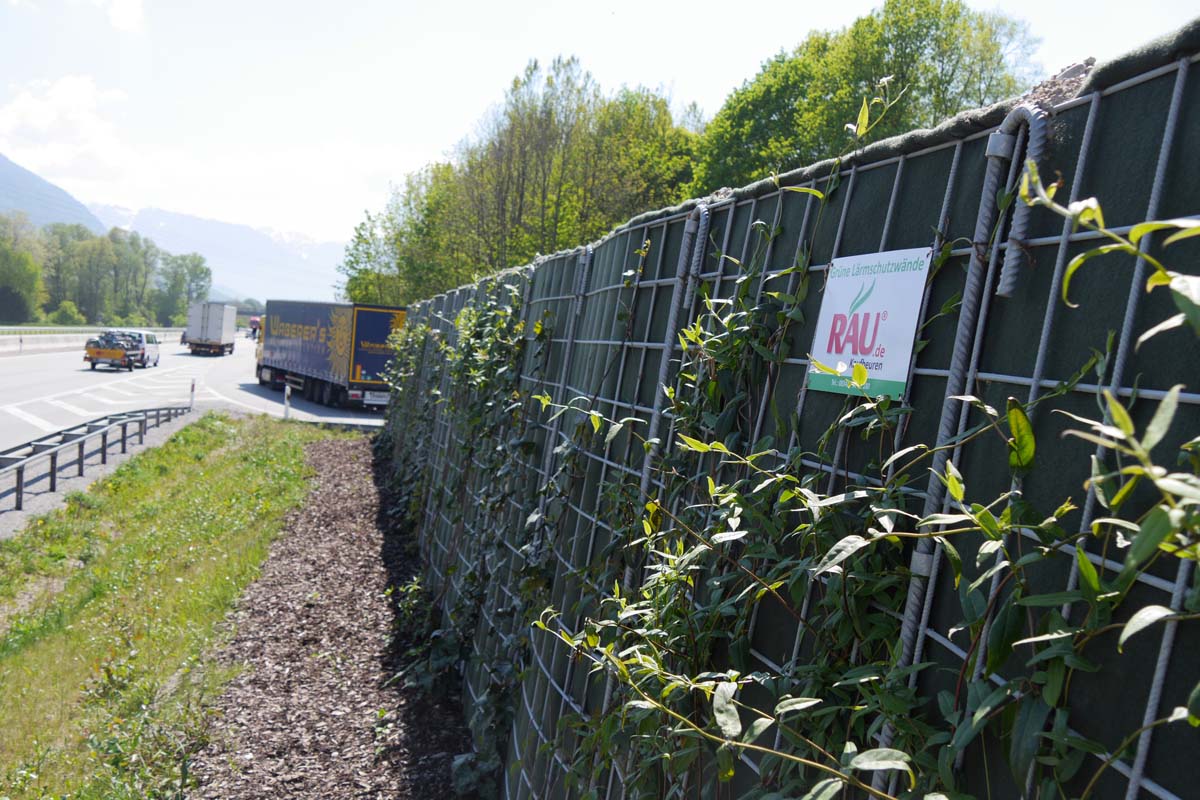
Directions and delivery from Kaufbeuren to Vienna
The route from our location in Kaufbeuren to Vienna is around 600 kilometers and leads via the A7, the A8 towards Munich and Salzburg, then on via the A1 Westautobahn through Upper Austria, Lower Austria and finally to the federal capital. The route takes around six to seven hours by truck, depending on the traffic situation and load. We usually plan deliveries to Vienna in larger tranches in order to keep logistics costs and effort manageable for you.
For larger projects – such as residential buildings in Aspern, noise protection measures along industrial estates in Liesing or renovations on the outskirts of the city – we coordinate the delivery closely with the construction site schedule. This applies to the delivery time windows, which vary greatly in Vienna depending on the district and location, as well as the accessibility for articulated trucks. We reach closer inner-city locations with smaller vehicles or via interim storage facilities in the suburbs.
We also plan the installation together with you or your construction company on site. For larger orders, our fitters come directly from Bavaria to Vienna; for smaller orders, we work with reliable partner companies in the region. For you, this means that you have a contact person who knows the system – and a local company that can react quickly if something needs to be repaired. In our experience, this mixture of manufacturer responsibility and regional implementation has proven to be the most resilient constellation for Austrian orders. We don’t pick you up from the sales office, but from the actual building situation – this saves time and misunderstandings on both sides.


