
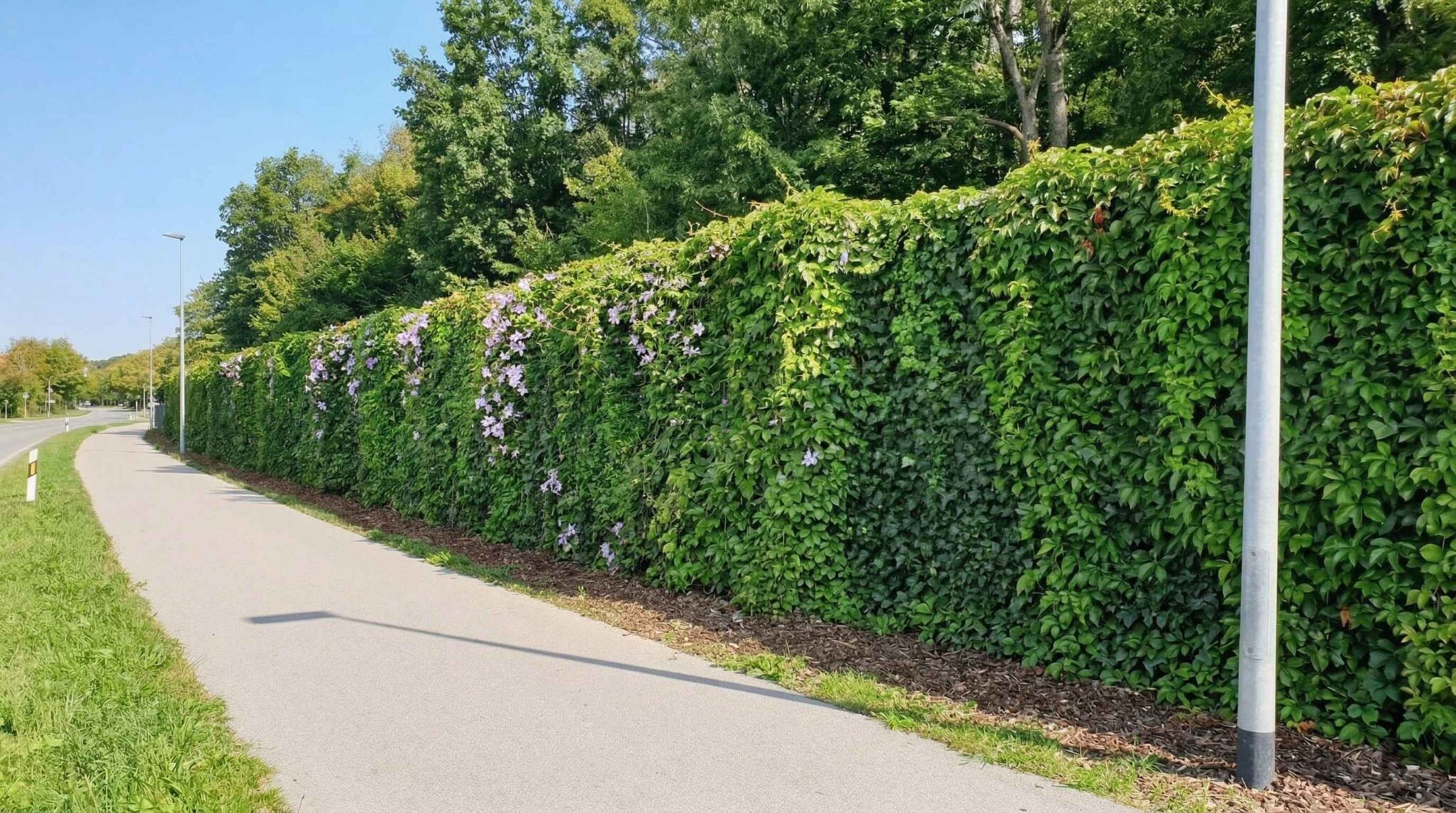
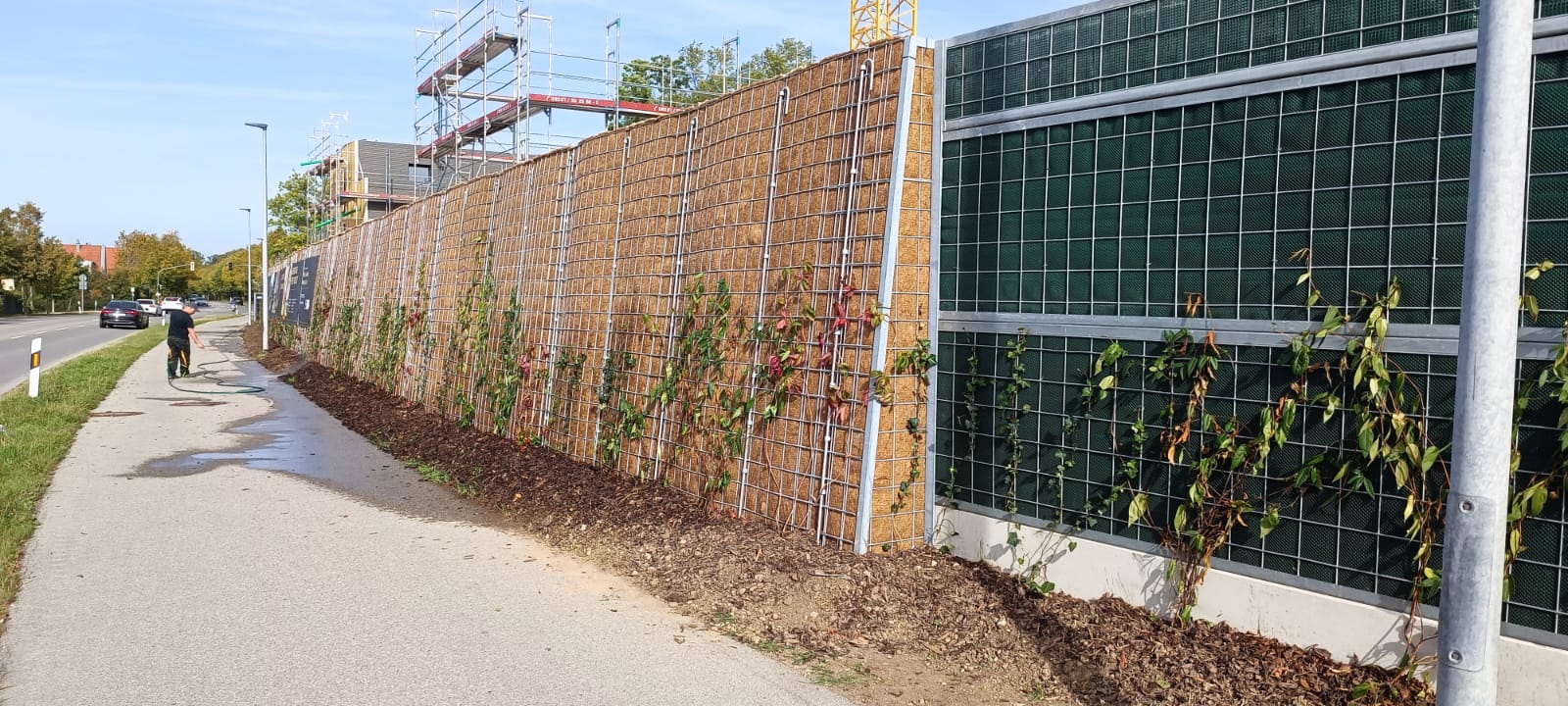
Innsbruck is located in the Inn Valley funnel between the Karwendel and Tux Alps – a topography that wedges the city between mountain ranges and creates special acoustic properties. Sound is retained for longer in this valley location and can spread far along the valley axis. Added to this is the acoustically dominant location on the Brenner corridor: the A12 Inntal highway runs through the city area, the A13 Brenner highway begins in the south and is the central transit axis between northern Europe and Italy. Anyone living in Pradl, Reichenau or Hötting is familiar with the mixture of highway, railroad and inner-city traffic noise. In the higher districts such as Igls, Aldrans or Mutters, the direct traffic noise from the valley predominates. At RAU.bayern, we supply noise barriers from the Allgäu to Innsbruck and the surrounding Tyrolean region – to private developers, residential developers, commercial enterprises, hotels and municipal clients. Our focus is on green noise protection systems that do more than just absorb noise: they blend in better with the Alpine landscape and bring vegetation into the city. We advise you personally on site, check the topography and noise situation and develop a proposal that really suits the location.

Brenner transit and Inn Valley topography - Innsbruck's acoustic peculiarity
Few cities in Europe have a similar noise situation to Innsbruck. The city lies in a basin that traps noise; the A13 Brenner highway is one of the most important north-south axes in Europe, with a particularly high proportion of heavy traffic during the peak season. The A12 Inntalautobahn runs north parallel to the Inn through the city area, and the Innsbruck Hauptbahnhof railroad junction is a central point in transalpine rail traffic.
The valley location has two acoustic consequences. Firstly, in inversion weather conditions – which are frequent in the Inn Valley – sound is not dissipated upwards but remains at the bottom of the valley. Secondly, the valley slopes become natural reflectors that reflect the noise back into lower-lying residential areas. Both mean that a purely standard solution in Innsbruck is often not sufficient.
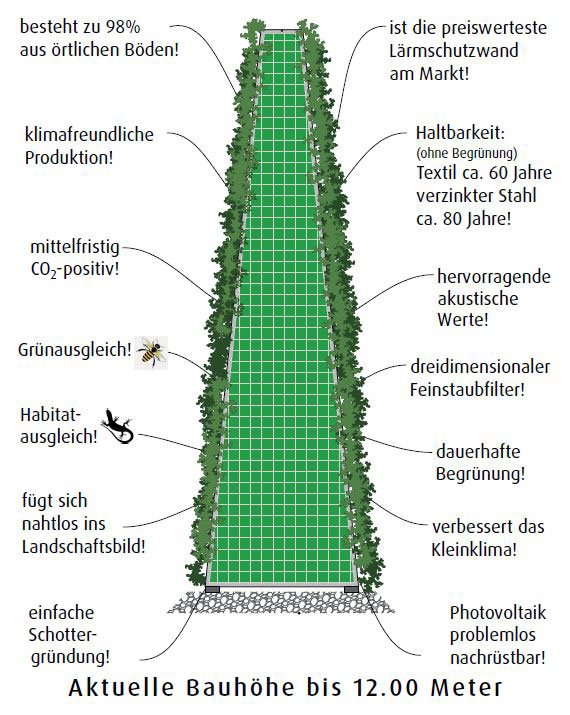
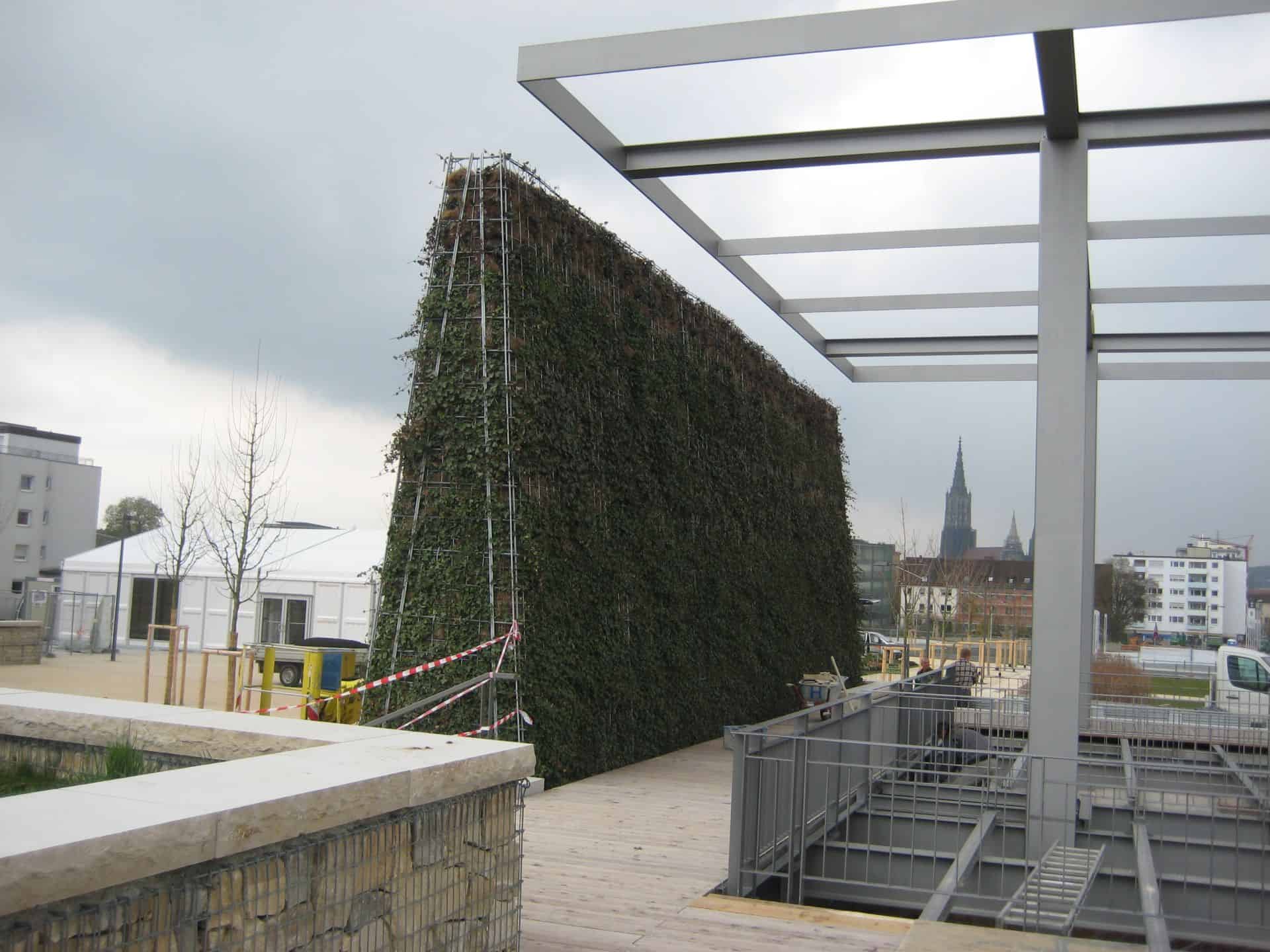
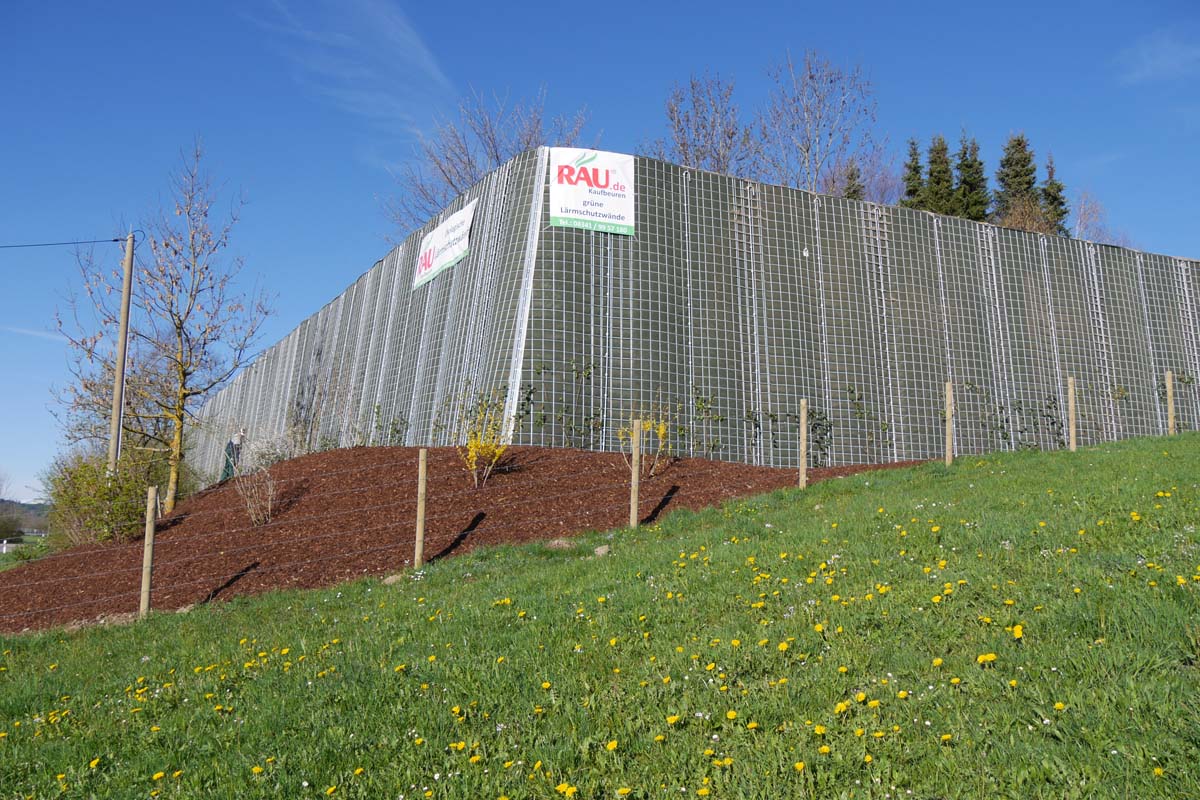
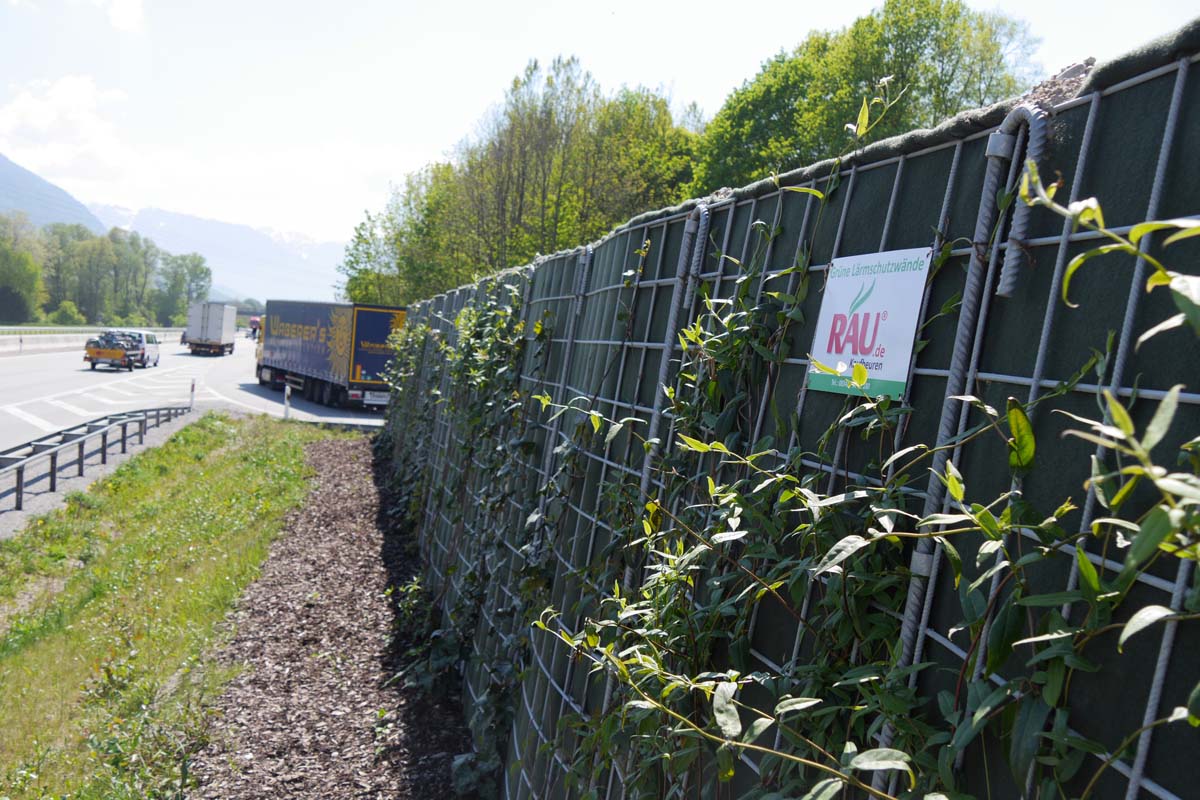
Our RAU systems are designed to absorb a broad frequency spectrum – not to reflect it. This is particularly important in Innsbruck because reflective walls can inadvertently direct sound into other residential areas. For locations in the direct vicinity of the A13 or A12 – for example in Wilten, Pradl or along the Inn – we are typically talking about wall heights of between 4 and 5 meters. For inner-city locations along the main traffic axes, two to three meters are often sufficient, provided the wall is strategically positioned.
For higher locations on the valley slope – Hötting, Mühlau, Arzl – the specific topography is an additional factor. Here, lower but strategically placed walls in combination with structural measures on the building itself often help. We examine the situation on site, talk about the expected effects and also honestly state the limits. Sometimes the wall alone is not enough, but must be combined with additional measures.
Getting to Innsbruck - the direct Allgäu route over the Fernpass
It is around 140 kilometers from Kaufbeuren to Innsbruck. The direct route leads via the B16 and B17 to Füssen, then via Reutte and the Fernpass to Imst and onto the A12 Inntalautobahn. Alternatively, there is a longer route via Munich and the A95/A93 via Garmisch-Partenkirchen. Both routes take around one and a half to two hours by truck, making Innsbruck one of the closest major Austrian cities to us. Deliveries can be planned at short notice and on a daily basis.
In Innsbruck itself, the A12 junctions Innsbruck-Mitte, Innsbruck-Ost and Innsbruck-West are the most important access points to the city area. For addresses on the southern outskirts of the city or in the low mountain range, we use the A13 junctions. We reach inner-city addresses, for example in the old town or in the narrow streets around the Golden Roof, with smaller vehicles and, if necessary, with deliveries outside peak traffic times. In the Olympic grounds and in the sports venue areas at Bergisel, we coordinate the logistics with the respective responsible parties.
For installation, we have partner companies in Tyrol who are familiar with the alpine conditions, the Tyrolean building regulations and the often limited accessibility of mining sites. For smaller projects, we bring our own fitters from the Allgäu – the short journey time often allows us to do this on the same day. For larger projects, such as noise protection structures along the A13 or in Tyrolean industrial estates, we coordinate with local construction companies. You always have a contact person at RAU.bayern who knows the system and accompanies the project from planning to commissioning. The proximity between Kaufbeuren and Innsbruck is a practical advantage that also pays off if service is required at a later date.


