
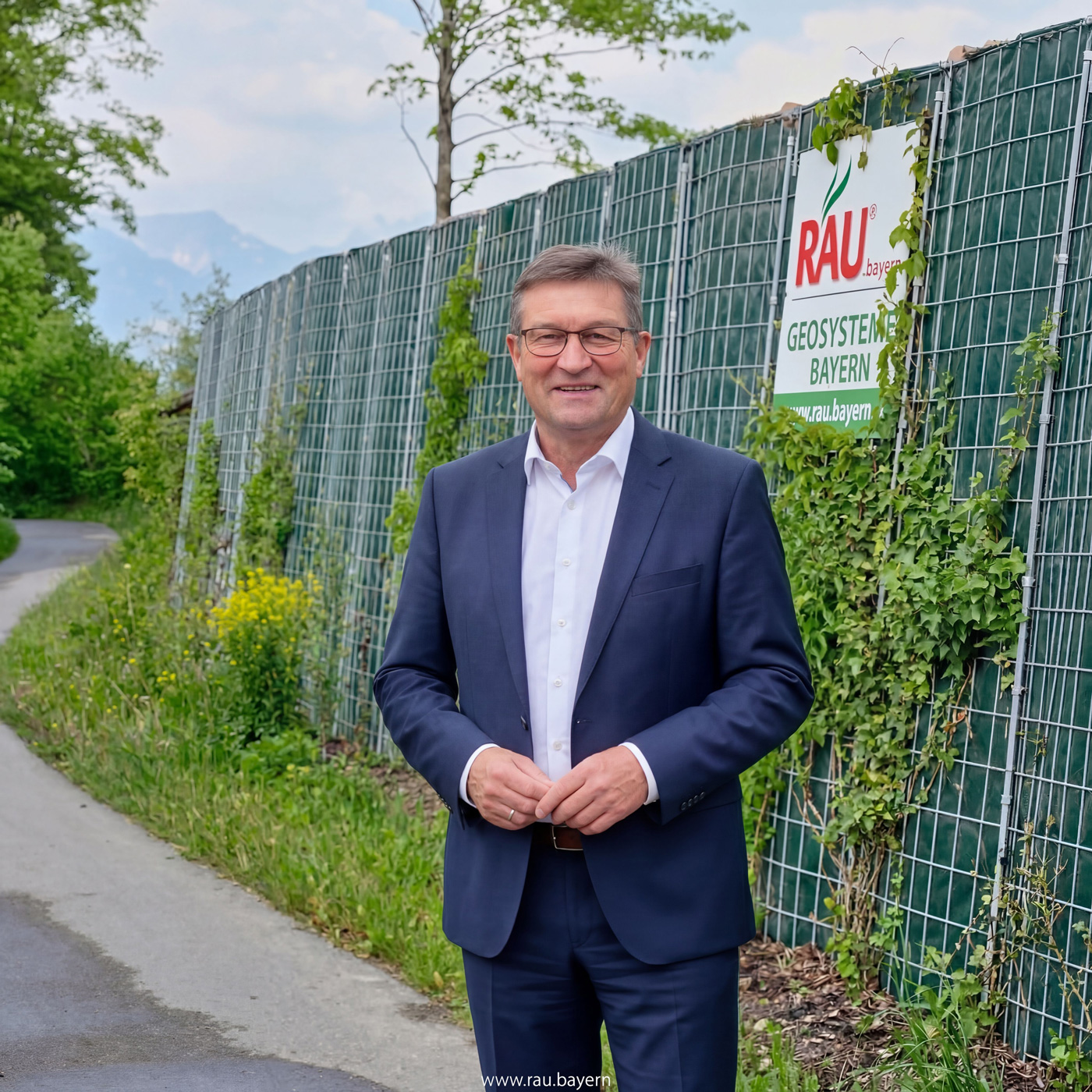
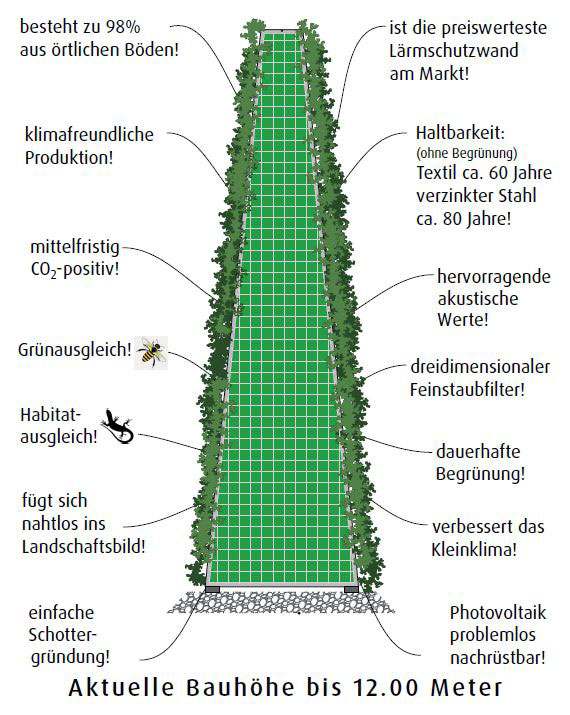
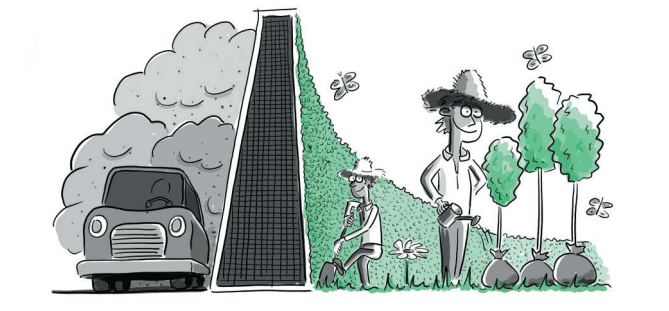
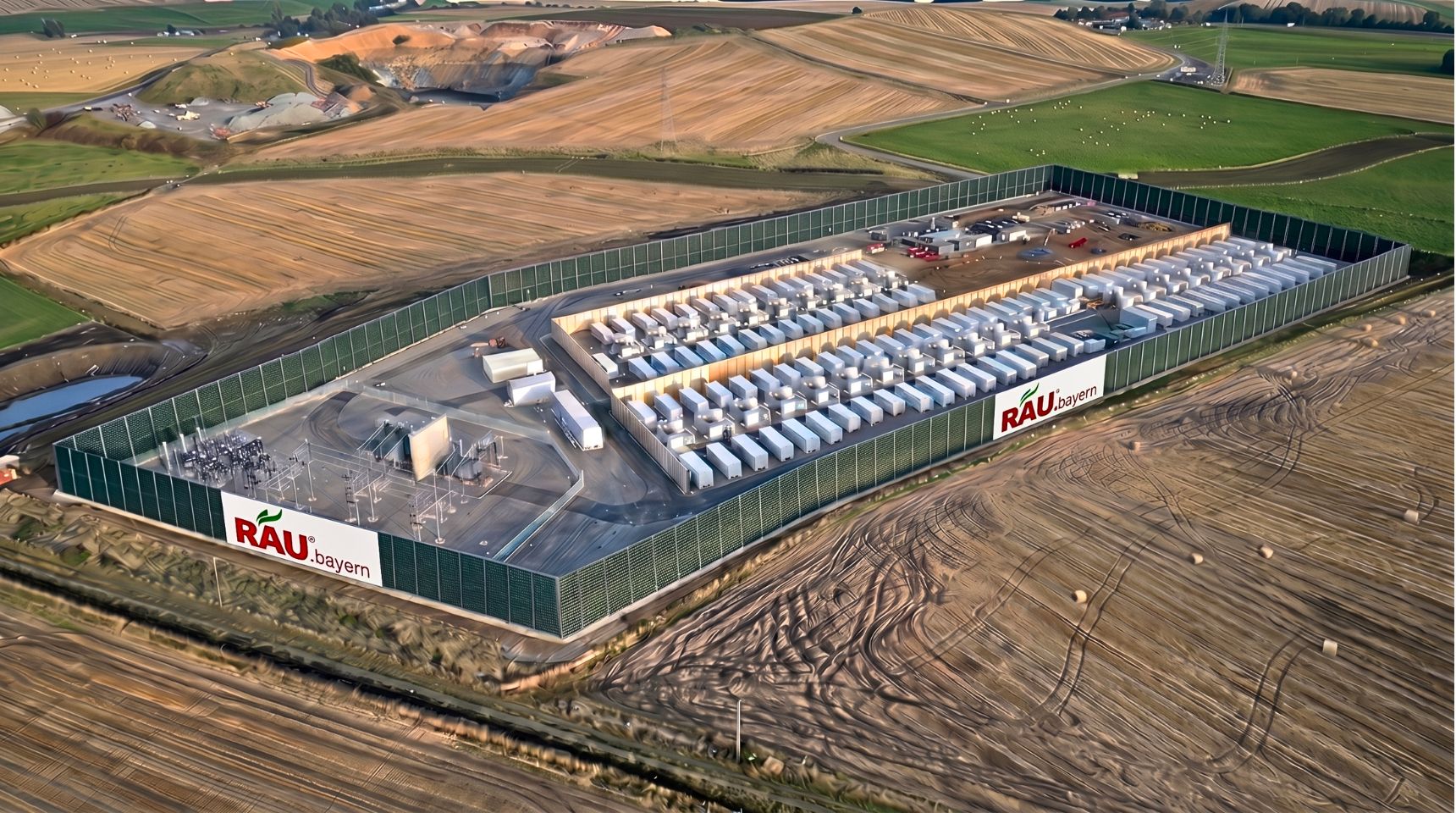
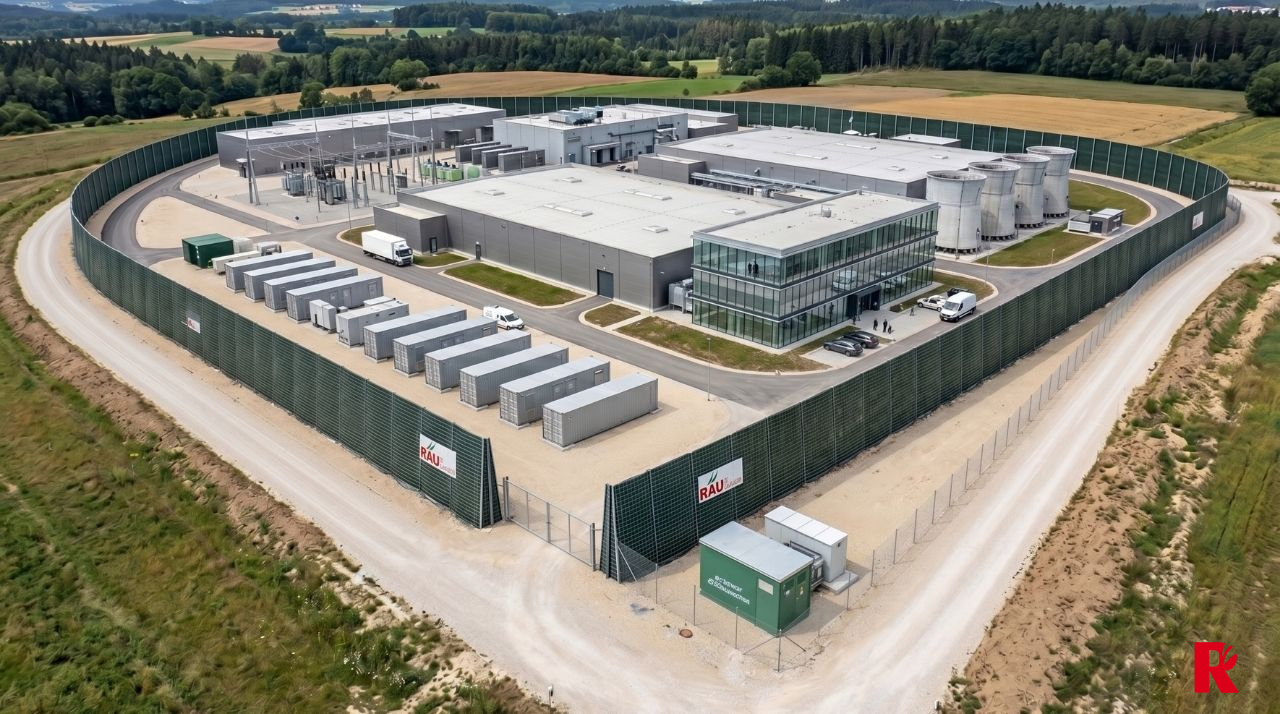
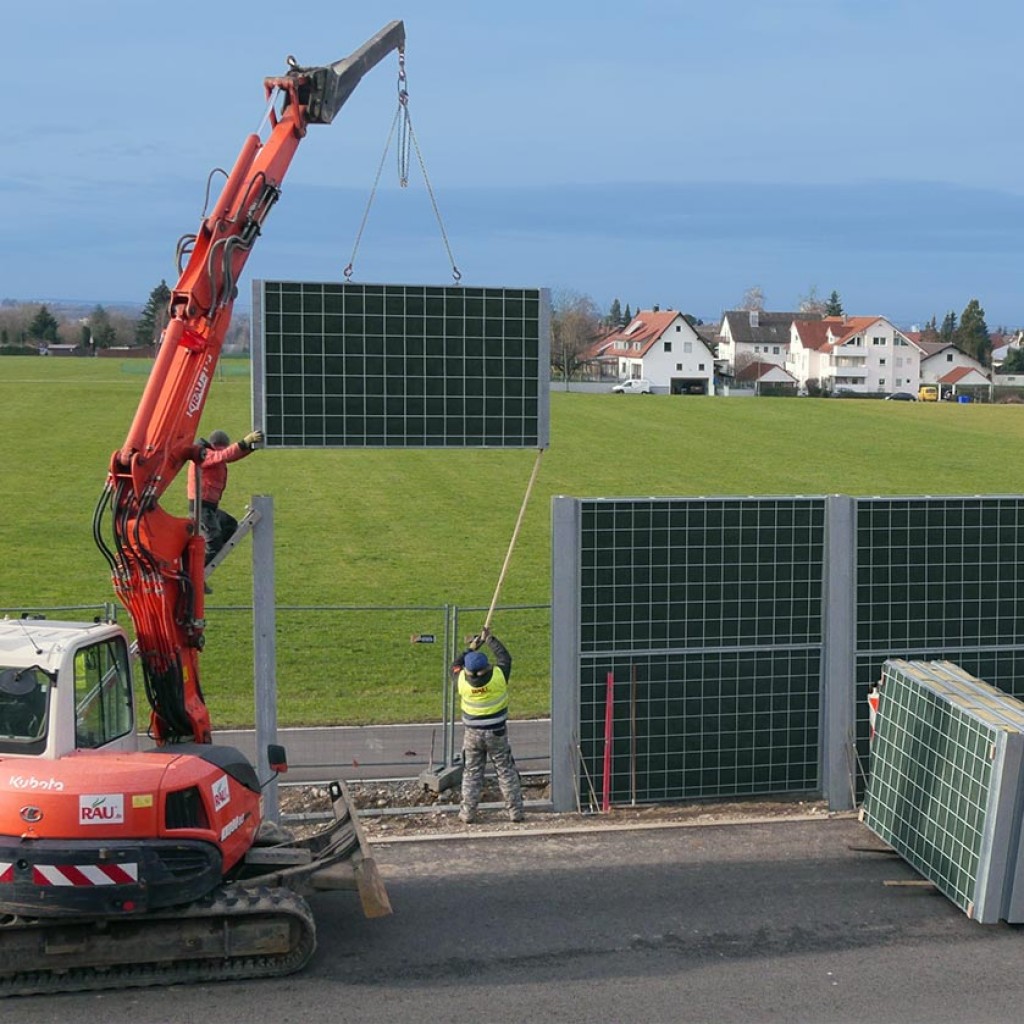
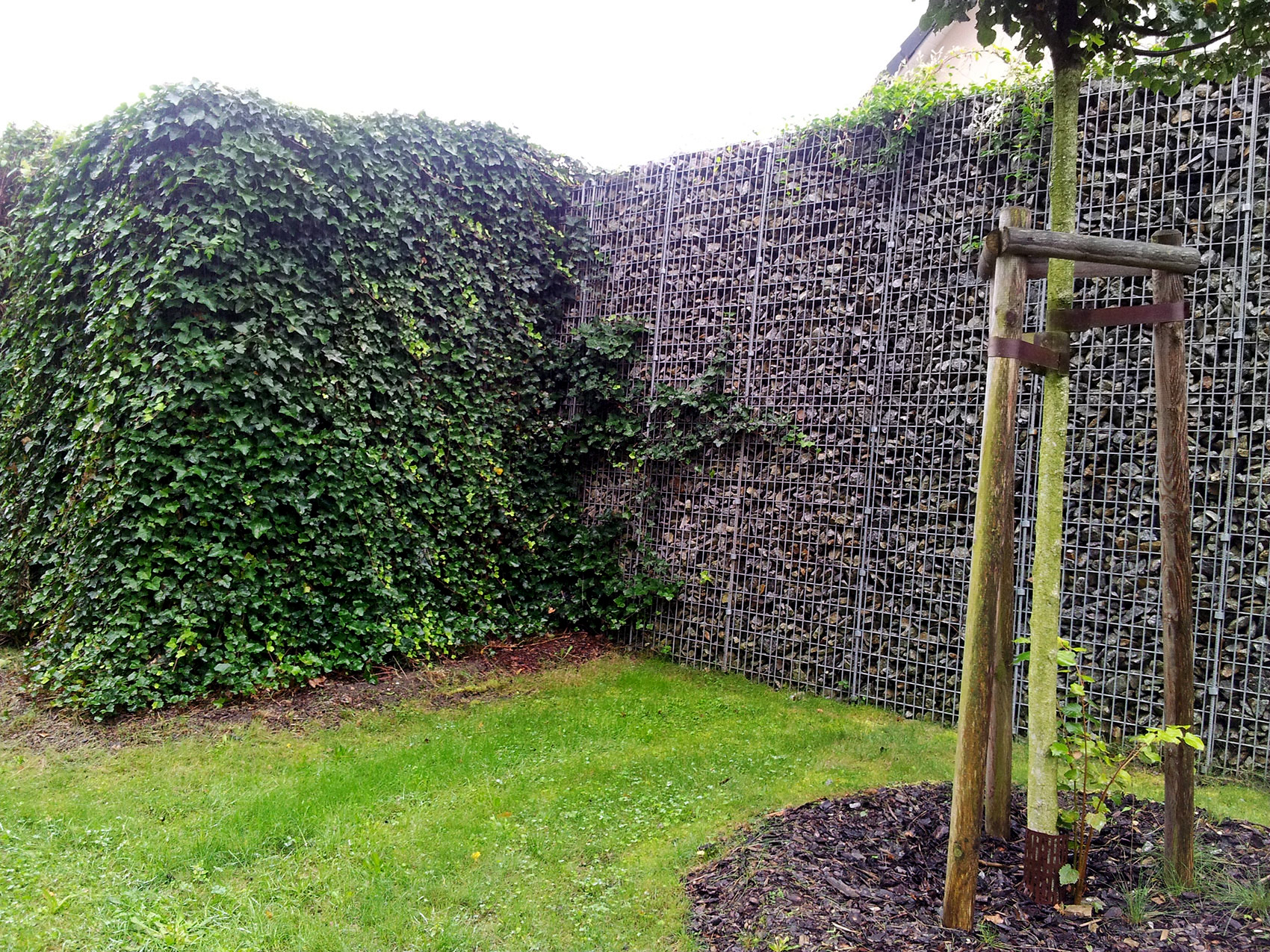
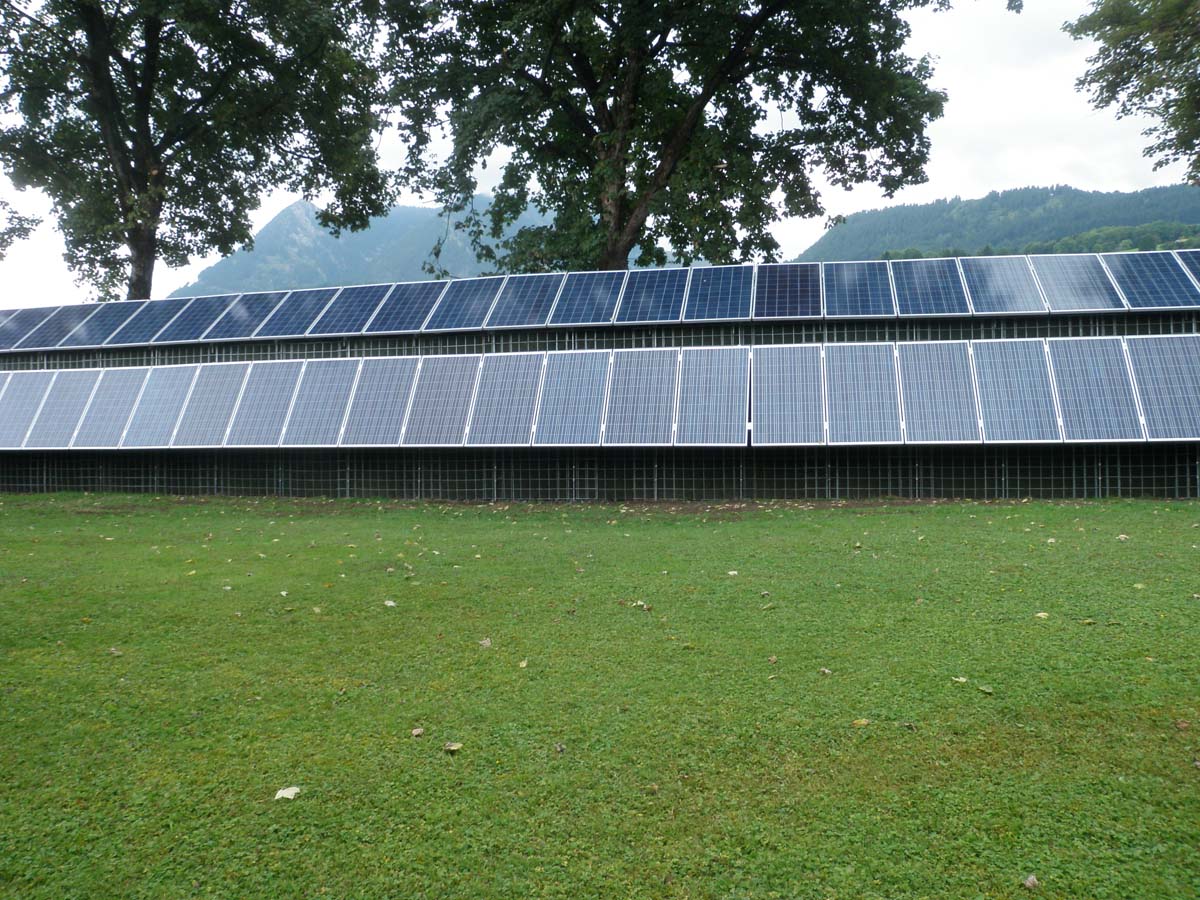
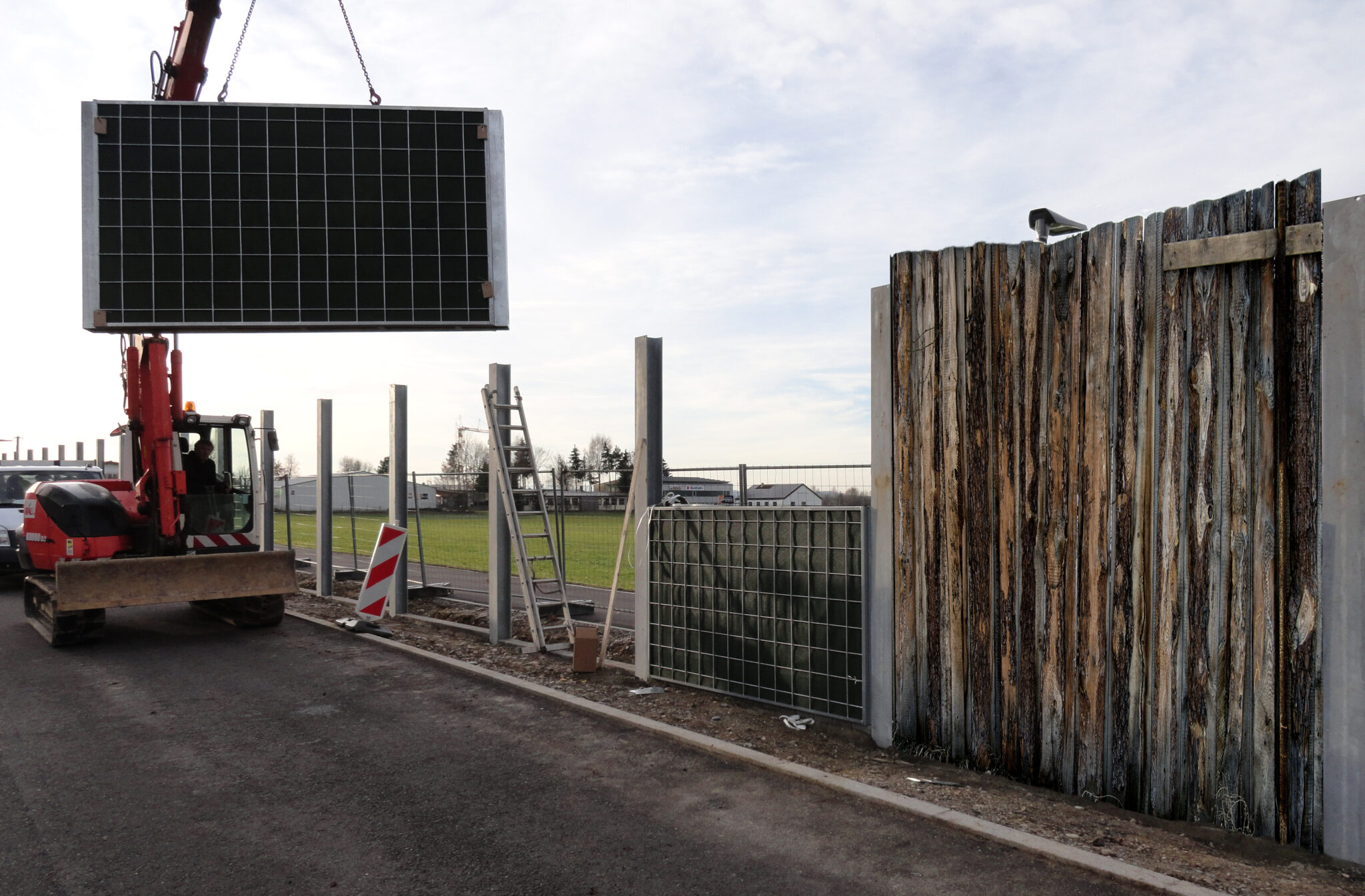
A noise barrier is a good option for BESS systems when noise emission points are located in only a few directions, cooling air and maintenance access must remain unobstructed, and future expansions are anticipated; an enclosure should be considered when residential buildings surround the system on all sides. RAU.bayern typically designs the RAU Bess noise barrier system as a wall. An enclosure encloses the containers and must provide its own solutions for cooling, fire protection, and access via dedicated systems, which increases construction and operating costs. The wall remains open, allowing warm air to escape upward and enabling the system to expand as the facility grows. We therefore view the enclosure as an exception for inner-city locations. The wall is filled with soil sourced locally, greened at the base without irrigation, and designed with fine dust protection; a Climate Handprint is available for the R3 climate wall.
When does the accessibility of the containers call for a wall instead of an enclosure?
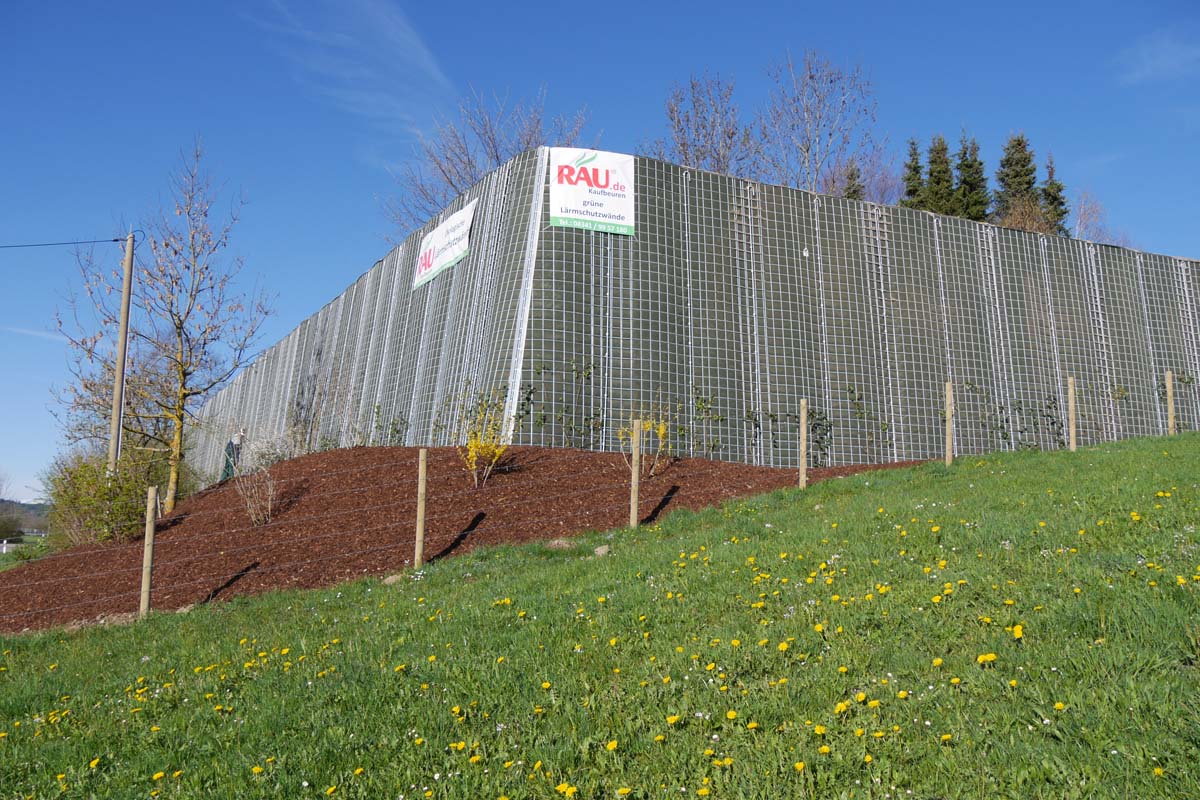
The accessibility of the containers makes a wall a better choice than an enclosure whenever battery modules, cooling systems, or inverters need to be regularly maintained, replaced, or moved by crane during operation, because a wall leaves these access routes open, whereas an enclosure requires all access to be organized through gates, roof openings, or removable components. Battery storage systems are designed to allow for module replacement over their operational lifespan; containers are opened, racks are pulled out, and cooling units are replaced. With a wall, this is done from the maintenance aisle, which lies between the wall and the row of containers. With an enclosure, the space above the containers must be high enough for crane operations, or the roof must be opened—which negates sound insulation during the work. Added to this is the fire department, which must be able to access the containers in the event of an emergency; an enclosure hinders access and smoke extraction and requires its own fire safety planning. The wall, on the other hand, can be designed with integrated soundproof doors or staggered sections to ensure that emergency exits remain clear, as demonstrated by our climate wall system in Pfaffenhofen an der Ilm with two doors. For sites where containers are located close to the property line, we use the RAU Rock Extensiv with a minimum width of 13 cm. The noise protection system overview shows which systems are suitable in both cases.
Which locations warrant the use of an enclosure rather than a noise barrier?
An enclosure rather than a noise barrier is justified at sites where residential buildings surround the facility on all sides at a short distance, where windows are located above the potential height of the wall, or where the authorities require an enclosed design for urban planning reasons, such as for storage facilities on inner-city substation sites. In these cases, a wall can no longer block the line of sight to higher-level windows, and an enclosure with sound-attenuated ventilation becomes the solution. Nevertheless, we recommend examining two alternatives first. First, a taller wall with varying heights—such as the one we built in Fehraltorf, ranging from 3.30 to 5.00 m—which also shields windows on the upper floor. Second, relocating the main sources—that is, cooling systems and inverters—to the center of the site, so that the containers themselves serve as a shield and the wall only needs to block the remaining portions. Only if both of these measures prove insufficient does enclosure make sense. Its disadvantages include the longer construction time, the need for its own cooling and fire protection systems, and the lack of scalability if additional containers are added later. The wall, on the other hand, can be expanded as needed by attaching additional sections to existing connections; its vegetation at the base—which requires no irrigation—and its protection against fine particulate matter are also advantages for the neighborhood that an enclosure does not offer. We’ve compiled information on regulations and planning under “Good to Know.”


