
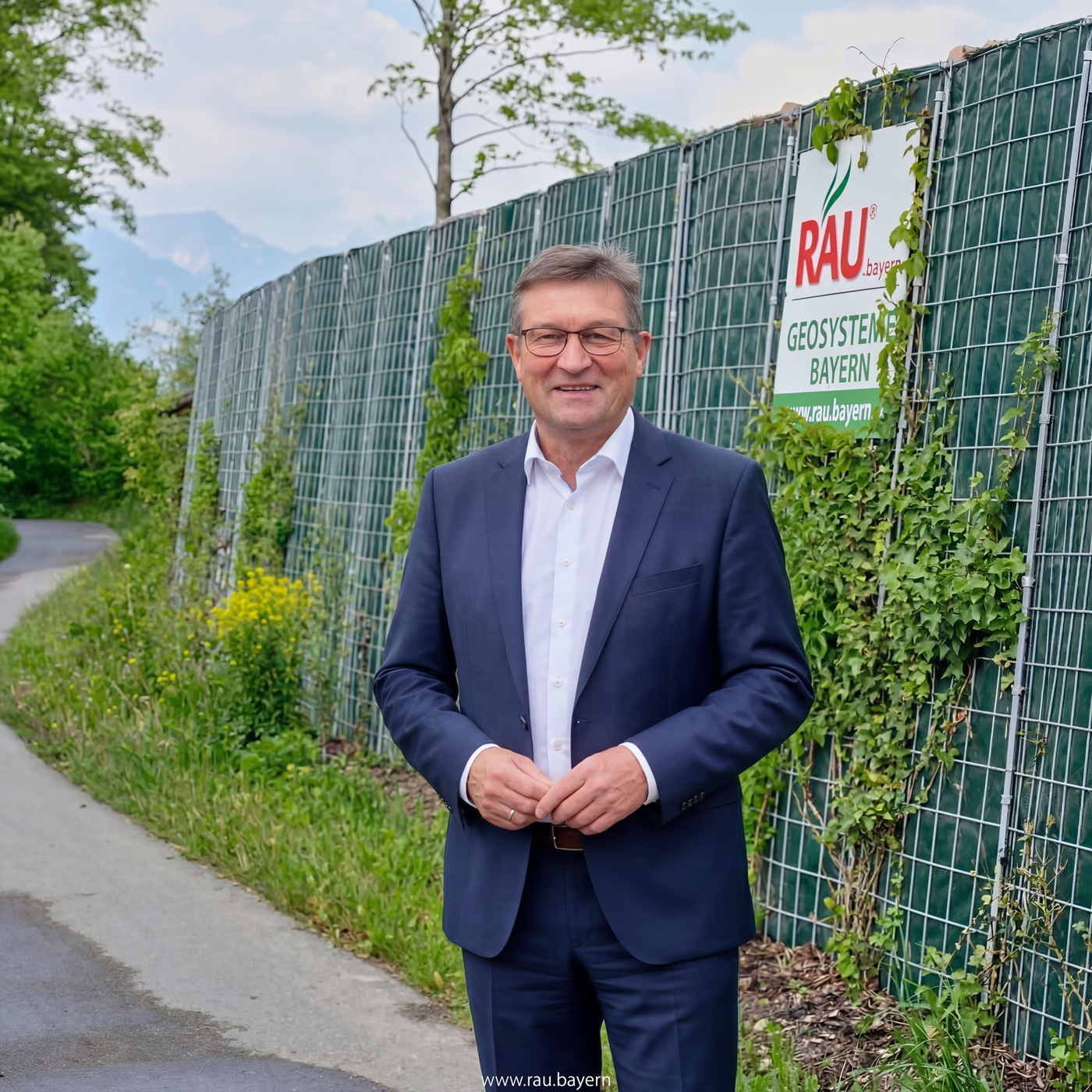
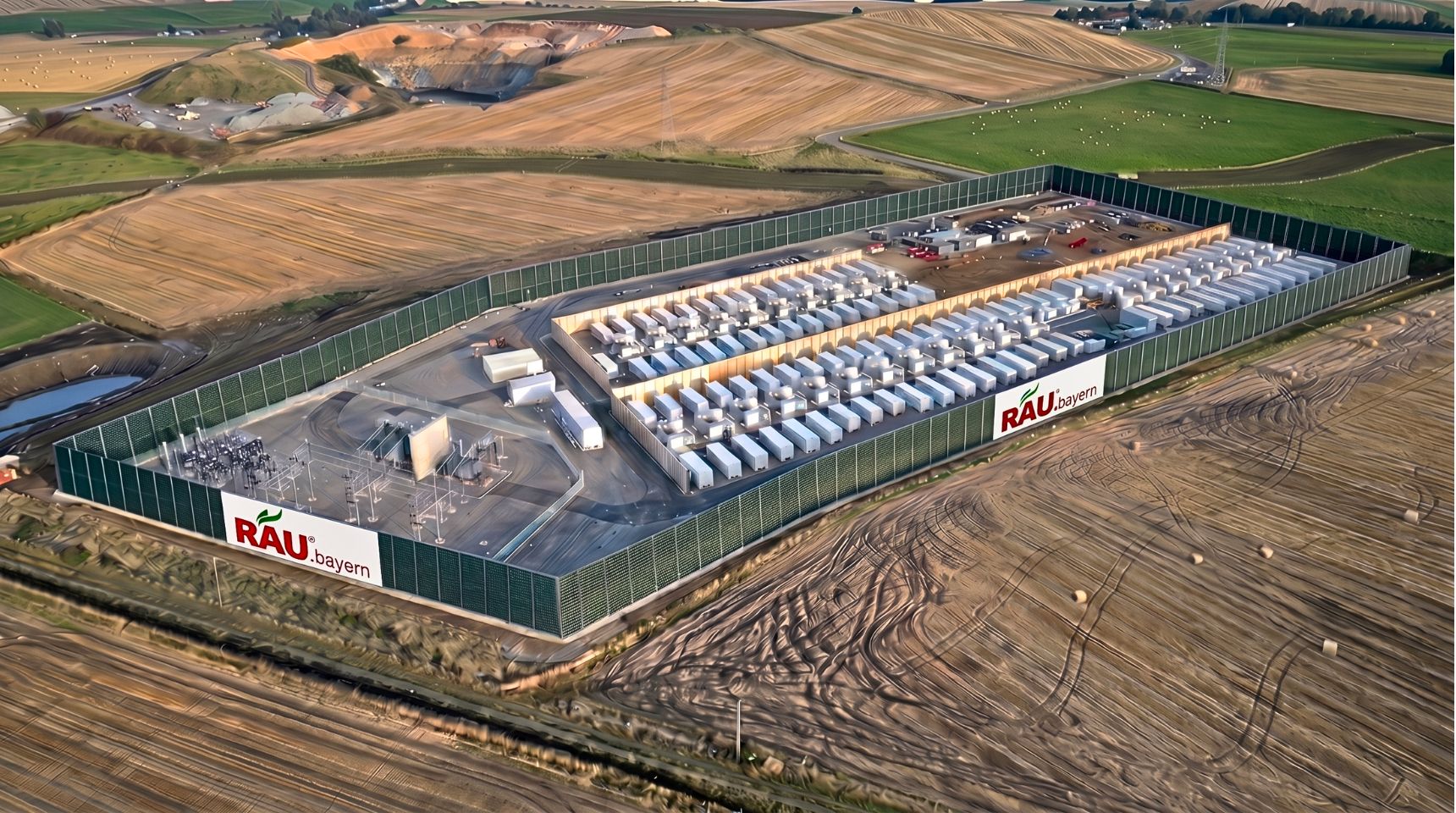
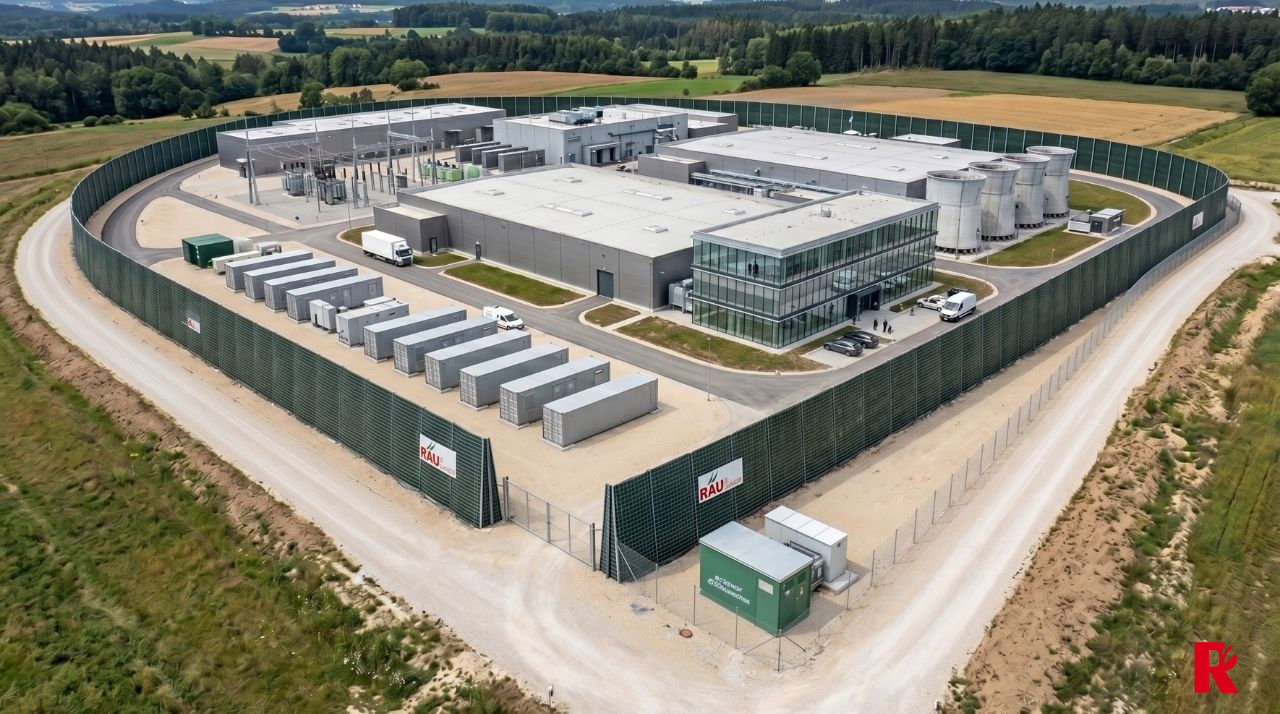
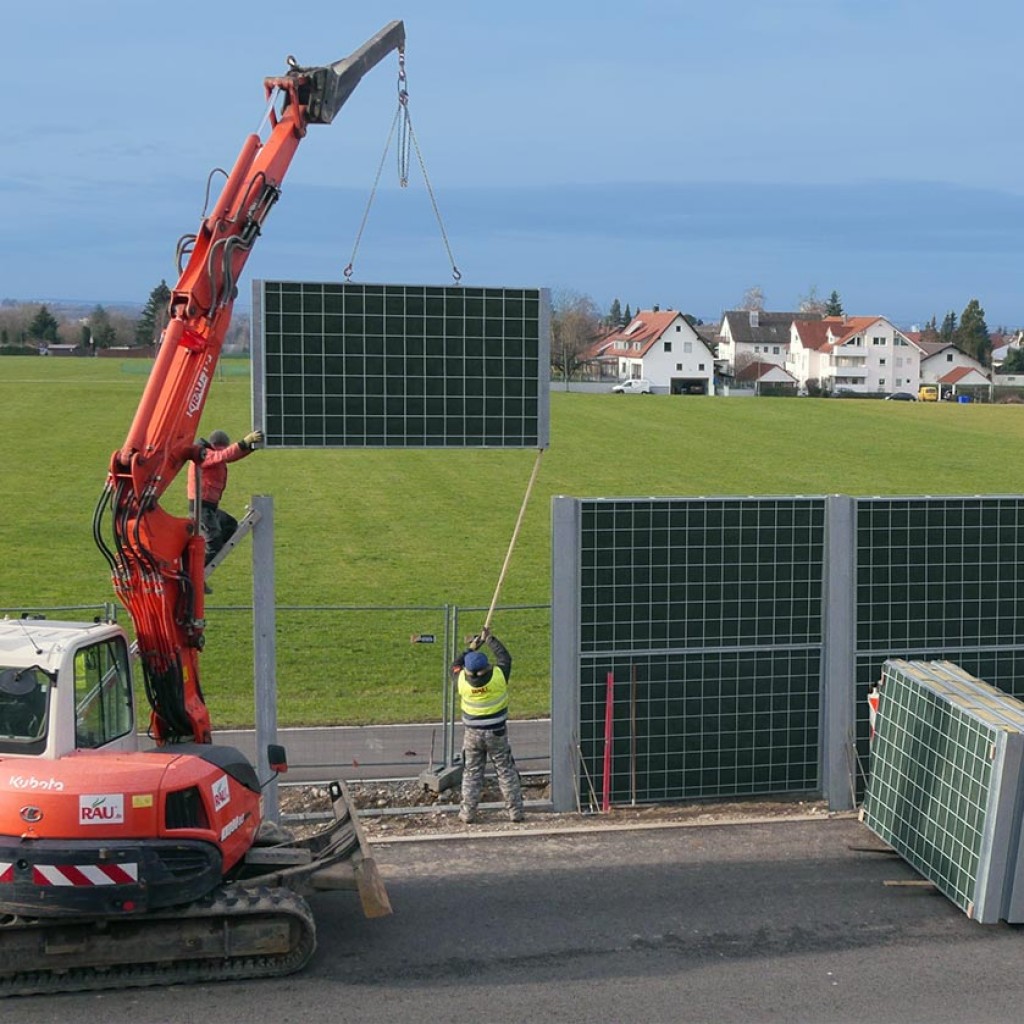
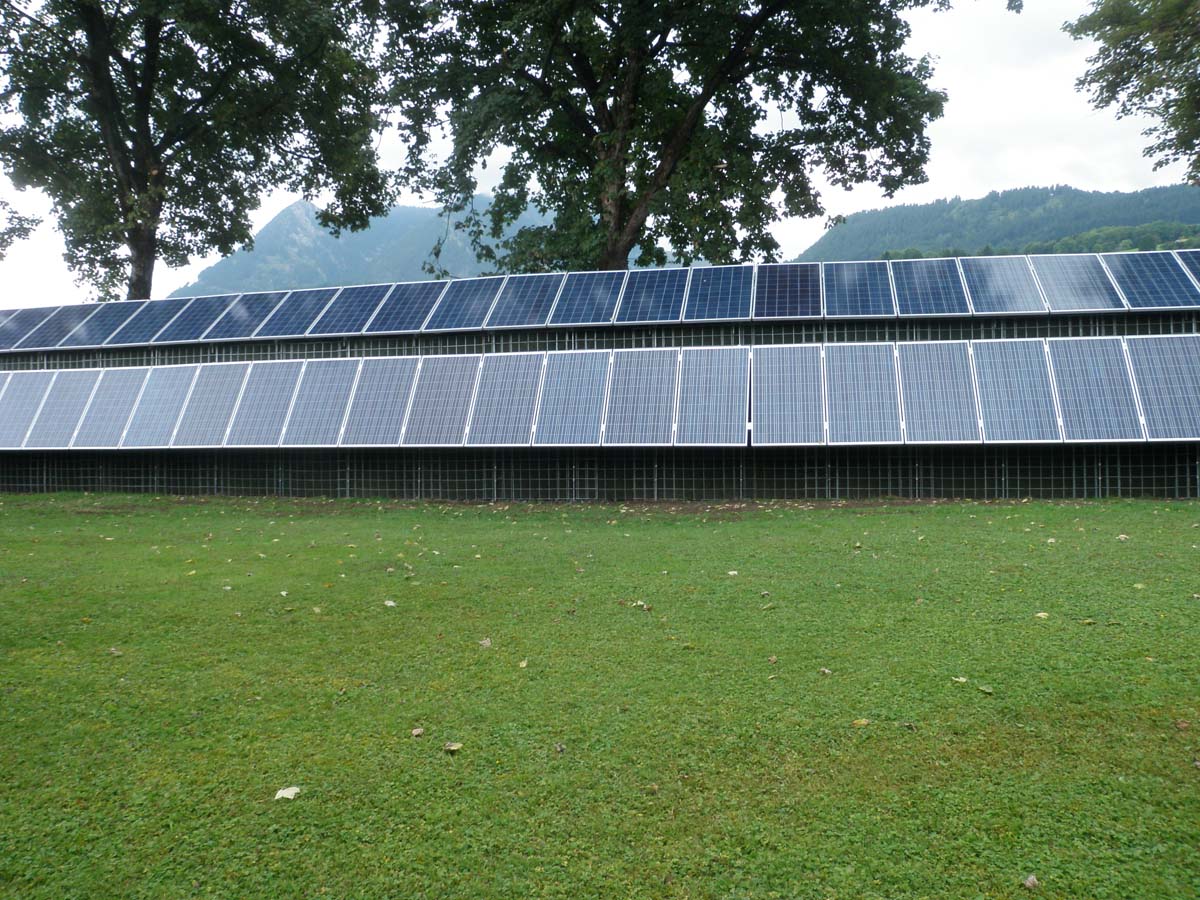
Inverters in solar farms and at large-scale storage facilities generate high-frequency sounds and fan noise that carry surprisingly far in quiet surroundings. Ground-mounted solar farms are often built on the outskirts of towns or in predominantly agricultural areas, where individual farms become the primary locations affected by noise. We shield central inverters, transformer stations, and storage containers with highly absorbent, green noise barriers that are positioned close to the source and interrupt sound propagation. For operators of photovoltaic systems, the combination is an obvious choice—our wall systems can be equipped with integrated solar panels and thus generate electricity themselves. Planning, manufacturing, installation, and maintenance are all handled in-house from our Kaufbeuren location, including tender documents for the contract award upon request.

Integrating Solar Farms and Noise Control
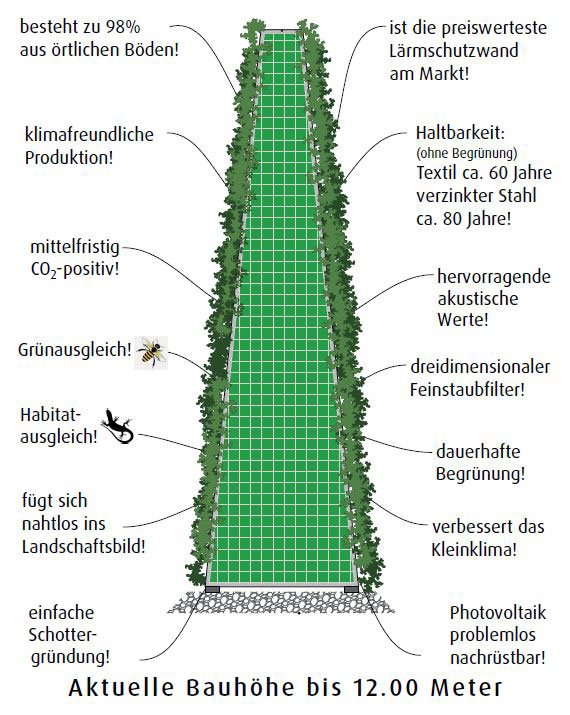
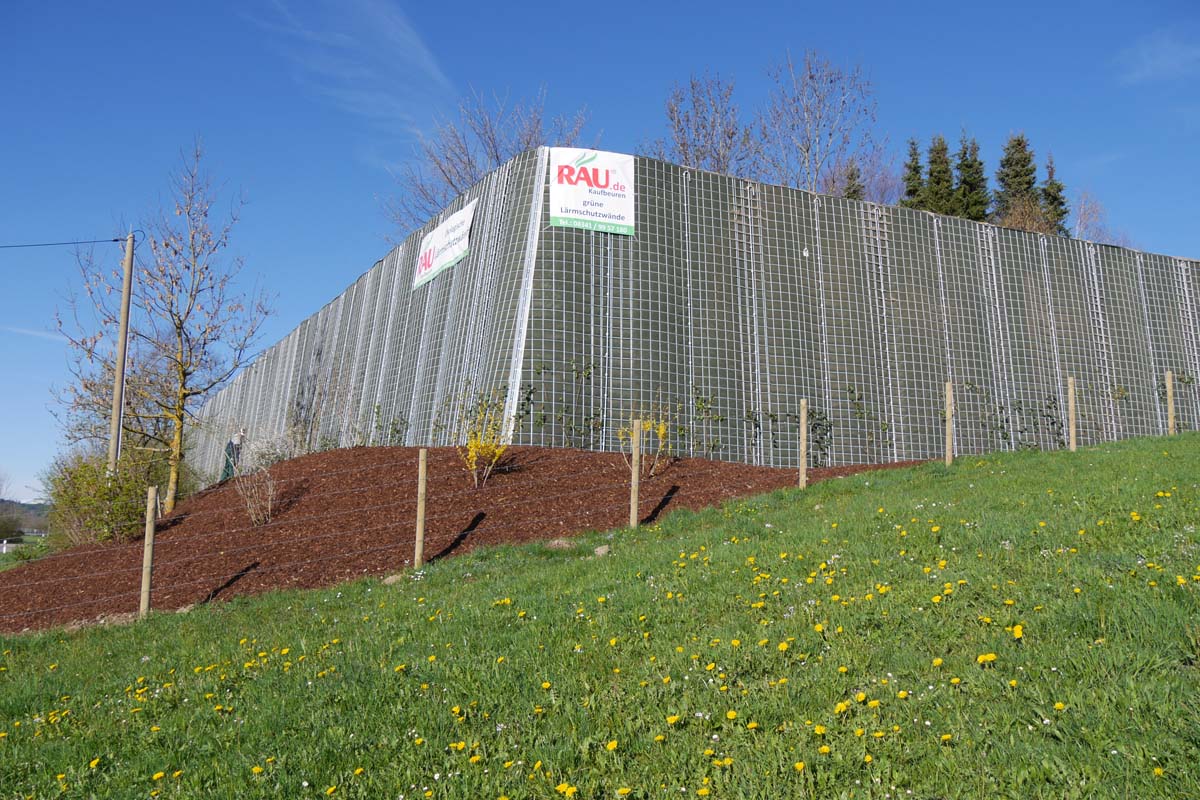
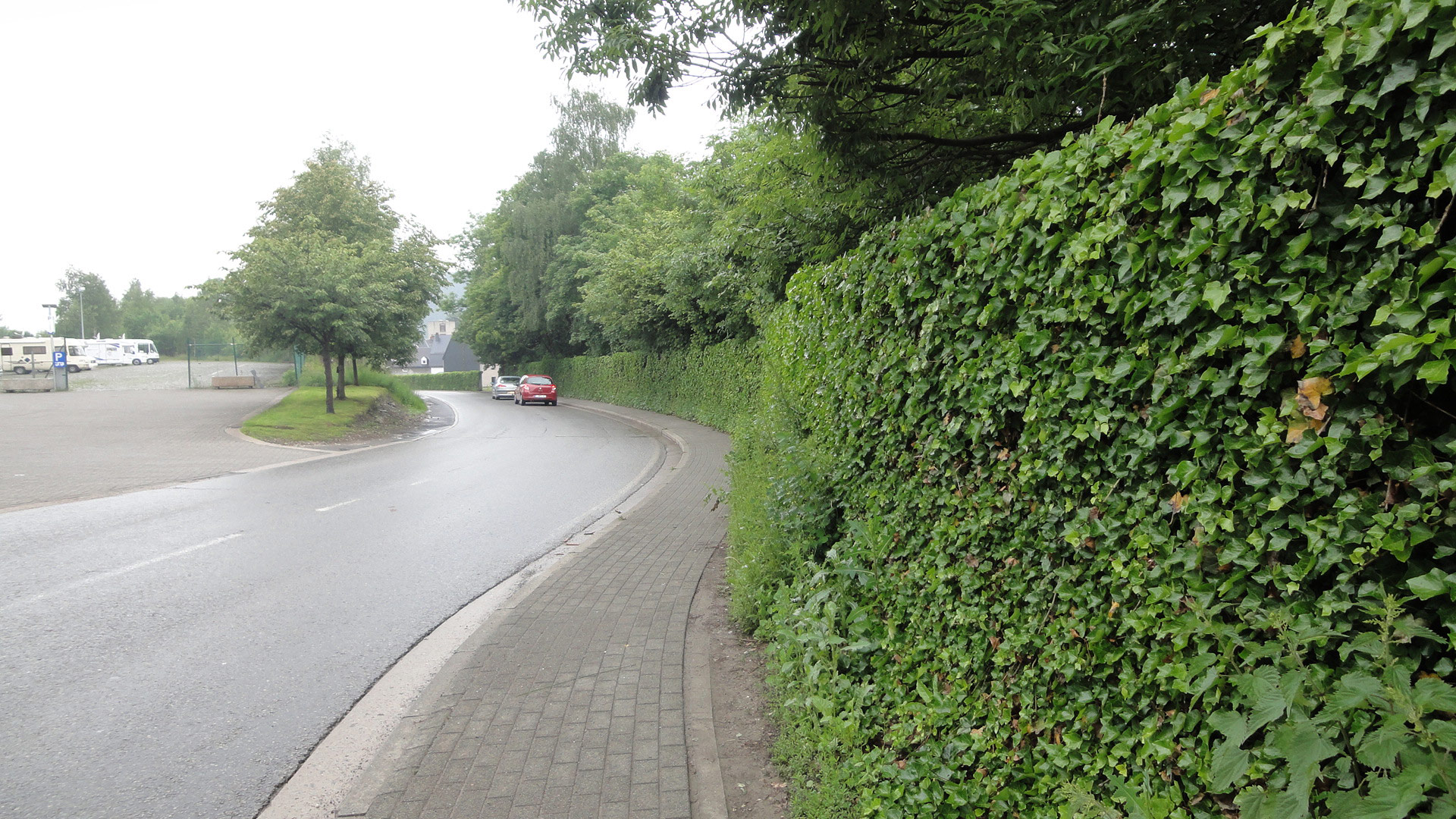
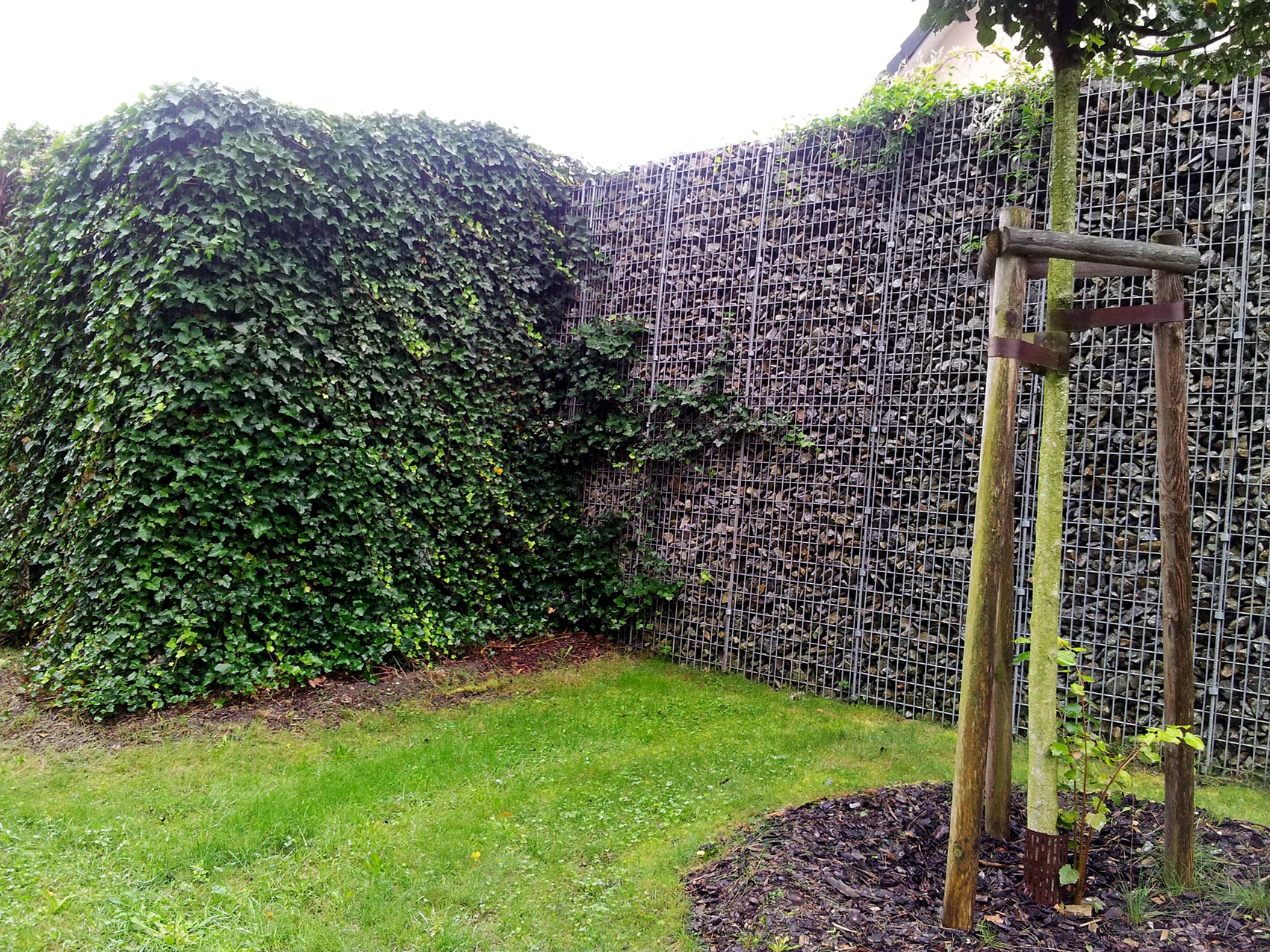
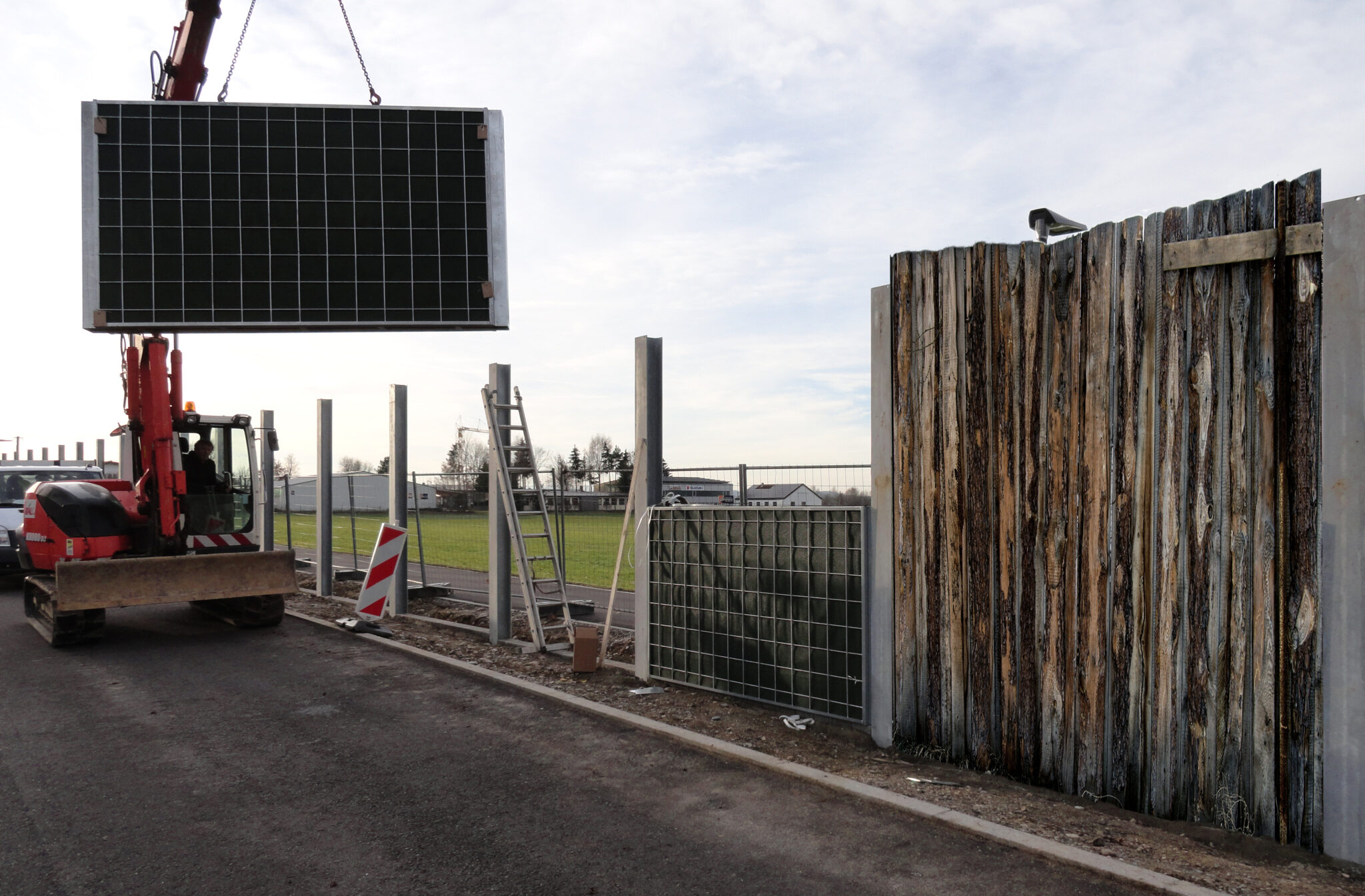
High-frequency single tones from PV inverters and frequency converters are more noticeable in the neighborhood than their sound level would suggest, and tones with distinct pitch are weighted more heavily in the assessment. Wall installations close to the source around inverter stations are therefore more effective than large-scale shielding at the edge of the park—the wall intercepts the sound before it spreads across the open area. Anyone investing in photovoltaics anyway can turn the sound barrier into a power-generating surface; our noise barrier with integrated photovoltaics demonstrates how this works. The wall systems themselves are typically filled with locally sourced soil and mineral raw materials, which is particularly cost-effective for open-field projects where earthwork is already underway. Vegetation integrates the structures into the landscape and traps fine dust without the need to install an irrigation system. We provide project developers with construction drawings and bid specifications so that the noise barrier is documented in the park’s permitting process from the outset and objections from neighbors can be addressed objectively. This saves time spent on back-and-forth coordination later in the process.
Documentation for Approval and Operation
Permitting authorities are increasingly requiring reliable assessments of noise levels for ground-mounted solar installations, particularly when storage systems and inverters continue to operate at night. A noise impact assessment with a noise forecast specifies the noise levels that must be complied with at the relevant exposure locations and the noise mitigation measures required to achieve this. We translate these requirements into specific wall geometries and select the appropriate system from our modular range—ranging from RAU Rock Extensiv, with a minimum width of 13 cm for confined substation environments, to RAU Klimawand R3, whose Climate Handprint offsets emissions from raw materials, production, transport, and construction; the CO2 footprint has been verified by KlimAktiv. Installation is carried out using a turnkey construction method by our teams or as a kit that the park’s general contractor installs using their own equipment. After commissioning, our service teams will handle inspection and maintenance upon request. As a member of the German Association for Noise Protection along Transportation Routes, we actively contribute to the technical discussion regarding facility noise in our projects and ensure that the design remains up to date with current best practices.


