
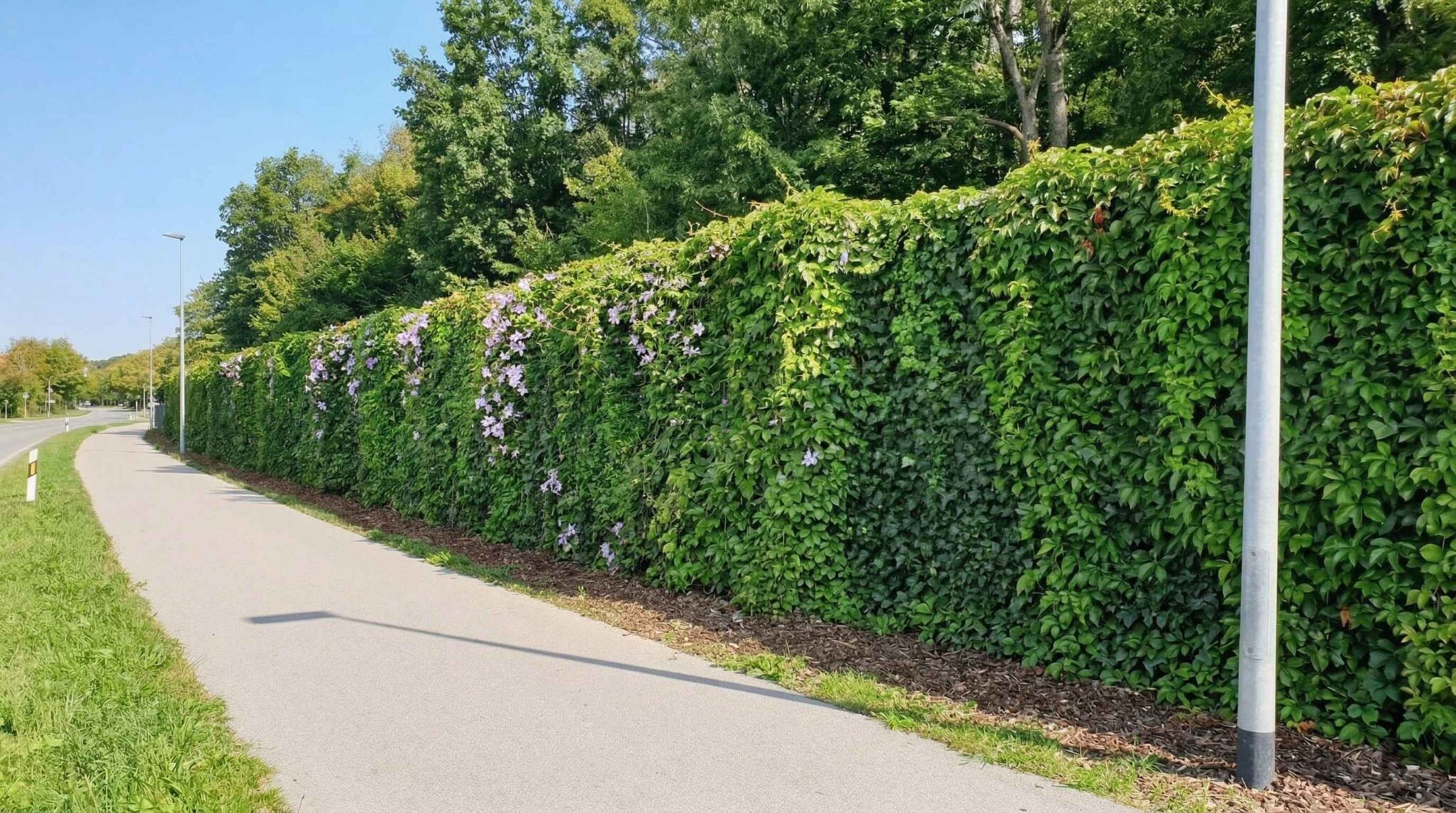
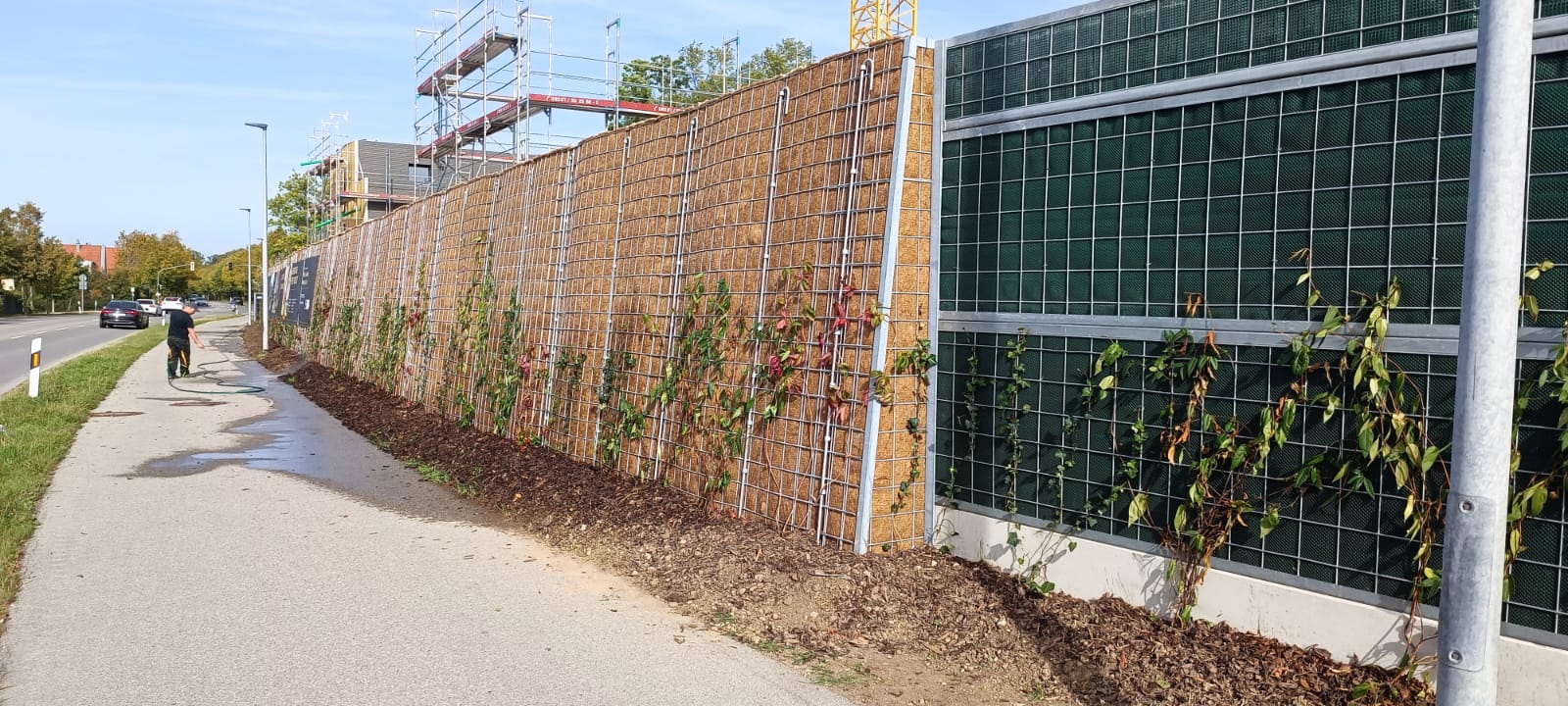
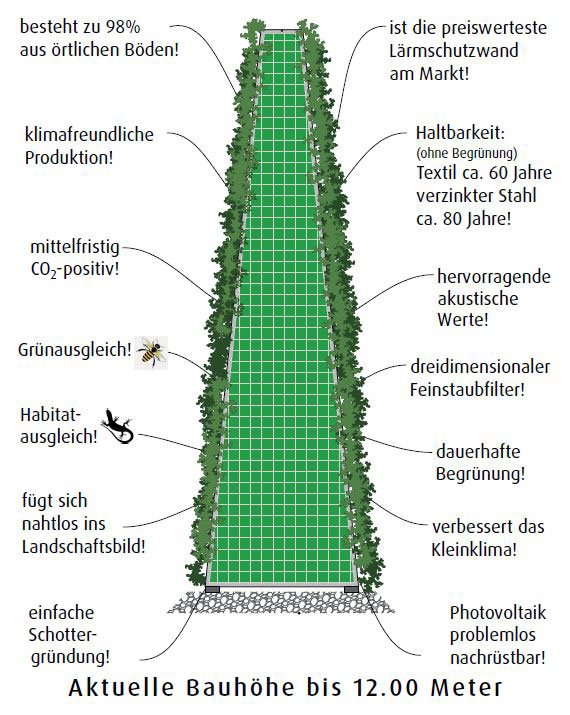
Villach is a transportation hub of European stature. The A10 Tauernautobahn runs through the city to the south, the Karawanken Tunnel connects Carinthia with Slovenia and Italy, and the Villach Hauptbahnhof railroad junction is one of the most important in southern Austria for freight and passenger traffic heading south. Added to this is the industrial location of Villach with the Infineon plant, which is one of the largest semiconductor locations in Europe and generates a considerable amount of traffic. Those who live in Lind, Landskron or St. Magdalen are familiar with the mixture of rail, road and industrial traffic; those who live in the city center or on the Drau are more likely to experience the inner-city traffic and tourism around the Drau and the nearby lakes. At RAU.bayern, we supply noise barriers from the Allgäu to Villach – to private developers, commercial enterprises, industrial companies and municipal clients. Our focus is on green noise protection systems that combine an acoustic effect with ecological added value. We advise you personally, examine your situation on site and develop a proposal that really suits your situation – not the next standard offer from the drawer.

Traffic junction south - why Villach is acoustically special
Few cities of comparable size have such a dense noise backdrop as Villach. The A10 Tauernautobahn is the most important link between Central Europe and Northern Italy; the proportion of heavy traffic is correspondingly high, with peaks before the major Italian vacations and during the peak travel season. The Villach railroad junction is a central point in the southern Austrian rail network, with shunting operations around the clock and a high frequency of passenger and freight trains. The Karawanken tunnel traffic adds to this for the districts south of the A10.
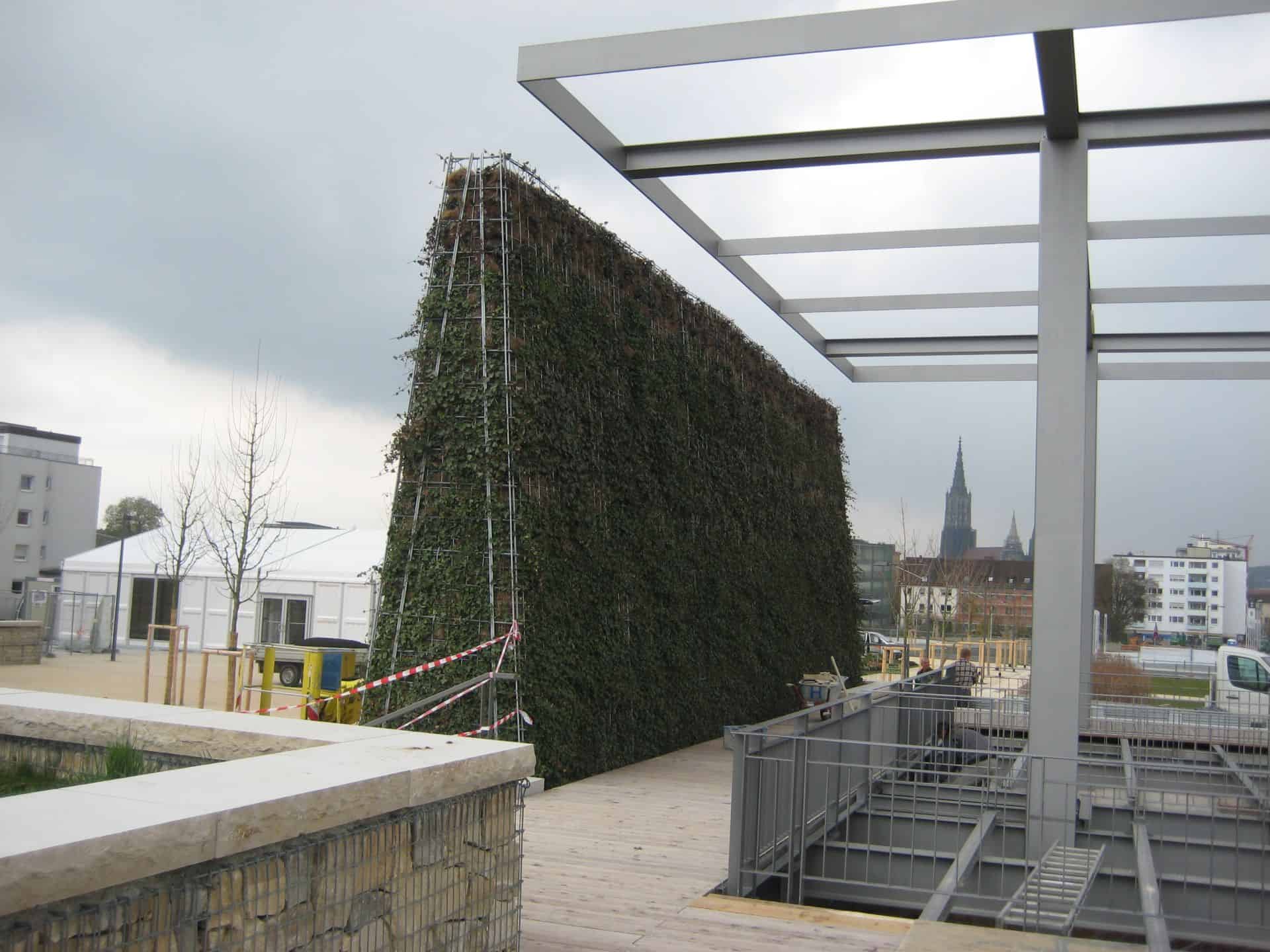
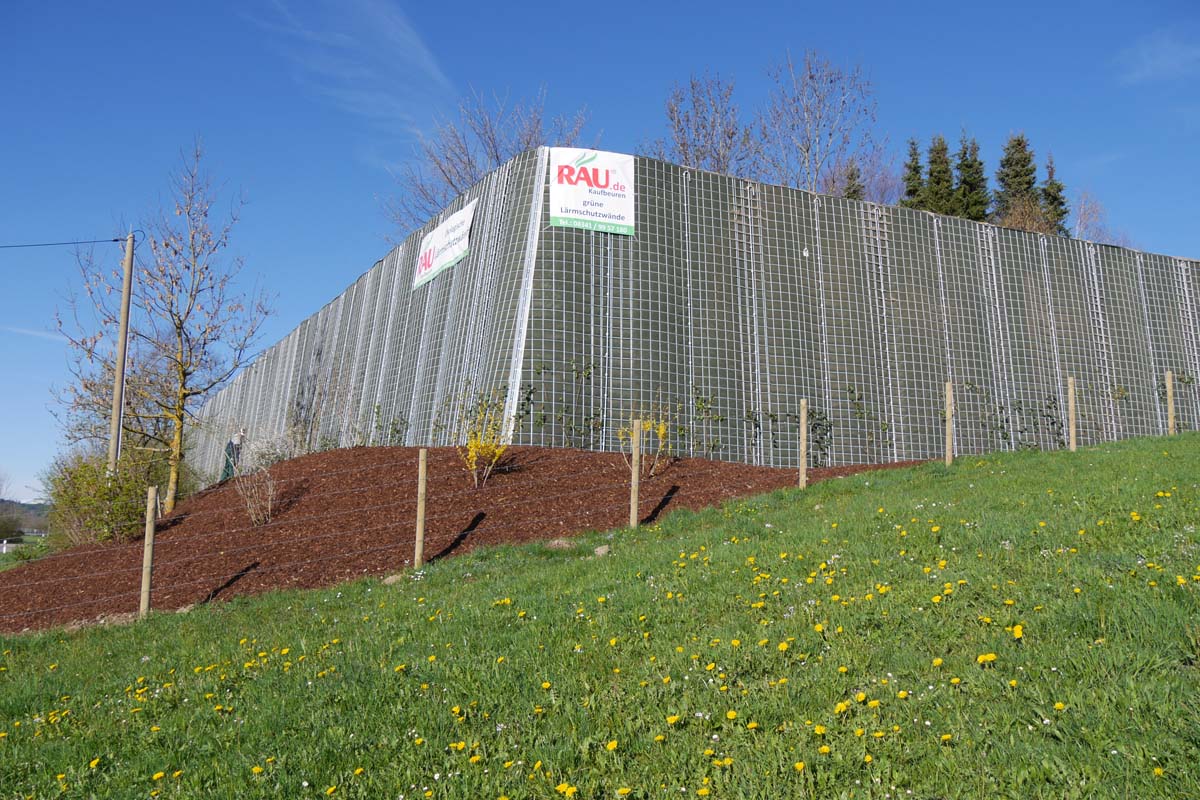
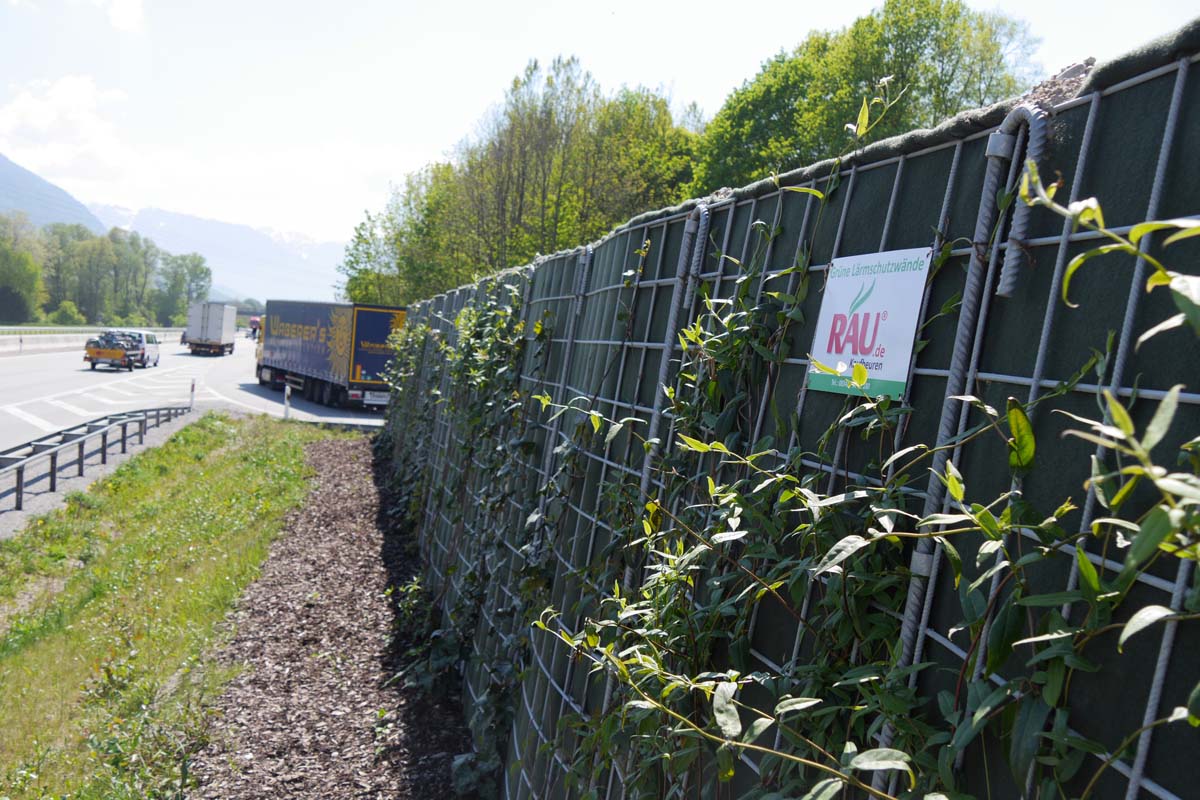
For private noise protection, this means that the location of your property plays a major role in determining the required wall height and type of construction. In Lind or St. Magdalen, where residential areas border directly on the A10, we are often talking about walls between four and five meters high, with absorbent construction and corresponding statics. In Landskron or on Lake Faak, there are often combined loads from rail and road traffic, which makes it sensible to measure the sound level before planning the wall.
For industrial sites such as the area around the Infineon plant, noise protection requirements are common from several directions: protection of local residents from plant noise, protection of employees from traffic noise and, where applicable, requirements from the operating license. The temporal characteristics also differ: while industrial plants often run continuously, rail traffic has its own peaks, and the highway is particularly busy at travel times. We supply wall systems that absorb different frequency ranges and can be modularly adapted to the respective requirements.
For all projects in Villach, it is important to deal with the exact source of the noise. Railroad noise has different frequency characteristics than truck noise, while industrial noise differs from both. We discuss this openly with you and only then propose a specific system.
Approach to Villach - the short Tauern route
It is around 380 kilometers from Kaufbeuren to Villach. The route leads via the A7 to the north, the A8 towards Salzburg and from there the A10 Tauernautobahn through the Tauern and Katschberg tunnels directly to Villach. We expect the journey to take around four hours by truck – Villach is easily accessible logistically via the Tauern route. During the travel season, we coordinate delivery times in such a way that we avoid the A10 traffic jams, which significantly improves adherence to delivery dates.
In Villach itself, the A10 junctions Villach-West, Villach-Faaker See and Villach-Ost are the most important access points to the urban area. Industrial connections around the Infineon plant and the industrial area are easily accessible via the A10. Inner-city addresses, for example along the Drau or in the Villach city center area, sometimes require smaller vehicles or coordination with the city. For locations near the lake at Faaker See or Ossiacher See, we coordinate deliveries in such a way that peak tourist times are not affected.
For installation, we work with experienced partner companies in Carinthia who know the region and are familiar with the climatic, topographical and official particularities. For smaller private projects, we use our own fitters from the Allgäu region, while for larger industrial projects we coordinate with local construction companies. You always have a contact person at RAU.bayern who knows the system and accompanies the project from planning to commissioning. This combination of manufacturer responsibility and regional implementation has proved particularly successful for the mix of industrial, tourist and residential locations in the Villach region – it ensures short response times when service is required.


