
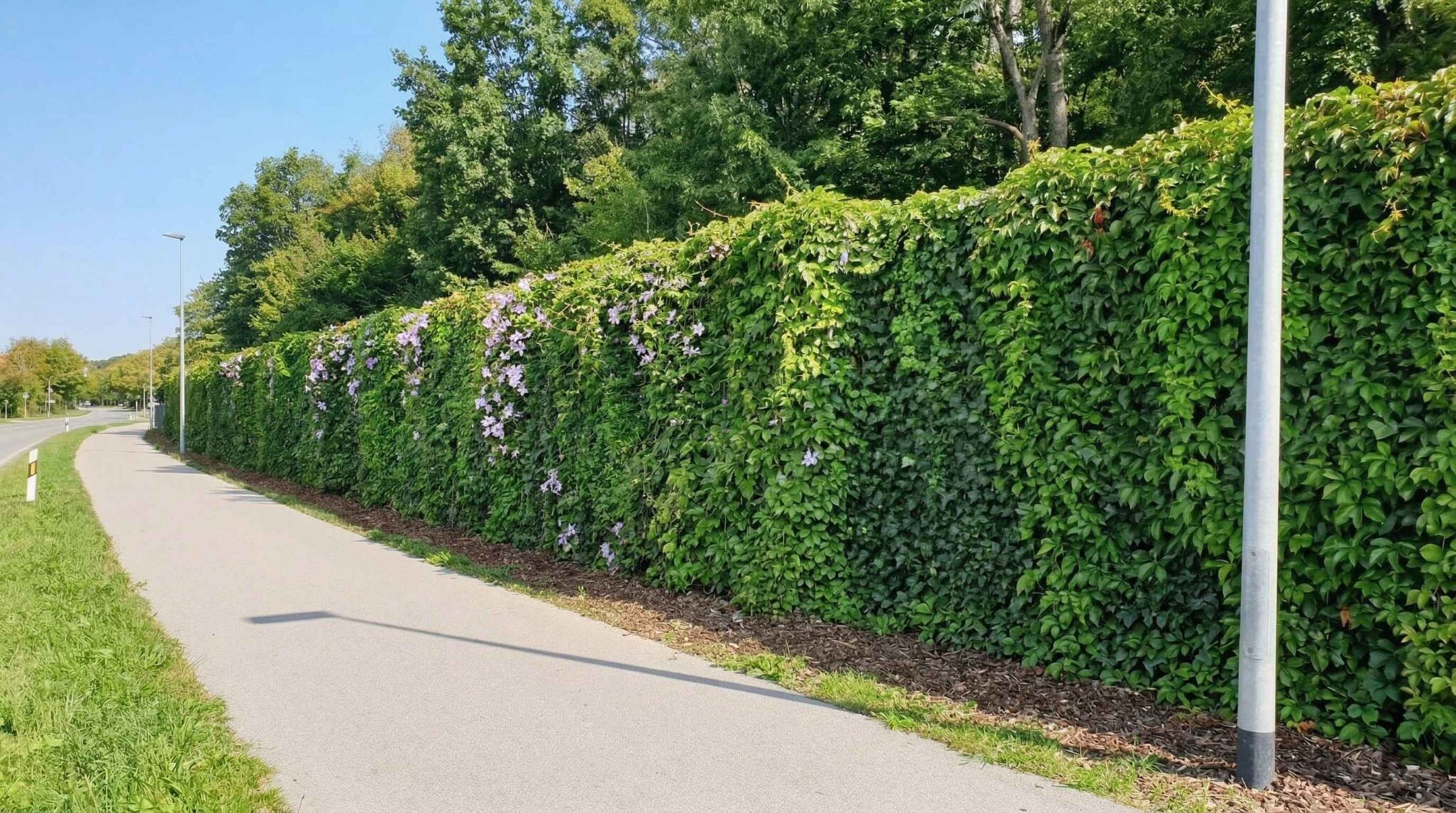
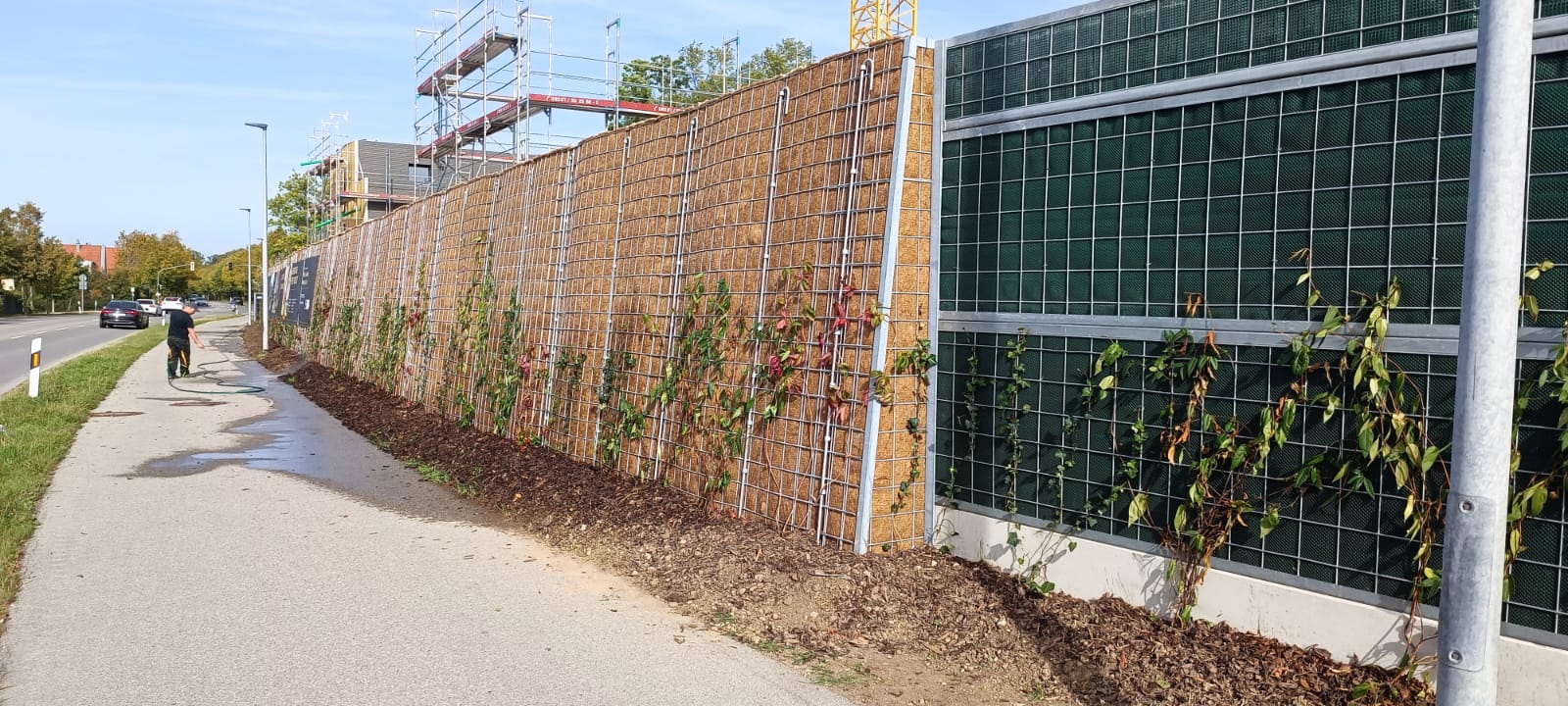
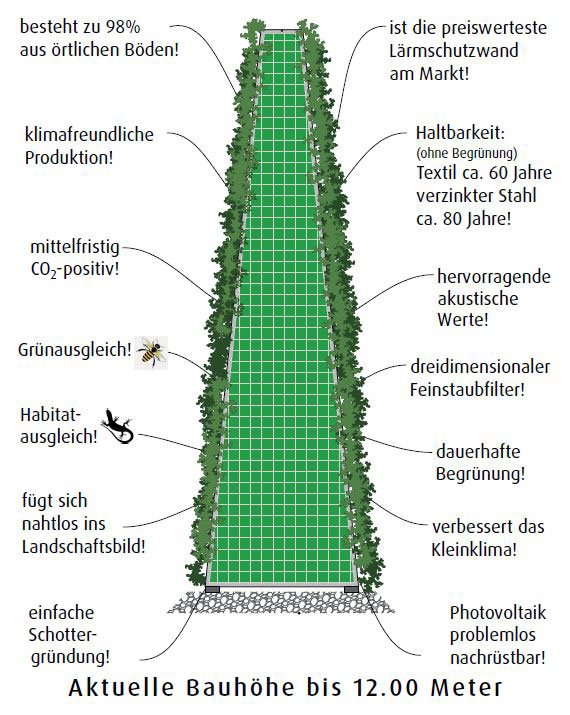
Graz has a special geographical location – the city lies in the Graz Basin, a valley widening on the south-eastern edge of the Alps, framed by the Schöckl in the north, the Plabutsch in the west and gentle hills in the south. This basin location not only shapes the climate, but also the spread of noise and pollutants. The issue of particulate matter has been on the agenda in Graz for many years, and noise levels can also linger in the air for longer in windless inversion weather conditions. Anyone who lives in Liebenau near the Magna plant, in the Eggenberg district on the A9 Pyhrn highway, or in Gries along the main traffic arteries towards the city center is familiar with the pollution. At RAU.bayern, we supply noise barriers from the Allgäu to Graz – to private developers, commercial enterprises, residential developers and municipal clients. Our focus is on green noise protection systems that perform several functions: They dampen sound, bind fine dust and bring vegetation into a city that tends to heat up considerably in summer. We advise you on site, look at your specific situation and develop a proposal that fits the situation – not a standard offer.

Noise protection in the Graz Basin - the basin location as an acoustic challenge
The Graz basin has acoustic characteristics that do not occur in flatter urban locations. In inversion weather conditions, which often occur in the fall and winter, a layer of cold air lies beneath warmer air – sound is then not conducted upwards as usual, but is partially reflected back and can propagate further in the plain. This is particularly audible with low-frequency sources such as industrial plants or heavy traffic on the A2 Süd Autobahn and the A9 Pyhrn Autobahn.
For noise protection in private homes, this means that a wall that is sufficiently effective under normal conditions can reach its limits in such weather conditions. We take this into account in our planning by deliberately dimensioning the height and design of the wall somewhat more generously and using absorbing modules that dampen the entire frequency spectrum – including the low frequencies that are particularly noticeable in inversion situations.
In the residential districts around the Magna plants in Liebenau and Thondorf, we often talk about walls between three and four meters high, which are intended to absorb mixed noise from plant and road traffic. In Mariatrost, Andritz or Gösting, where traffic noise tends to dominate, two and a half to three meters is often enough. For residential locations near the Mur, such as in Puntigam or Straßgang, there is also the factor of sound propagation over the water, which suggests a slightly higher wall.
We measure or estimate the levels in advance, talk about the expected effect and give you an honest assessment of whether the project makes sense before you decide – even if this means that in individual cases a wall alone is not enough and additional measures need to be considered.
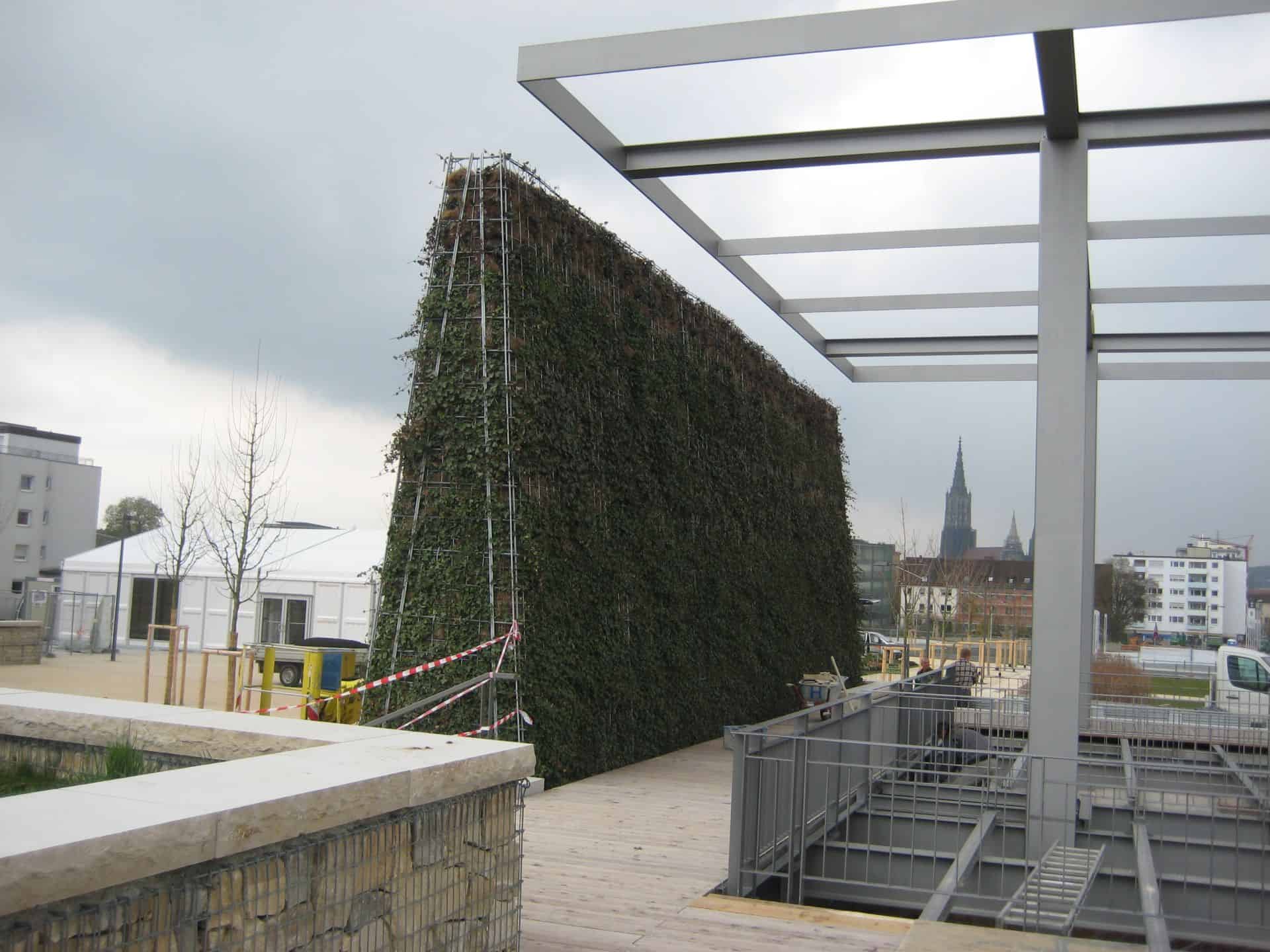
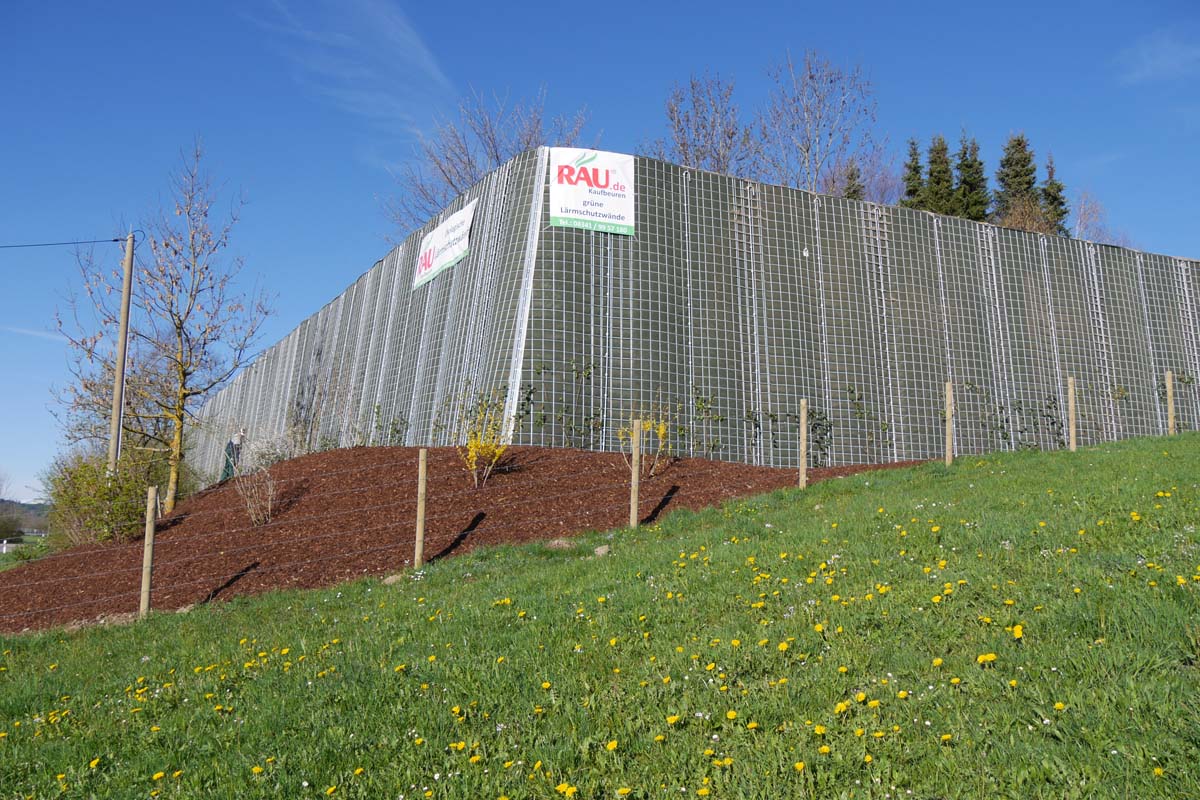
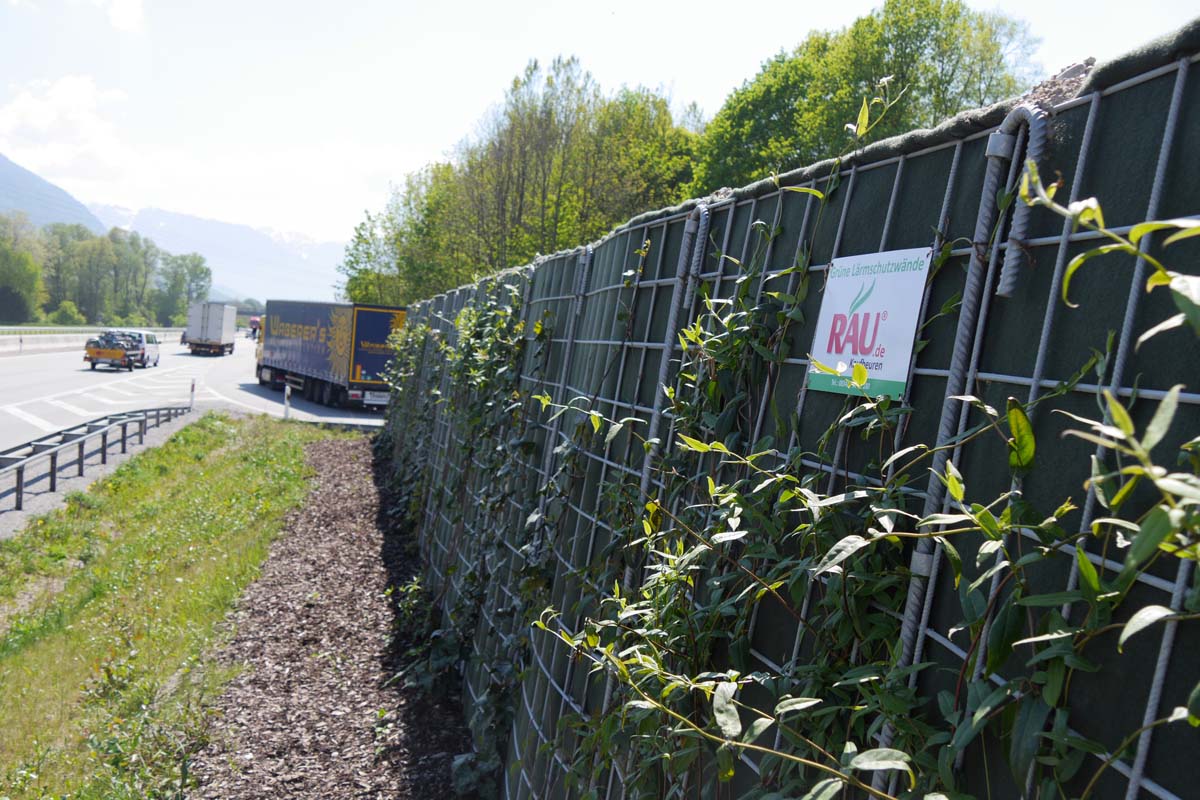
Travel to Graz and logistical handling
It is around 540 kilometers from Kaufbeuren to Graz. The route leads via the A7 to the north, the A8 towards Salzburg, then via the A10 Tauernautobahn to the south and from Salzburg via the A9 Pyhrn Autobahn through the Bosruck Tunnel to Graz. By truck, we expect the journey to take around five and a half hours, provided the Tauern highway is free. In summer and on travel weekends, we plan deliveries outside peak times, as traffic jams on the A10 can have a significant impact on logistics.
In Graz, the A2 and A9 junctions Graz-West, Graz-East and Graz-South are the most important access points to the urban area. Industrial areas in the south – around the Magna plants, in Werndorf or Kalsdorf – are easily accessible via the A9. For inner-city addresses, for example in the Schlossberg, Lend or Geidorf areas, we coordinate delivery times with the city of Graz and with you. In the old town of Graz, a UNESCO World Heritage Site, the possibilities for articulated trucks are very limited; in such cases, we work with reloading stations on the outskirts of the city and smaller vehicles for the last leg of the journey.
For installation, we have partner companies in Styria who are familiar with the local conditions – with the topography, with the requirements of the Styrian building regulations and with the typical local requirements. For smaller projects, we use our own fitters from the Allgäu region, while for larger projects we coordinate with local construction companies. You always have a contact person at RAU.bayern who knows the system and supervises the project from start to finish. This combination has proved its worth for Austrian orders because it combines short implementation paths with clear responsibility on the part of the manufacturer.


