
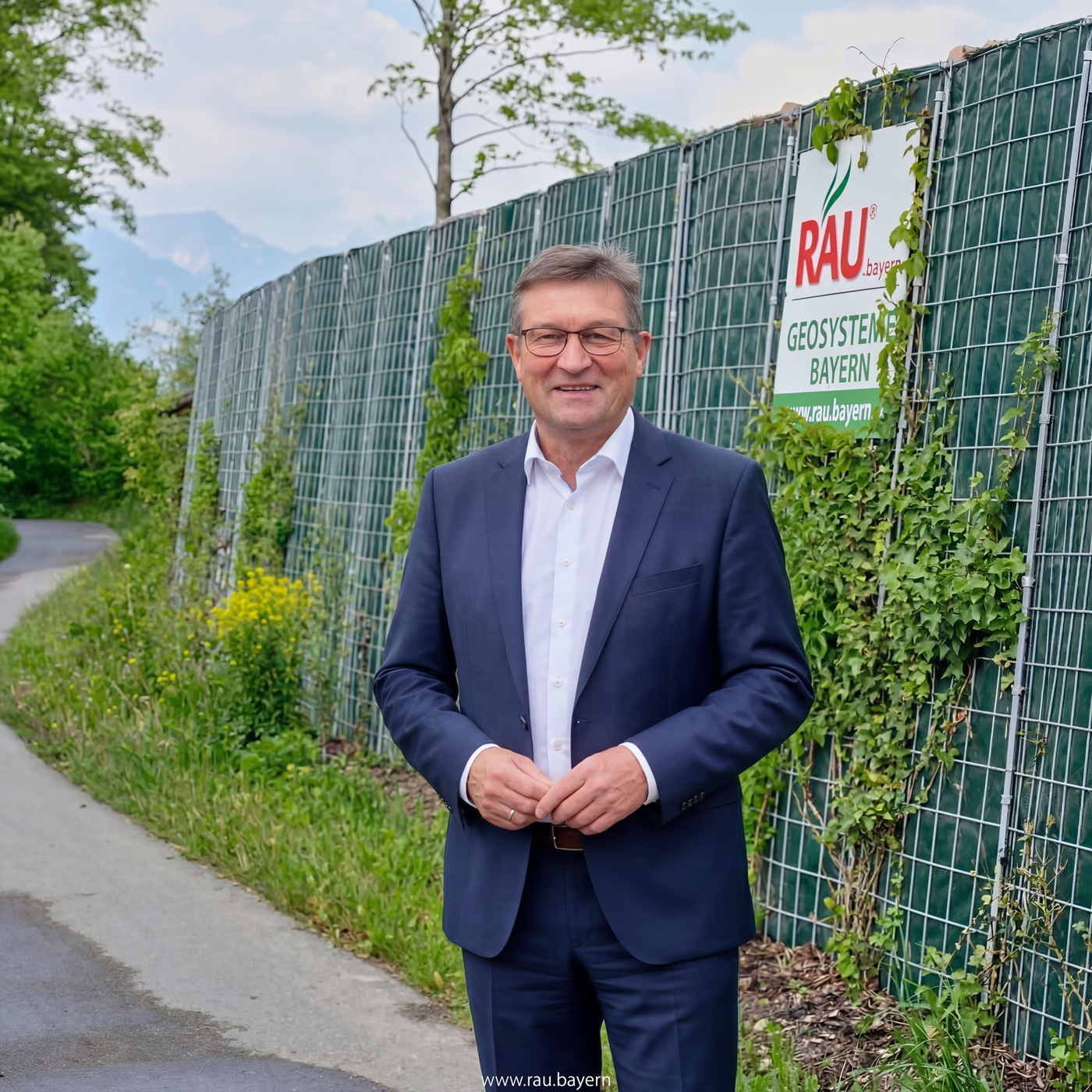
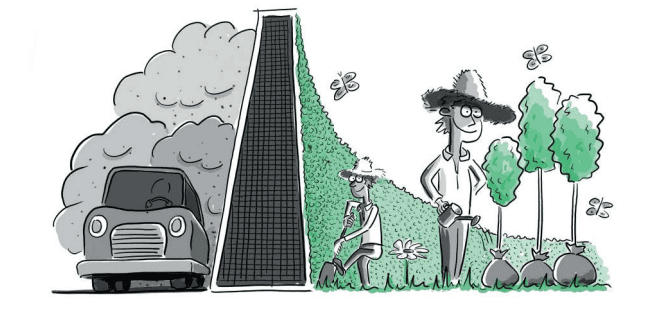
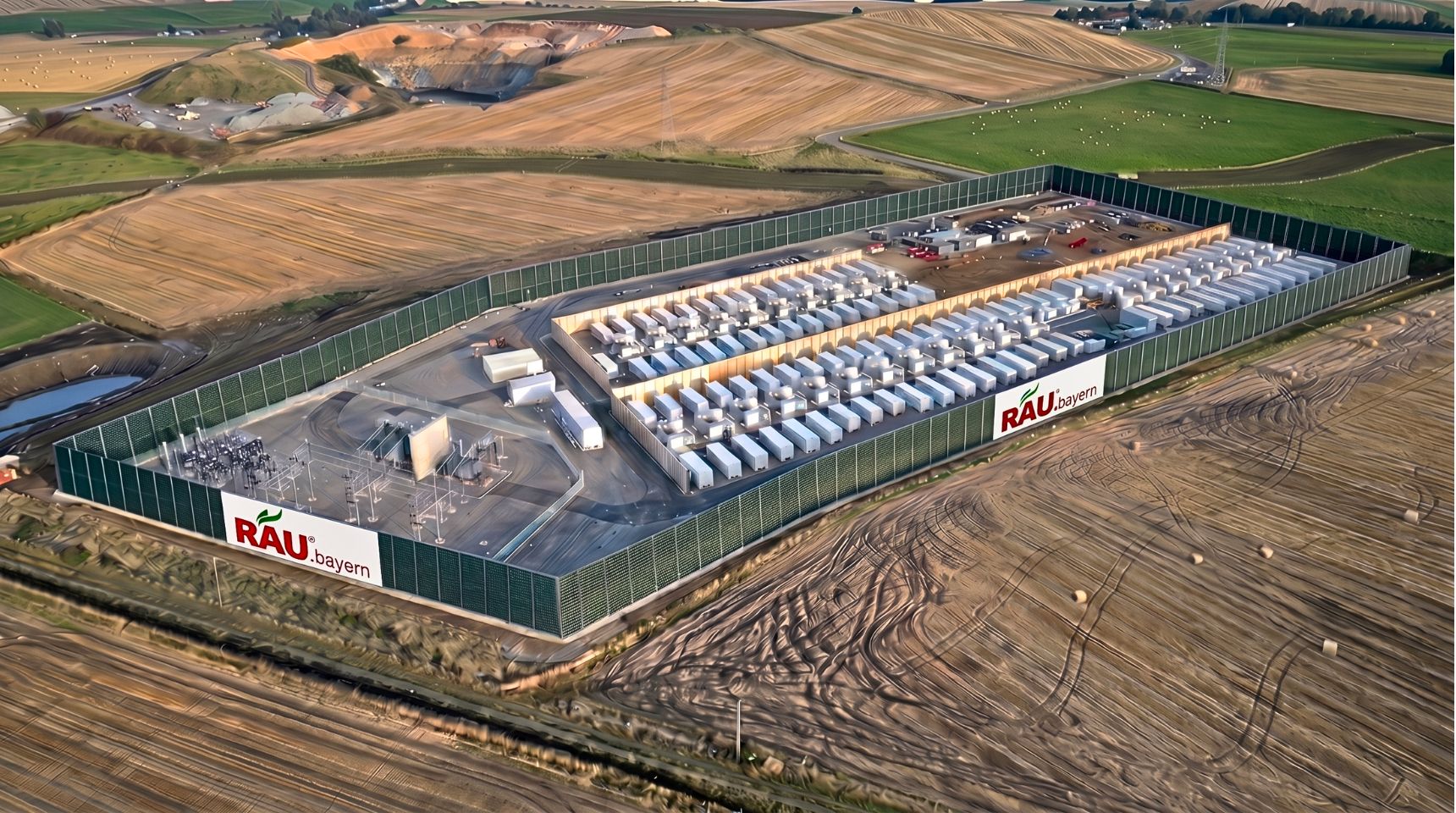
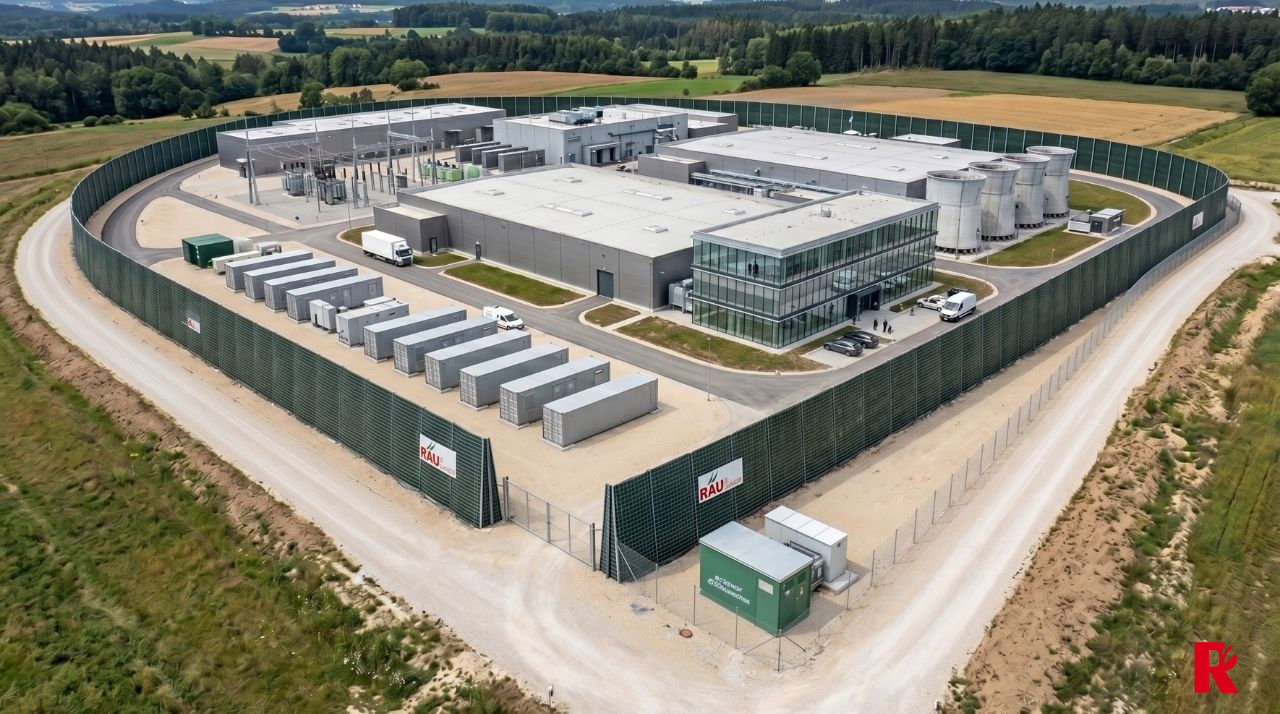
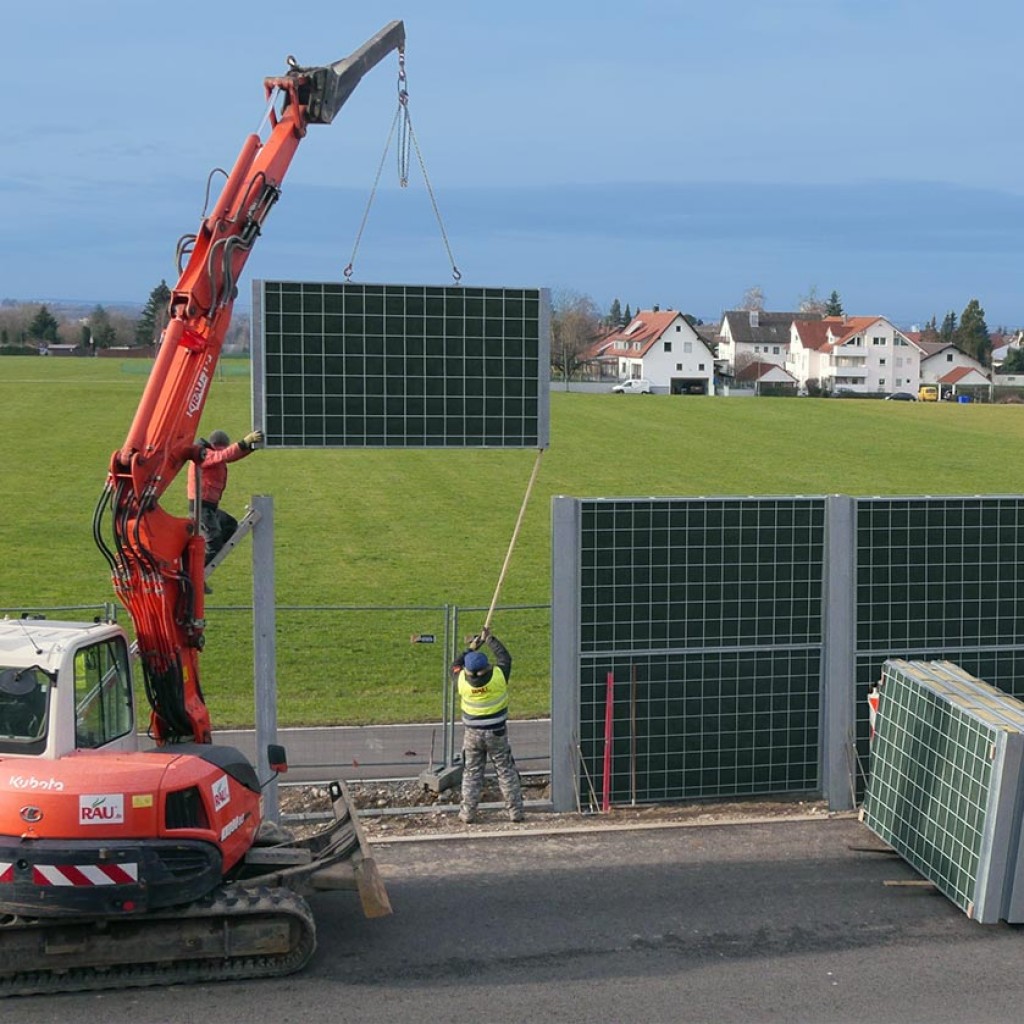
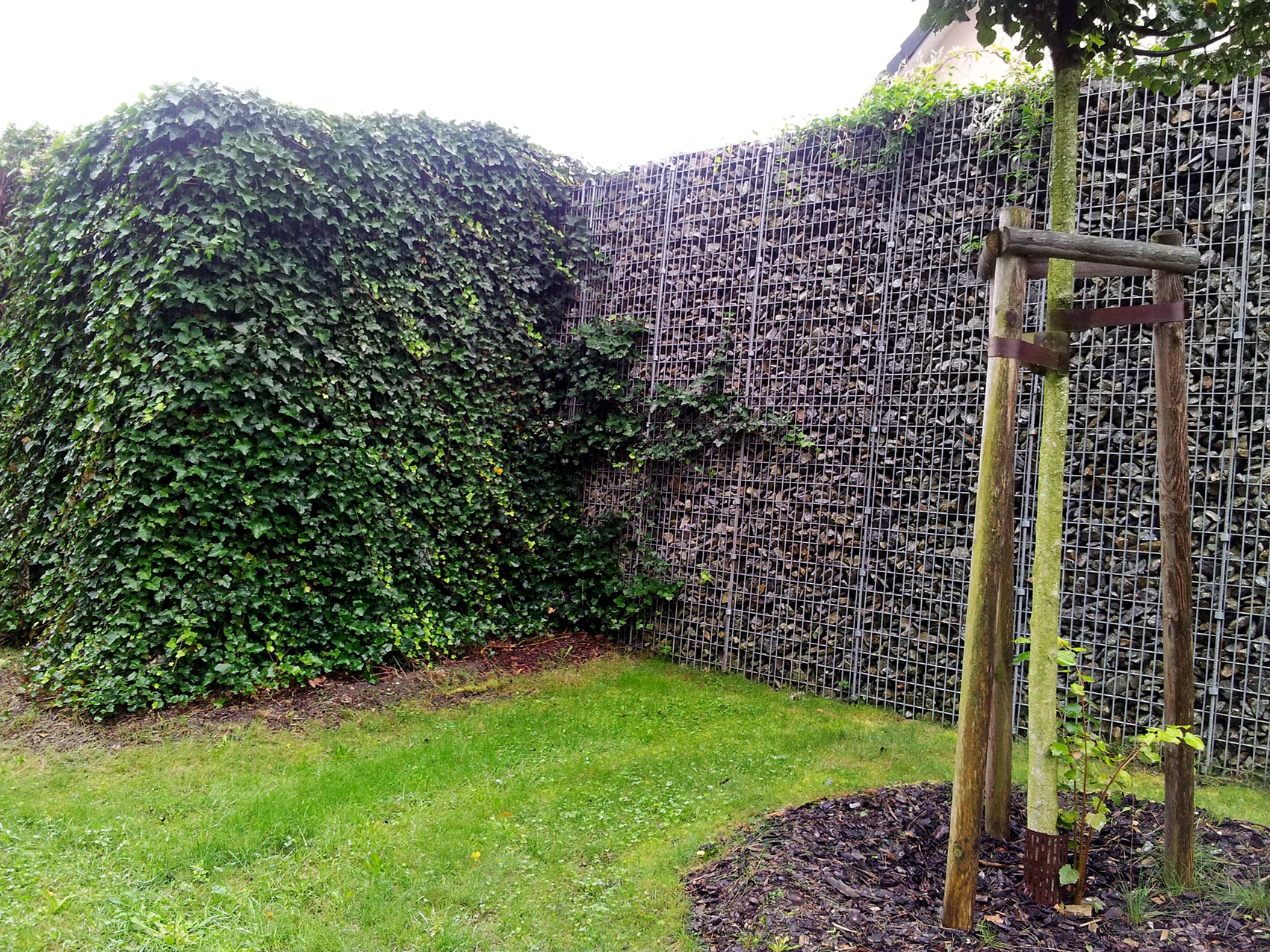
Logistics centers operate when their neighborhoods quiet down—nighttime deliveries, shunting traffic, and backup alarms occur during hours when the noise guidelines set by the Technical Instructions on Noise (TA Lärm) are significantly lower than during the day. Loading zones, ramps, and access roads can hardly be relocated for operational reasons, but they can be acoustically contained. We install highly absorbent, green noise barriers along loading zones, parking areas, and plant access roads, designed to accommodate turning radii, collision protection, and emergency escape routes. The greenery at the base of the walls traps fine particulate matter from truck traffic and requires no irrigation. We provide planning, bidding, installation, and maintenance all from a single source—managed from our Kaufbeuren location and carried out by our own teams or as a kit.
Marking Loading Zones and Ramps with Acoustic Cues
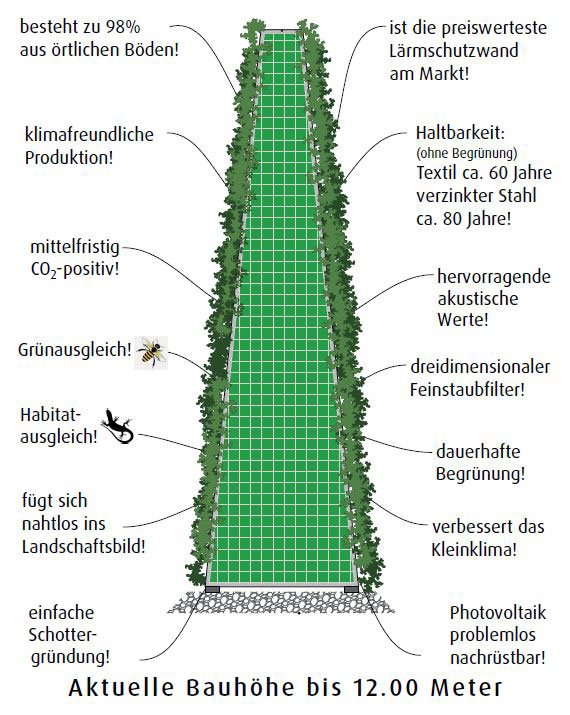
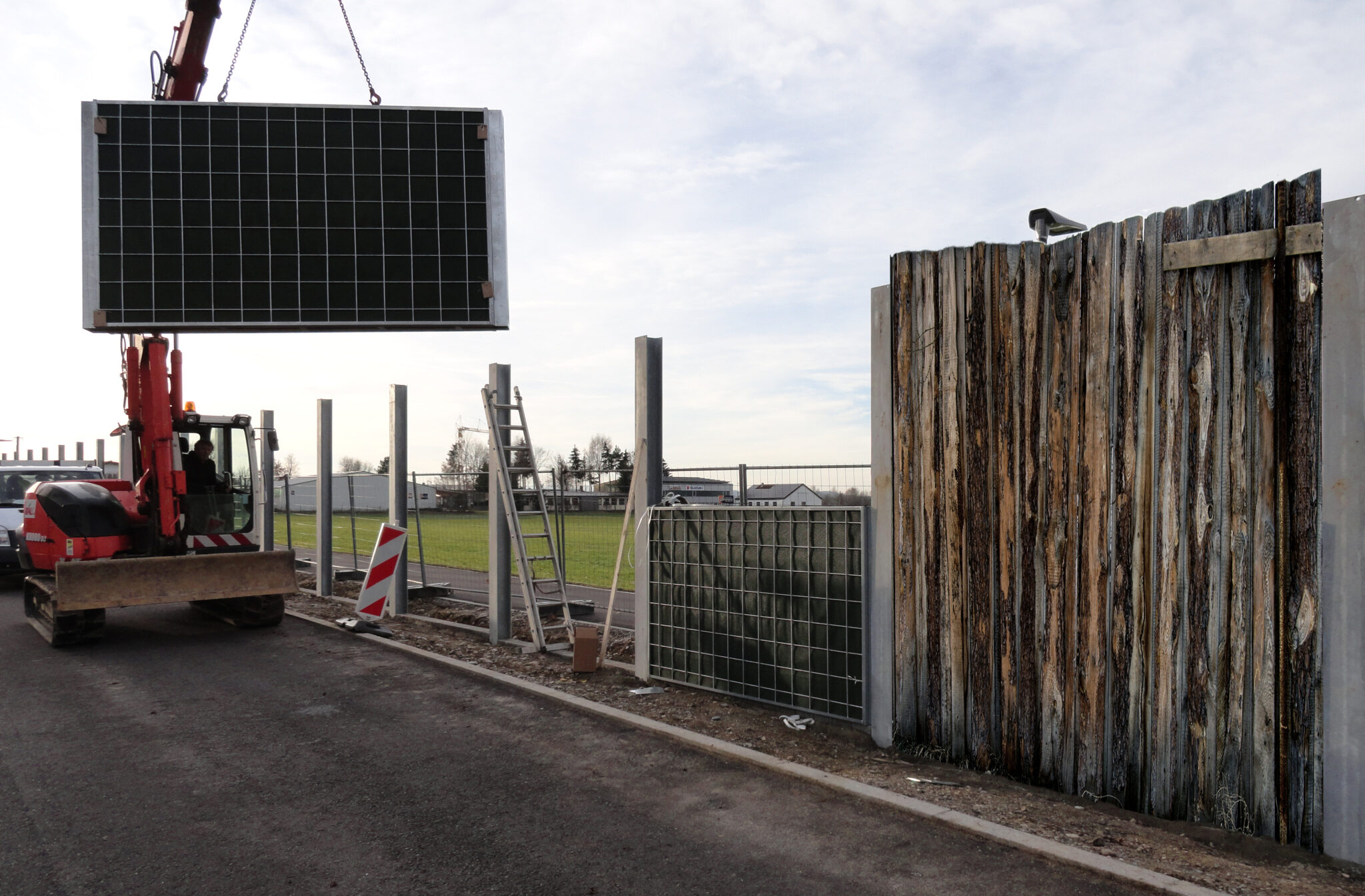
Reversing alarms, refrigeration units on parked trailers, and docking at loading ramps generate intermittent noises that carry significant weight in the assessment. Walls directly adjacent to the loading zone interrupt the line of sight between the sound source and the point of exposure, thereby providing a solution where standard barrier walls fall short. Between ramps, traffic lanes, and parking spaces, there is rarely room for protruding structures; our systems account for turning radii, collision protection, and drivers’ fields of vision. To prevent sound from building up between the building façade and the wall, we use highly absorbent soundproof walls that absorb the energy rather than reflecting it back into the yard. Filling the structures with soil and mineral raw materials—typically sourced on-site—ensures they maintain their volume and are durable, even when subjected to vibrations from heavy traffic. For new construction projects, we provide bid documents and construction plans; for existing structures, we design the wall layout around ongoing traffic without interrupting deliveries or blocking maneuvering areas. Emergency escape routes and fire department staging areas are taken into account, as is the yard staff’s visibility of maneuvering traffic.
Ensure Nighttime Operations, Plan the Budget Realistically
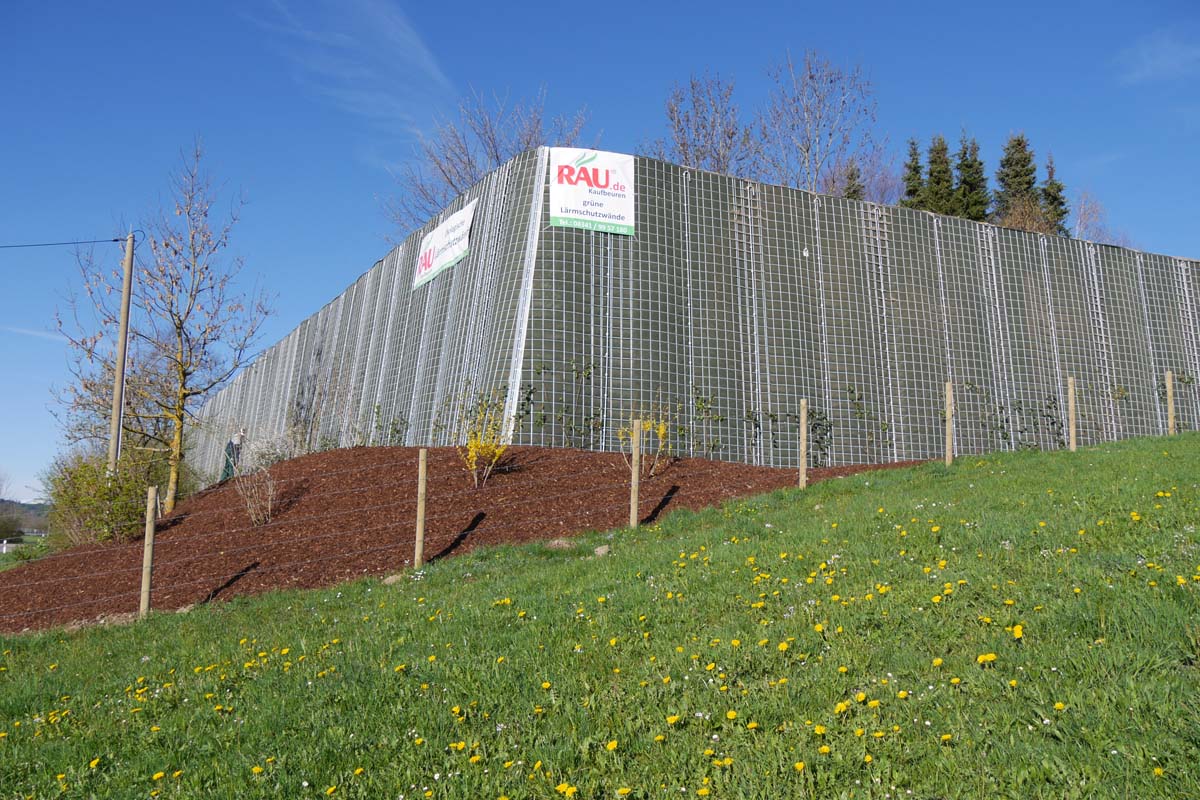
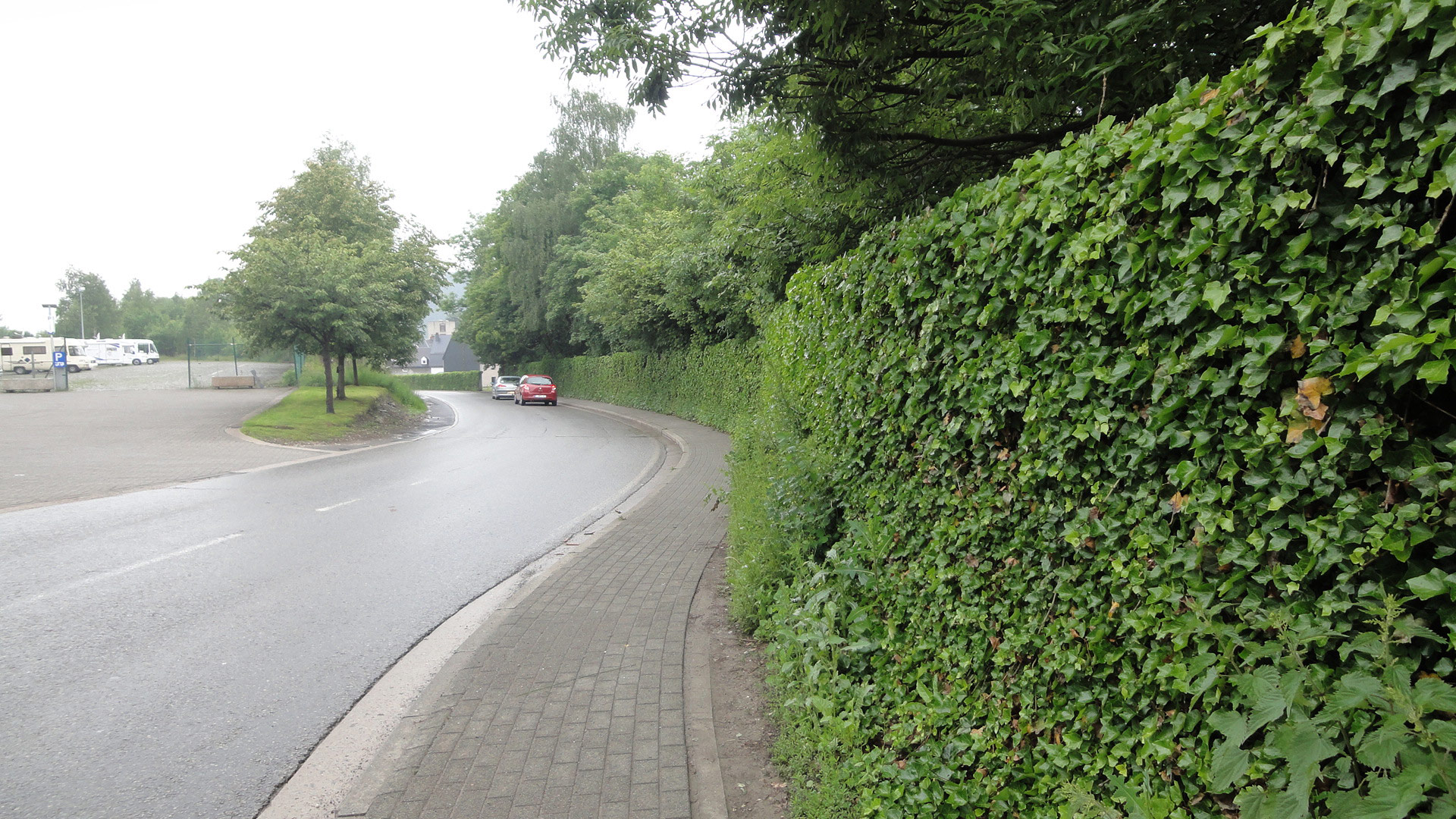
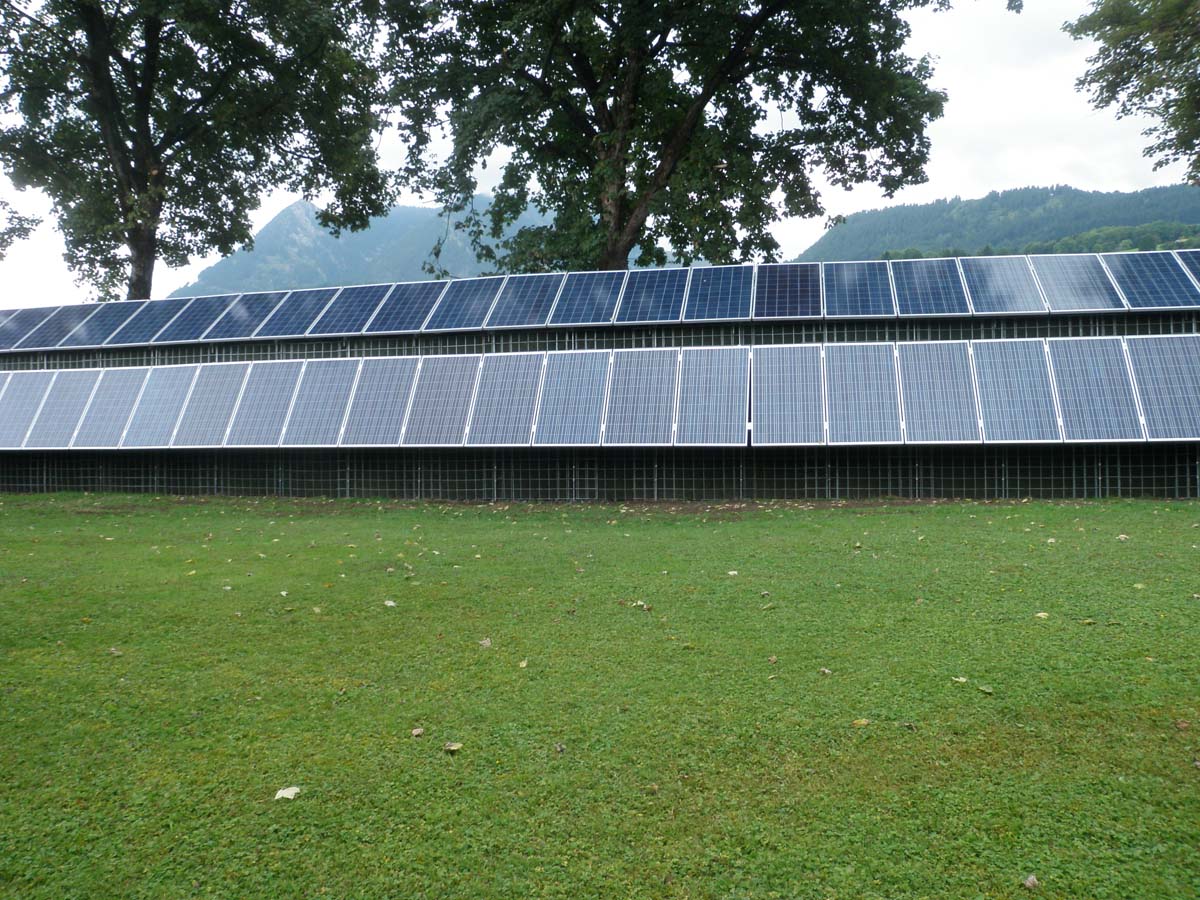
Permits for round-the-clock operations depend on nighttime conditions, and making adjustments during ongoing operations is more expensive than planning ahead. Anyone expanding a logistics center or seeking night-time operating authorization should incorporate the shielding of loading zones into the space planning early on, while wall locations are still freely selectable. We determine which design parameters—height, length, foundation, collision protection, and accessibility—determine the scope of work on a project-by-project basis; our reference overview provides an impression of completed projects. In areas with limited space, RAU Rock Extensiv creates flexibility with a minimum width of 13 cm without sacrificing parking spaces. Locations with sustainability goals combine sound insulation with a quantifiable environmental contribution; the RAU Klimawand R3 features a Climate Handprint with KlimAktiv-certified CO₂ accounting, whose emissions are offset by the greenery within a few years. After completion, our service teams maintain the wall and vegetation; the extensive construction method structurally minimizes the required effort. Upon request, we can integrate photovoltaic panels along suitable sections of the wall. This transforms the installation into a plannable component of the site’s development.


